Storage & Containers
Portion-Control Snack Bag
Small bag for pre-portioning snacks, ingredients, and single servings.
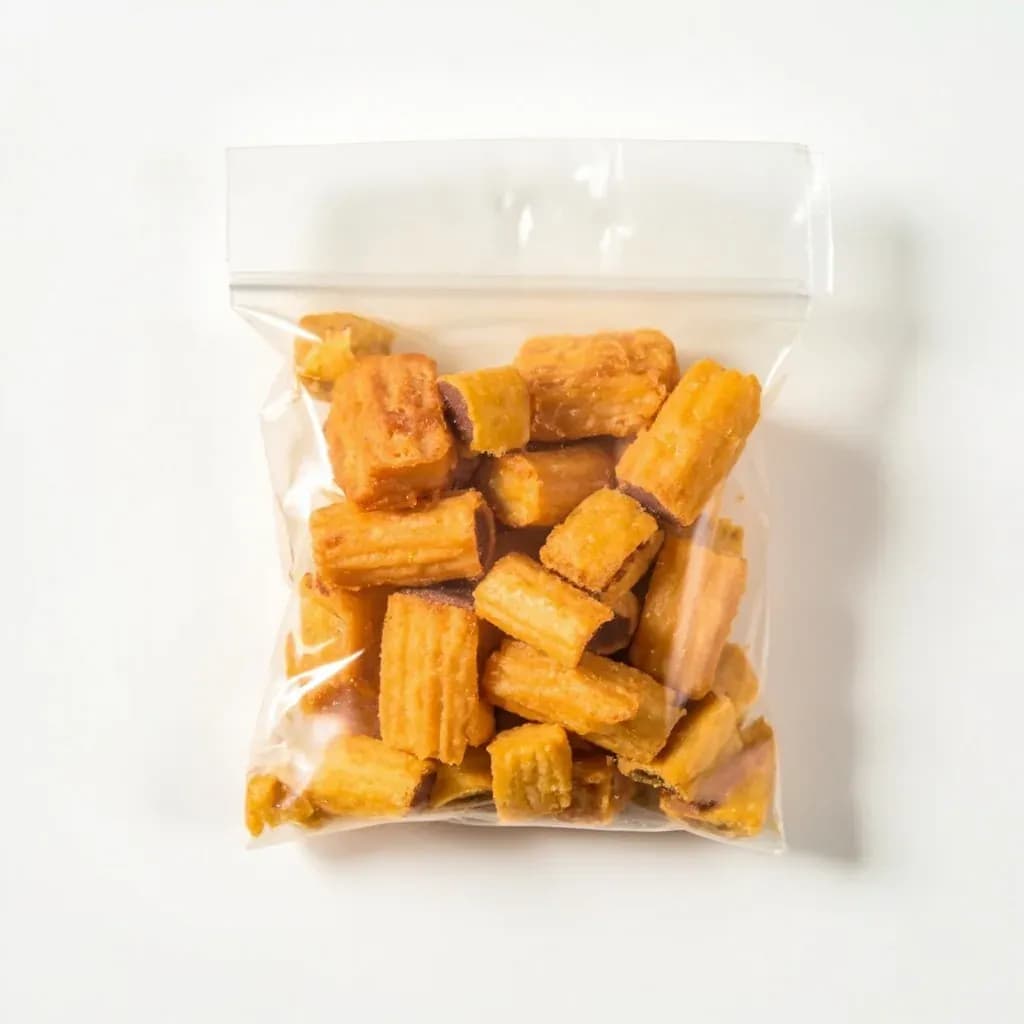
A small plastic or compostable bag used to pre-portion snacks, mise en place ingredients, and single servings for meal prep and service. It standardizes serving sizes for consistency and calorie control and keeps prepped components separated and ready. Resealable versions let a portion be opened and reclosed without spilling.
A portion-control snack bag is a small, single-serving food storage bag — typically snack (≈1 cup) or sandwich (≈2 cups) sized — used to pre-measure snacks, ingredients, and meal components. The category spans disposable polyethylene zip-top bags, reusable food-grade silicone pouches, kraft and compostable films, and laminated stand-up pouches, all sharing the same core job: keeping a measured amount of food sealed, portable, and protected from air, moisture, and cross-contamination.
For home cooks, these bags earn their keep in the lunch box, the freezer, and the pantry. They turn bulk-bin grains, trail-mix components, and baking add-ins into grab-and-go servings; they let you freeze smoothie packs, marinated proteins, and herb-in-oil portions flat and stackable; and they tame chaotic lunch packing by separating wet dips from dry crackers, allergen snacks from nut-free ones, and portioned produce from the rest of the meal. The key trade-off is disposability versus durability: a reusable silicone bag can replace hundreds of disposable ones, but disposable polyethylene remains cheaper per use and more convenient for raw-meat or freezer-only applications.
Behavior varies sharply by material. Polyethylene disposable bags are lightweight, freezer-safe, and inexpensive but not microwave- or dishwasher-safe; food-grade silicone bags handle roughly -40 °F to 400 °F (-40 °C to 204 °C), survive the dishwasher, and go in the microwave, but cost more upfront and must be fully dried before storage. Choosing the right bag for the task — pantry, freezer, microwave, or gifting — is the single biggest factor in whether a portion-bag system actually works.
Alternatives
Types & varieties
Classic polyethylene snack- or sandwich-sized bag — Ziploc, Glad, and Hefty are the dominant brands. Single-use, inexpensive, freezer- and pantry-friendly; not microwave- or dishwasher-safe.
Pinch-loc or zip-top food-grade silicone pouch; Stasher is the best-known brand. Dishwasher- and microwave-safe, freezer-safe, rated for 3–5+ years of regular use; replaces hundreds of disposable bags over its life.
Gusseted bottom lets the bag stand upright on a shelf; commonly used for granolas, nuts, and sauces. Often laminated for a stronger oxygen and moisture barrier than plain polyethylene.
Crisp transparent bags used for candies, cookies, and homemade confections; usually heat-sealed or tied with ribbon for gifting.
Coated or uncoated kraft paper, with grease-resistant varieties available. Classic for fries, popcorn, and street-food service.
Made from PLA, kraft, or other bio-based films, designed to break down in commercial composting — check certification (BPI, TÜV) since not all are backyard-compostable.
Thicker gauge (often 2.7–4 mil) for long-term freezer storage of pre-portioned ingredients; resists freezer burn better than standard bags.
Used for spices, jerky, and dried ingredients where moisture and oxygen barrier matter more than flexibility. Often heat-sealed rather than zip-sealed.
Disposable vs. Reusable: Choosing the Right Bag
Most home cooks end up using both, and the choice usually comes down to what the bag will hold and how it will be cleaned.
- Use disposable polyethylene for raw meat, poultry, and fish marinades, and for anything going into the freezer longer than a month — replace rather than wash to avoid bacterial carryover and freezer-burn pinholes.
- Use reusable silicone for dry snacks, cut produce, cheese, leftovers, and microwave reheating — they pay for themselves quickly if you pack lunches daily.
- Reserve stand-up laminated pouches for pantry items that need a real oxygen barrier (coffee, nuts, dried fruit); plain polyethylene is too permeable for these.
- Choose heavy-duty freezer bags for anything frozen longer than 30 days; standard snack bags are too thin to prevent freezer burn past that point.
Freezer-Organization Method
A simple flat-freeze filing system turns a chaotic freezer drawer into a browsable library of portioned ingredients.
- Lay filled bags flat on a sheet pan and freeze 2–4 hours until rigid, then stand them upright in a bin like file folders — flat-frozen portions stack neatly and thaw in a fraction of the time a lumpy bag takes.
- Group with binder clips or rubber bands by meal or category (smoothie packs, soup bases, single-protein portions) so you can grab a full set in one motion.
- Label with contents and date in permanent marker on freezer tape; marker on the bag itself smears as the bag frosts over.
- Double-bag anything stored longer than one month — the extra layer is cheap insurance against pinholes and freezer burn.
Common uses
Tips & pitfalls
- Label every bag with contents and date using freezer tape and a permanent marker — unlabeled bags are the single biggest reason home freezers accumulate mystery food.
- Squeeze out as much air as possible before sealing; for liquids and freezer storage, submerge the open bag in a bowl of water to force air up and out, then seal just above the waterline so no water enters.
- Never reuse a disposable bag that has held raw meat, poultry, or fish — polyethylene can harbor bacteria even after a thorough wash.
- Don't overfill: food packed above the seal line leaves gaps that let air and moisture in, causing staleness or freezer burn.
- Stack portion bags flat in the freezer for the first 2–4 hours, then file them upright — flat-frozen portions stack neatly and thaw far faster than lumpy ones.
- For oily or moist homemade snacks (granola bound with coconut oil, energy bites, candied nuts), cool them completely to room temperature before bagging to prevent condensation and sogginess.
- Reusable silicone bags should be air-dried completely — ideally inverted on the rack — before storage; trapped moisture in the seal is a leading cause of mildew and off-odors.
- Microwave only bags explicitly labeled microwave-safe (most silicone bags are; standard polyethylene is not) — transfer contents to a covered dish if in doubt.
Good to know
- Category
- Storage & Containers
- Standard snack-bag size
- Approximately 6.5 × 3.5 in (16.5 × 9 cm); holds roughly 1 cup / 240 mL
- Standard sandwich-bag size
- Approximately 6.5 × 5.9 in (16.5 × 15 cm); holds roughly 2 cups / 480 mL
- Common materials
- LDPE/LLDPE polyethylene (disposable), food-grade silicone (reusable), kraft paper, PLA plant-based film
- Temperature range (silicone reusable)
- -40 °F to 400 °F (-40 °C to 204 °C); check manufacturer specs
- Microwave & freezer
- Reusable silicone bags are typically microwave-safe; most purpose-made snack and sandwich bags are freezer-safe to 0 °F / -18 °C
- BPA / phthalate status
- Major brands (Ziploc, Glad, Stasher) manufacture BPA- and phthalate-free products
- Origin
- Slide-seal plastic bag patented in Denmark in the 1950s; Ziploc brand launched by Dow Chemical in 1968
Also called
Portion-Control Bags · Portion Bag · Snack Portion Bag · Snack Bag
Related

Freezer Bags
Thick, sealable bags built to fight freezer burn

Storage Bags
Resealable bags for fridge storage and marinating

Storage Container
Lidded container for leftovers, prep, and meal kits

Glass Container
Oven-to-fridge glass that won't stain or hold odors

Plastic Container
Lightweight, stackable storage for everyday leftovers

Vacuum Sealer Bags
Airtight bags for long freezing and sous-vide

Reusable Bags
Washable silicone bags that replace single-use plastic

Mason Jar
Sealed glass jar for preserves, pickles, and storage