Storage & Containers
Reusable Canning Lid
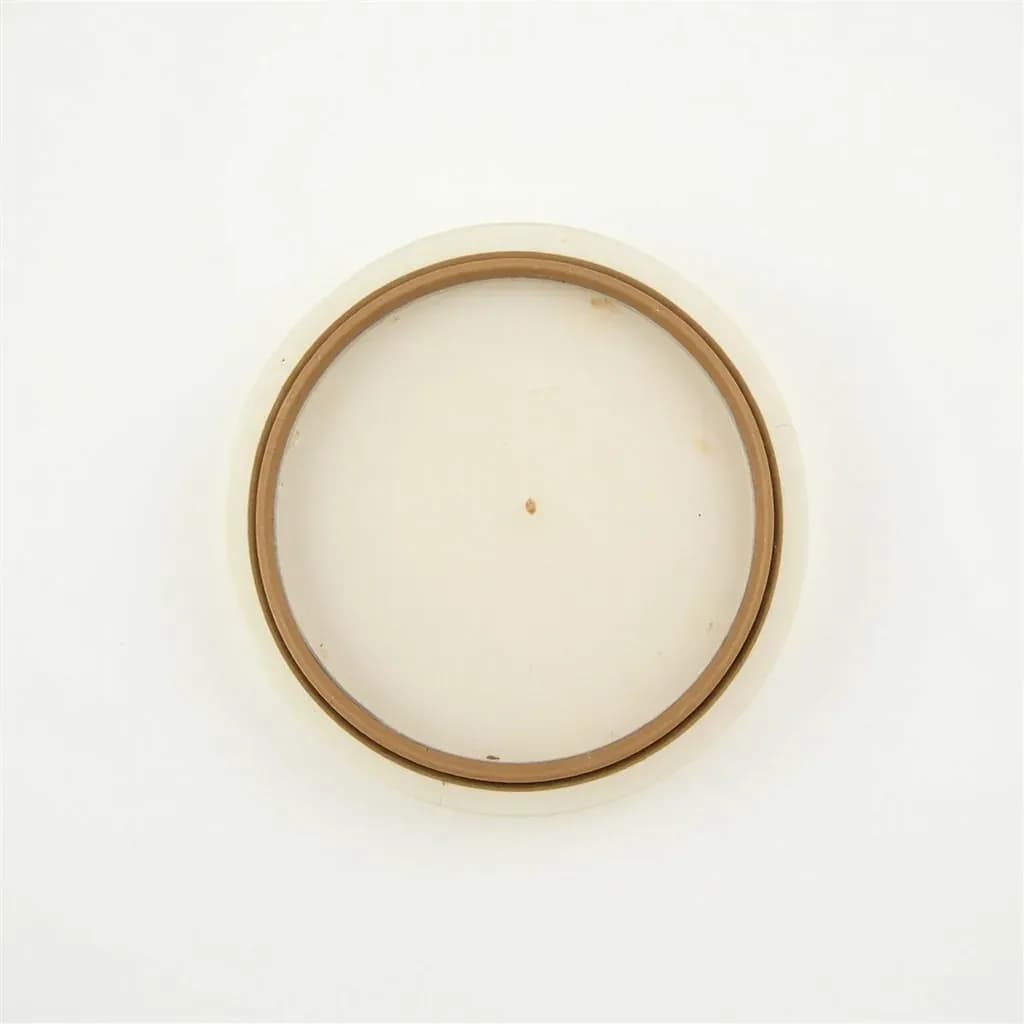
A two-piece plastic-and-gasket canning lid designed to seal jars repeatedly.
A reusable canning lid, such as the Tattler system, is a food-grade plastic disc with a separate rubber gasket that seals a mason jar during canning. Unlike single-use metal lids, it can be cleaned and reused across many batches, saving money and waste. Canners follow specific tightening steps to get a reliable vacuum seal.
A reusable canning lid is a two-piece sealing system built around a rigid food-grade plastic disc that screws onto a standard Mason-style jar, with a separate natural-rubber gasket ring that presses against the jar rim to form a compression seal. Unlike the familiar Ball or Kerr metal flat lid, which relies on a soft sealing compound and a center vacuum button that pops down as the jar cools, the reusable design is purely mechanical: the rubber gasket is squeezed between the lid and the glass rim, and that squeeze is what holds. The screw band is just a clamp; it has no vacuum-indicating function.
The appeal is straightforward for a serious home canner. A single metal flat lid is a one-use product, while a Tattler-style disc can be washed, inspected, and put back on the shelf indefinitely, with gaskets typically lasting anywhere from 8 to 20-plus cycles before they need replacing. The upfront cost is higher, but the per-jar cost drops dramatically over time, and the reduction in single-use metal waste is significant for anyone putting up dozens or hundreds of jars a season. The lid works in both water-bath and pressure canning, and sealed jars store just as long as those closed with traditional flats.
The trade-off is a real learning curve. Canners accustomed to the visual pop of a metal button have to retrain their eye and their hand: the band is tightened more loosely, the cooling period is longer, and seal failure rates run higher (often 10 to 20 percent) until the technique is dialed in. The natural-rubber gasket is also a problem for anyone with a latex sensitivity, which is why many canners in that situation move to a glass-lid reusable system, such as a bail-closure jar with replaceable rings.
Alternatives
Types & varieties
The original and most widely sold reusable canning lid in the U.S., made by Continental Commercial Products; available in regular and wide-mouth sizes and considered the reference product of the category
Sold separately as the intentional wear component; replaced when cracked, hardened, or no longer springy
A related but distinct European system using tempered glass lids, a rubber gasket, and a wire bail clamp; the whole assembly is reusable
European glass-lid system with rubber rings and stainless-steel clamps; fully reusable, dishwasher-safe, and compatible with silicone replacement rings for latex-sensitive canners
Why the Sealing Principle Matters
Understanding how a reusable lid seals is the single biggest predictor of success. Traditional metal lids have a flowable sealing compound that gets pushed into every micro-imperfection on the jar rim, and a dimpled center button that flexes inward as the cooling contents pull a vacuum. That button is a built-in gauge: popped down and tight means sealed; sprung up means not sealed. A reusable plastic lid has no such gauge. The rubber gasket does the sealing work mechanically, and you judge the result by feel and by behavior over time, not by a visual cue.
- The screw band is a clamp, not an indicator. Finger-tight plus a quarter turn is the rule; over-tightening traps air inside and prevents the seal from forming.
- Do not press the center of the lid to 'test' the seal while the jar is hot. With a metal lid this releases trapped air; with a reusable lid it can break the gasket's grip and ruin the seal.
- A sealed reusable lid will sit flat or slightly domed and will not flex up and down when pressed. The band should also come off easily once the jar has cooled, which is a good secondary signal.
- Expect a 12 to 24 hour undisturbed cool-down. The rubber seal forms slowly as contents contract, and checking too early is the most common cause of perceived failure.
Gasket Care and Replacement
The gasket is the only consumable part of the system, and how you handle it determines how often you buy replacements. Boil new gaskets for 10 minutes before their first use to condition the rubber, and after every run pull them off the lids, wash them in warm soapy water, and dry them out of direct sunlight. Heat and UV both shorten rubber life.
- Replace any gasket that has lost its rebound, shows deep cracking, or stays compressed when you set it down flat.
- Keep spare gaskets on hand; a worn gasket discovered at the start of a canning day is the only thing standing between you and a good batch.
- Store gaskets loose, not screwed onto lids, so air circulates around the rubber.
Common uses
Tips & pitfalls
- Do not overtighten the screw band; finger-tight plus a quarter turn is correct, and excess force is the leading cause of seal failure with reusable lids.
- Do not press the center of a reusable lid to test the seal while the jar is still warm — this can break the gasket's grip, unlike with a traditional metal flat.
- Allow jars to cool undisturbed for 12 to 24 hours before checking; the rubber gasket forms its seal as contents cool and contract.
- Sterilize new gaskets in boiling water for 10 minutes before first use, and inspect every gasket each time for cracks, hardening, or loss of elasticity.
- Replace any gasket that no longer rebounds to its original shape, shows deep cracking, or has a permanent compression set.
- Store cleaned gaskets away from direct sunlight and heat to extend rubber life — heat and UV are the two biggest enemies of natural rubber.
- Remove screw bands after jars have cooled and sealed to prevent rust and to make it easy to spot any seal that fails during storage.
- If you have a latex allergy, consider a glass-lid alternative such as a Weck or Bormioli Fido jar, where silicone replacement rings can be used in place of natural rubber.
Good to know
- Material
- Food-grade plastic resin lid disc with a natural rubber gasket ring
- Pieces
- Two-piece system: threaded plastic lid plus separate rubber gasket
- Jar compatibility
- Standard and wide-mouth Mason, Ball, and Kerr canning jars, from half-pint through quart
- Canning methods
- Compatible with both water-bath and pressure canning
- Reusability
- Lid disc can be reused indefinitely; gaskets typically last 8 to 20+ uses depending on care and canning method
- Seal mechanism
- Compression seal between rubber gasket and jar rim, not a vacuum-cone seal
- Shelf life of seal
- Provides comparable long-term storage (1–2+ years) to traditional metal lids when properly processed
- Cost comparison
- Higher upfront cost than single-use metal lids, but lower long-term cost due to reusability
- BPA status
- BPA-free resin (applies to plastic-disc systems such as Tattler; glass-lid alternatives contain no plastic)
- Allergen note
- Gaskets are natural rubber (latex); not suitable for those with latex allergies
- Origin
- The plastic-disc reusable lid was developed in the U.S. in the 1970s by Gernot Katran, founder of the Tattler brand
Also called
Reusable Canning Lid (Tattler) · Tattler Lid · Plastic Canning Lid
Related

Freezer Bags
Thick, sealable bags built to fight freezer burn

Storage Bags
Resealable bags for fridge storage and marinating

Storage Container
Lidded container for leftovers, prep, and meal kits

Glass Container
Oven-to-fridge glass that won't stain or hold odors

Plastic Container
Lightweight, stackable storage for everyday leftovers

Vacuum Sealer Bags
Airtight bags for long freezing and sous-vide

Reusable Bags
Washable silicone bags that replace single-use plastic

Mason Jar
Sealed glass jar for preserves, pickles, and storage