Storage & Containers
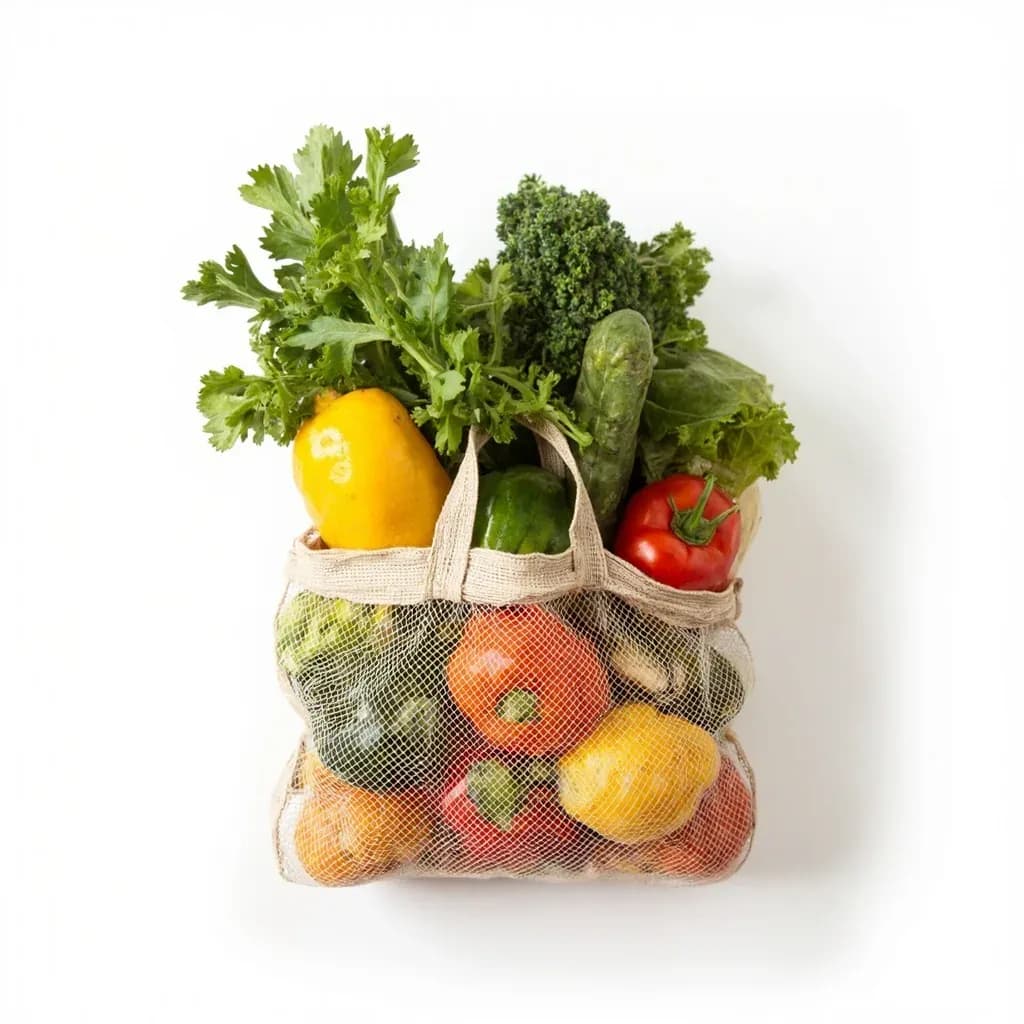
Reusable Produce Bag
A washable mesh or fabric bag for carrying and storing fruits and vegetables.
Reusable produce bags are lightweight mesh or cotton sacks that replace single-use plastic bags at the market. They let cooks weigh, transport, and refrigerate fruits and vegetables while allowing air to circulate. The breathable mesh slows spoilage compared with sealed plastic and can be washed between uses.
The reusable produce bag is one of those rare kitchen tools that solves a problem at two points in a food's life: at the store, where it replaces the thin LDPE plastic film that used to litter the produce aisle, and at home, where the open weave does something sealed plastic never could—let the food breathe. That airflow is the entire reason these bags work as storage, not just as transport. Onions, garlic, shallots, potatoes, citrus, and squash all keep longer in mesh than in a sealed bag because surface moisture can escape and ethylene gas does not concentrate around the produce.
A modest set of three bags in graduated sizes (small, medium, large) covers the vast majority of shopping runs and crisper-drawer organization. Most are made from polyester or nylon mesh with a drawstring closure and weigh between 10 and 45 grams; the tare weight is printed on a care tag so it can be deducted at the register. The category became a mainstream grocery product from around 2007 onward as part of the broader reusable-bag movement, with widespread retail adoption and major ban-driven demand following from 2016 as single-use plastic restrictions took hold in the EU, Canada, and many US states, and major retailers like Trader Joe's, Whole Foods, and ALDI dropped free produce bags entirely.
Pick fabric to match use. Open-weave synthetic mesh is the everyday workhorse—light, quick-drying, and semi-transparent so the cashier can see what's inside. Cotton and hemp are gentler on the planet at end-of-life but hold moisture longer, so they suit dry pantry storage better than the fridge. For anything wet or delicate (washed greens, fresh basil, berries), mesh is the wrong tool: a rigid container lined with a paper towel will do the job better.
Alternatives
Types & varieties
The most common type; lightweight, quick-drying, semi-transparent so the cashier can see contents; can be washed inside a mesh laundry bag.
Similar to polyester but stronger and more elastic; a good choice for heavier produce like potatoes, citrus, and root vegetables.
Undyed GOTS-certified cotton netting; softer hand and fully compostable at end of life, but the slowest fabric to dry.
Solid-woven cotton rather than netted; better for dusty items in bulk bins (flour, grain, rice) than for produce storage, since airflow is limited.
Durable natural fiber with a mild antimicrobial reputation; heavier and more expensive than cotton.
Made from post-consumer plastic bottles; closes the loop on single-use plastics but is still a synthetic.
Tighter weave than open mesh; reduces snagging on rough produce like artichokes, pineapple crowns, or knobby ginger.
Storage by produce type
Mesh bags double as long-term storage, but the rules differ by category. The general principle: dry items that need to breathe go in mesh, and washed or delicate items go in rigid containers.
- Alliums and roots (onions, garlic, shallots, potatoes, ginger): loose in a mesh bag in a cool, dark pantry. Keep potatoes out of direct light to prevent greening.
- Citrus, apples, avocados, pears: mesh bag in the fridge or on the counter depending on ripeness. Always separate ethylene producers (apples, bananas, avocados, pears) from sensitive produce (berries, leafy greens, broccoli, cucumbers).
- Leafy greens and herbs: mesh for dry bunched herbs with stems left slightly damp; skip mesh for washed salad mix, microgreens, and fresh basil, which need a paper-towel-lined container to absorb excess moisture.
- Bulk pantry goods (rice, lentils, dried beans, nuts, seeds, dried fruit): cotton muslin drawstrings in airtight jars are the most reliable, since open mesh still admits pantry moths.
The tare-weight fix
The single most common complaint about reusable produce bags is paying for the bag itself when produce is sold by weight. Two reliable solutions:
- Read the tare weight on the bag's care tag and ask the cashier to deduct it. Most registers can subtract it as a line item.
- At self-checkout, place the empty bag on the scale, press the 'tare' or 'bag' button, then fill it. The bag's weight will be zeroed out before the produce is weighed.
Care and end-of-life
A bag that is washed regularly and dried on a line will outlast one that goes through a hot dryer or sits damp in a drawer.
- Wash every 1–2 weeks in cool water with mild detergent; toss in a delicates bag for the machine and hang to air dry. Bleach and high dryer heat degrade both natural and synthetic fibers.
- Replace bags that have stretched, torn seams, or lost their drawstring—stretched mesh no longer closes properly and small items (garlic cloves, grapes, cherry tomatoes) push through gaps.
- At end of life, cut the drawstring off polyester or nylon bags and recycle the fabric where textile recycling is accepted. Cotton and hemp bags can be cut up and composted after any synthetic care tags are removed.
Common uses
Tips & pitfalls
- Photograph or memorize the tare weight on the bag's tag and have it deducted at the register, or hit 'tare' at self-checkout with the empty bag on the scale before filling—the friction is easy to solve.
- Never bag wet produce straight from rinsing; towel-dry first, or leave stems slightly damp only for items going into the crisper within hours, since trapped moisture is the main cause of mold and rot in mesh storage.
- Keep ethylene-producing fruit (apples, bananas, avocados, pears) in their own bag, separate from ethylene-sensitive produce (berries, leafy greens, broccoli, cucumbers)—the mesh makes this easy because the contents are visible at a glance.
- Wash bags every 1–2 weeks in cool water with mild detergent; toss them in a delicates bag in the machine and hang to dry. Bleach and hot dryer heat degrade the fibers and shorten the bag's life.
- Skip the mesh for high-humidity keepers like fresh basil, microgreens, and washed salad mix—store those in a rigid container lined with a paper towel instead, which absorbs the moisture the mesh would trap.
- Don't overfill. A stretched mesh loses its shape, won't close properly, and lets small items (garlic cloves, grapes, cherry tomatoes) push through the gaps.
- Use the smallest bag that fits the produce; cashiers and self-checkout cameras read contents faster, and food stays better organized at home.
- Label your bags with a laundry-safe marker if you shop regularly at bulk stores—it speeds up the refill line and avoids the wrong-bag deduction on the scale.
Good to know
- Primary materials
- Polyester mesh, nylon mesh, organic cotton mesh, cotton muslin, hemp, or recycled PET (rPET)
- Typical tare weight
- 10–45 g (0.02–0.1 lb) per bag, usually printed on a care tag so it can be deducted at the register
- Closure
- Drawstring with toggle or simple cotton tie on most designs
- Standard set sizes
- Usually sold in sets of 3–9 bags in graduated small, medium, and large
- Small bag
- Approx. 20 × 25 cm (8 × 10 in) — garlic, ginger, limes, mushrooms, berries
- Medium bag
- Approx. 30 × 35 cm (12 × 14 in) — apples, oranges, avocados, tomatoes
- Large bag
- Approx. 38 × 46 cm (15 × 18 in) — leafy greens, bunched herbs, squash
- Care
- Machine washable on cold/gentle, hang to air dry; do not tumble dry mesh
- Lifespan
- 2–5 years with weekly use, depending on fabric and care
- Replaces
- Single-use LDPE plastic produce bags (typically 4–6 micron film)
- Origin of category
- Became a mainstream consumer product c. 2007–2015 as part of the broader reusable-bag movement; widespread retail adoption followed single-use plastic bag bans from 2016 onward
- Where banned
- Single-use plastic produce bags are restricted in the EU (since 2021 under the SUPD), several US states, and many Canadian provinces, accelerating demand for reusables
Also called
Mesh Produce Bag · Reusable Silicone Storage Bag
Related

Freezer Bags
Thick, sealable bags built to fight freezer burn

Storage Bags
Resealable bags for fridge storage and marinating

Storage Container
Lidded container for leftovers, prep, and meal kits

Glass Container
Oven-to-fridge glass that won't stain or hold odors

Plastic Container
Lightweight, stackable storage for everyday leftovers

Vacuum Sealer Bags
Airtight bags for long freezing and sous-vide

Reusable Bags
Washable silicone bags that replace single-use plastic

Mason Jar
Sealed glass jar for preserves, pickles, and storage