Storage & Containers
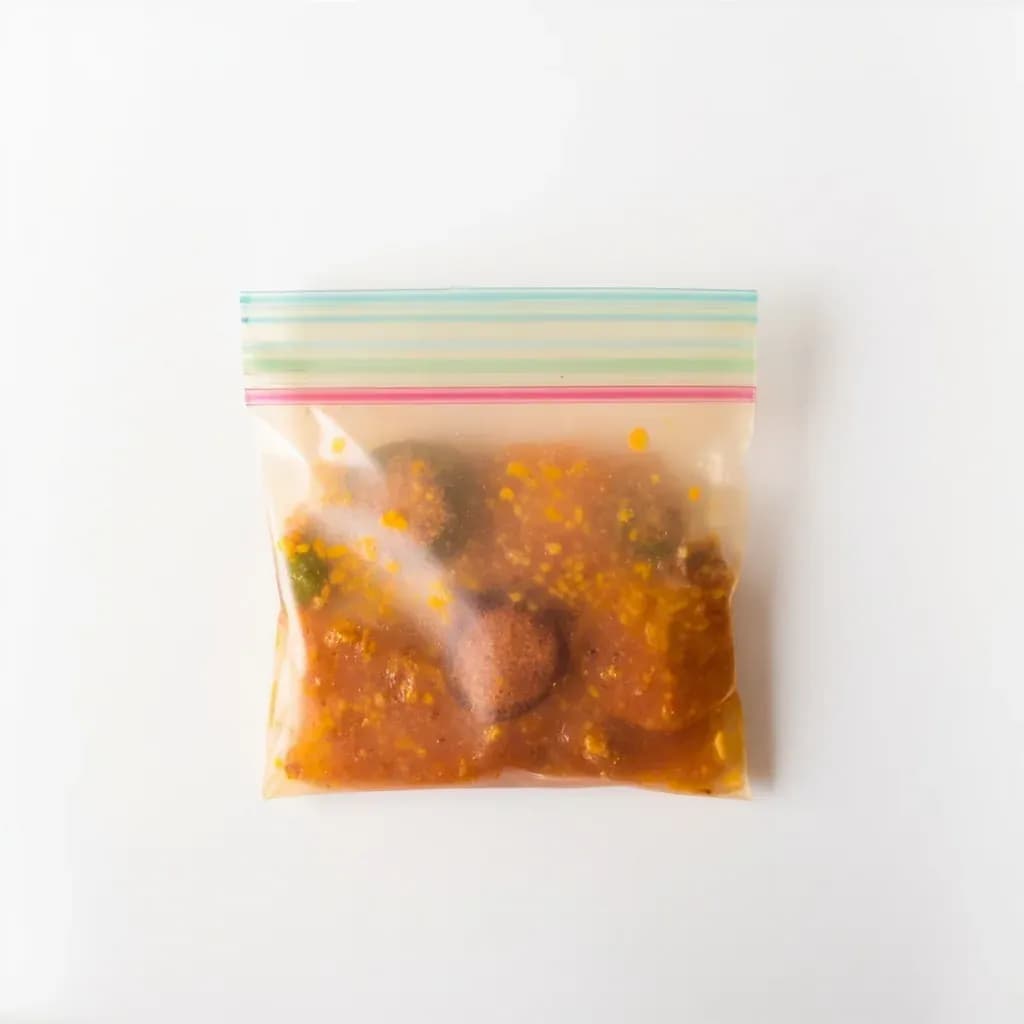
Reusable Silicone Storage Bag
An airtight, washable silicone bag for storing, freezing, and sous-vide cooking.
Reusable silicone storage bags are flexible, sealable pouches that replace disposable zip-top bags. Cooks use them to marinate, freeze portions, store leftovers, and cook sous vide because food-grade silicone tolerates both freezer and simmering-water temperatures. They wash clean and reseal for repeated use.
The reusable silicone storage bag is a washable, airtight pouch made from food-grade silicone that has largely displaced single-use polyethylene zip bags in well-equipped home kitchens. Unlike plastic, silicone tolerates a wide span of heat and cold, holds a true seal, and can travel from freezer to microwave to sous-vide bath without being repackaged. The trade-off is cost and care: a good bag runs several dollars and asks a little more of you at the sink than a disposable does, but it pays back that attention with years of service.
In practice, the bag behaves less like a sandwich sack and more like a flexible, transparent vessel. It can be laid flat to freeze a slab of stock, stood upright to hold soup in the fridge, or clipped to the lip of a pot for low-temperature cooking. The closure — a pinched lip, a molded zip track, or a slider — is the part that varies most across brands and most determines whether the bag will actually hold liquid, marinade, or a vacuum at temperature.
Silicone's real advantage over plastic is thermal range. The same bag you freeze chicken stock in overnight can be lowered into 180°F water the next morning to thaw it gently, or used directly as the cooking pouch in a circulating bath. That kind of continuity is what makes the bag feel less like a storage container and more like an extra pot you happen to be able to fold up and put in a drawer.
Alternatives
Types & varieties
A molded lip that folds and pinches to create an airtight closure; the most common style and the easiest to clean because there are no tracks to trap food.
Single-piece bag with a traditional zip track and a gusseted base; stands upright for filling liquids and feels familiar to anyone who has used a disposable freezer bag.
Plastic-slider zip closure; familiar feel, but reintroduces a non-silicone part that can fatigue and is the part most likely to fail first.
No reinforced base; designed to freeze flat into stackable slabs for efficient freezer storage and fast thawing.
Wide gusseted or molded base that lets the bag sit upright on the shelf; ideal for soups, grains, and pantry storage.
A matte corner that can be labeled with a dry-erase or washable marker, eliminating the need for tape.
Open silicone vessel for mixing, marinating, or covering bowls; not always airtight and used more like a flexible mixing bowl.
Choosing a closure that fits your cooking
The closure is the single biggest variable between brands, and the one that most affects how the bag performs in real use. Pinch-seal bags are forgiving — you can hear and feel the seal engage, and there is no track for grease or marinades to lodge in. They wash quickly and rarely leak unless overfilled. Molded zip-top bags feel more like a traditional freezer bag and seal with a satisfying click, but the track can trap oils and small food particles if not cleaned with a bottle brush. Slider-lock bags are the easiest to open one-handed but bring a plastic part back into a silicone system, and that slider is typically the first thing to break.
- Pinch-seal is best for liquids, marinades, and sous-vide where seal integrity matters most.
- Molded zip-top is best for everyday refrigerator and lunchbox use where familiarity matters.
- Slider-lock is best for one-handed operation but expect to replace the bag when the slider cracks.
- Flat bags freeze into uniform slabs that thaw quickly and stack flush; stand-up bags earn their keep for soups and grains that you ladle out of the fridge.
Sous-vide and water-bath use
Silicone bags are among the most reliable vessels for sous-vide cooking because they conform to the food, displace air efficiently, and tolerate the full range of typical bath temperatures. The practical considerations are seal integrity and the bag's upper-temperature rating. Most platinum-cure silicone handles boiling water comfortably, but only some bags are rated for the upper end of the sous-vide range or for pressure-canner use, so check the manufacturer's spec before pushing past 200°F.
- Clip the open edge above the waterline so circulating water cannot seep into the seam.
- Lower the bag slowly into the bath at an angle to let water pressure push air out before the seal is fully closed.
- Confirm the bag's upper-temperature rating before cooking above 190°F; not every model is rated the same.
- Do not assume silicone bags are pressure-canner safe — most are not rated for the 240°F-plus temperatures of a pressure canner.
Care and longevity
A well-made silicone bag should last years, but only if it is cleaned and dried with a little attention. The failure modes are predictable: trapped moisture in a closure channel causes odor and mildew; sharp utensils puncture the wall; and strongly pigmented or aromatic foods leave a stain that is cosmetic but persistent. A short routine after each use keeps the bag working and odor-free.
- Turn the bag inside out after washing so the closure and corners can air-dry fully.
- Rub a paste of baking soda and water on stains from turmeric, tomato, curry, or beet to lift discoloration.
- Soak in equal parts white vinegar and warm water to neutralize lingering odors, then rinse well.
- Replace any bag that turns cloudy, sticky, or tacky to the touch — degraded silicone can harbor bacteria and may no longer hold a reliable seal.
Common uses
Tips & pitfalls
- Fill only about two-thirds to three-quarters full so the seal closes cleanly without forcing air out — overfilling is the most common cause of leaks.
- When freezing liquids, lay the bag flat on a sheet pan until solid, then stand upright or stack; this gives a uniform thickness for fast thawing.
- Always open or vent the bag before microwaving — trapped steam can balloon or burst the seam, and a sealed bag in the microwave is a genuine hazard.
- Turn the bag inside out and air-dry after washing so moisture cannot sit in the closure channel, where it causes mildew and odor over time.
- Do not use sharp knives, forks, or metal utensils inside the bag; the silicone will puncture, and a pinhole leak in a sous-vide bath means contaminated food.
- For sous-vide, clip the open edge above the waterline to prevent water infiltration, and confirm the bag's upper-temperature rating before use.
- Strongly pigmented or aromatic foods (turmeric, tomato, curry, garlic, beet) can stain or temporarily flavor the silicone — a baking soda paste rub usually lifts the stain, though some color may remain.
- Label with painter's tape and a Sharpie rather than adhesive labels, which leave a sticky residue that is hard to remove from silicone.
- For dry-goods pantry storage, slip a small desiccant or oxygen absorber inside to keep grains and nuts crisp over time.
Good to know
- Material
- Platinum-cure food-grade silicone (silica-based polymer)
- Temperature range
- Typically -40°F to 400°F (-40°C to 204°C), model-dependent
- Typical sizes
- Snack (~4 oz), Sandwich (~8 oz), Pint (~16 oz), Quart (~32 oz), Half-Gallon, Gallon
- Closure styles
- Pinch-and-seal, molded zip-top, or slider
- Dishwasher safe
- Yes, generally top-rack; also hand-washable
- Microwave safe
- Yes, with the bag vented or open to release steam
- Freezer-to-sous-vide capable
- Yes, water-bath safe within the rated temperature
- Free of
- BPA, plastic, latex, and lead (reputable brands)
- Average lifespan
- Roughly 3,000+ uses claimed by major brands
Also called
Reusable Storage Bags · Reusable Silicone Bag · Stasher Bag
Related

Freezer Bags
Thick, sealable bags built to fight freezer burn

Storage Bags
Resealable bags for fridge storage and marinating

Storage Container
Lidded container for leftovers, prep, and meal kits

Glass Container
Oven-to-fridge glass that won't stain or hold odors

Plastic Container
Lightweight, stackable storage for everyday leftovers

Vacuum Sealer Bags
Airtight bags for long freezing and sous-vide

Reusable Bags
Washable silicone bags that replace single-use plastic

Mason Jar
Sealed glass jar for preserves, pickles, and storage