Heat & Safety
Cleaning Gloves
Waterproof rubber gloves that protect hands during dishwashing and kitchen cleaning.
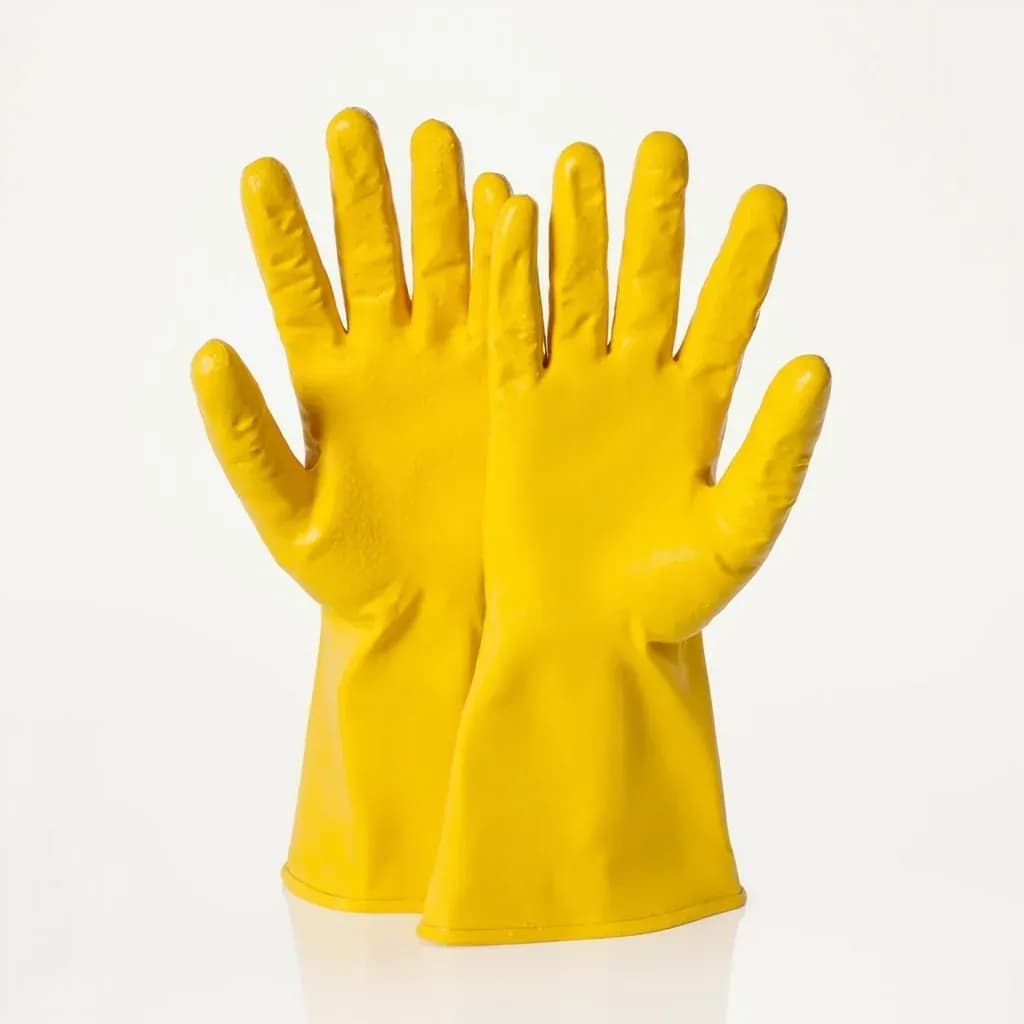
Cleaning gloves are reusable rubber or latex gloves worn for washing up, scrubbing, and handling hot water or harsh detergents. They keep hands dry and shield skin from soaps, sanitizers, and grease while protecting nails from softening. In commercial kitchens they are often color-coded so cleaning gloves are kept separate from food-prep tasks.
These waterproof gloves — the unsung workhorse of the kitchen sink — are a thin shell of natural or synthetic rubber that stands between your skin and a working day's worth of hot water, grease, detergents, and raw juices. The right pair lets you plunge your hands into dishwater that would otherwise scald, scrub oven racks with caustic cleaner, or break down a chicken without flinching; the wrong pair — perished, punctured, or made of the wrong polymer for the job — fails quietly and defeats the purpose.
Modern cleaning gloves are a small piece of polymer engineering: a few hundred micrometres of elastic wall with a textured palm for grip, a cuff long enough to keep splash from running up the arm, and (in better models) a soft inner lining that absorbs sweat. They behave very differently depending on whether they are made of natural latex, nitrile, vinyl, or neoprene, and understanding that difference is the key to choosing a pair that will actually last and protect rather than just feel rubbery for a week.
Originally a hospital tool — William Halsted commissioned the first surgical gloves at Johns Hopkins around 1889–90 — the household version became a kitchen fixture in the mid-twentieth century, and the basic idea has not changed: a sealed barrier on the hand. What has changed is the chemist's ability to tune the polymer for heat, puncture, allergy, and chemical resistance, which is why a well-stocked kitchen now keeps more than one pair.
Alternatives
Types & varieties
Most elastic and tactile of the four; degraded by oils and petroleum-based products; carries the highest allergy risk
Synthetic; highly puncture- and chemical-resistant; contains no natural latex proteins; the go-to choice for latex-sensitive cooks and for handling raw meat
The cheapest option; loose fit and lower chemical and heat resistance; best for short, light kitchen tasks only
Strong resistance to acids, bleaches, and harsh detergents; more expensive; often sold as heavy-duty cleaning gloves
Cotton or rayon flock interior absorbs sweat and slides on easily; the classic dishwashing-glove construction
Inner cotton or knit layer for comfort during long wear; favoured in commercial dishwashing stations
Cuff extends 12–15 in up the forearm for washing deep stockpots, scrubbing oven interiors, or working at a deep utility sink
Embossed palm and fingers improve grip on wet glassware, slippery cookware, and oily stovetops
Sold in yellow, pink, blue, green, and red so commercial kitchens can keep raw-meat, produce, and cleaning zones physically separate
Choosing the right material
The polymer on your hand matters more than the brand on the box. A glove that is perfect for one kitchen job can be the wrong tool for the next, and the failure is rarely dramatic — it shows up as a perished cuff, a swollen hand, or a pair that mysteriously leaks halfway through the dish pile.
- Latex is the benchmark for feel and elasticity, and handles hot dishwater up to ~60 °C, but it breaks down on contact with vegetable oils, mineral oil, and petroleum-jelly hand creams — the cuff turns gummy in weeks.
- Nitrile is the modern default in serious kitchens: puncture-resistant, latex-allergy-safe, tolerant of detergents and animal fats, and stable in hot water. Pick this for raw-meat handling and all-purpose dishwashing unless you have a specific reason not to.
- Vinyl is fine for a quick wipe-down or handing out at a dinner party, but it softens in hot dishwater and can leach plasticisers above ~50 °C — keep it out of the sink and away from the dishwasher load.
- Neoprene earns its premium price when the job involves oven cleaner, lye, descalers, or strong bleach; its chemical resistance outlasts the others in those conditions.
- If you have a known latex allergy, choose nitrile or vinyl, and if you must use latex look for low-protein, powder-free, accelerator-free styles to reduce both Type I and Type IV reactions.
Common uses
Tips & pitfalls
- Switch colours between raw protein, produce, and cleaning tasks so that a glance at the glove tells you which zone you are working in — a cheap, reliable way to enforce no-cross-contamination.
- Air-dry gloves inside out after each use; a damp, closed lining is where mildew and the dreaded 'dish-glove smell' actually live.
- Replace gloves at the first sign of tackiness, cracking, swelling, or small holes — perished rubber is no longer waterproof, and a leak you cannot see defeats the point.
- Never use petroleum jelly, mineral oil, or oil-based hand creams under a latex glove; they break the rubber down from the inside and the cuff turns to paste within weeks.
- Keep at least two pairs in rotation: one for dishwashing detergent, another for raw meat and fish. The chemistry is different, the wear pattern is different, and you do not want yesterday's chicken juice on the sponge you are using to clean the salad bowl.
- Do not reach for vinyl when the dishwater is steaming — it softens, loses shape, and can leach plasticisers. Save vinyl for cool, light, short jobs and use nitrile or latex for the hot sink.
- For long sessions, slip a pair of thin cotton liners inside the gloves to absorb sweat, reduce irritation, and make removal at the end much easier.
- Store flat or hung by the cuff; folded gloves crease, crack at the fold, and tend to leak there on the second use.
- Run cold water over the cuff before plunging into a deep sink — the wet seal keeps dishwater from running down your arm and soaking your sleeve.
- When washing crystal or wine glasses, pick a glove with an embossed palm; smooth-finish gloves let stemware slip straight out of your hand.
Good to know
- Primary materials
- Natural rubber latex, nitrile (NBR), polyvinyl chloride (PVC/vinyl), or neoprene
- Wall thickness
- Household reusable gloves typically 11–18 mil (0.28–0.46 mm); heavy-duty styles 20–30 mil
- Cuff length
- 9–12 in (23–30 cm) standard household; long-cuff and gauntlet styles 12–15+ in (30–38+ cm) for deep-sink and oven work
- Temperature tolerance
- Latex and nitrile reusable household gloves rated for hot water up to ~50–60 °C (120–140 °F); vinyl softens and may leach plasticisers above ~50 °C
- Allergens of concern
- Natural latex proteins (Type I hypersensitivity) and accelerator chemicals such as thiurams, carbamates, and MBT (Type IV)
- Service life
- Reusable household gloves 3–6 months with regular use; discard once cracked, perished, or holed
- Storage
- Cool, dry, out of direct sunlight; keep away from ozone sources and petroleum products to slow rubber degradation
Also called
Rubber Gloves · Washing-Up Gloves · Dishwashing Gloves
Related

Paper Towels
Disposable sheets for spills, drying, and patting dry

Kitchen Towels
Reusable cloths for drying, gripping, and wiping

Oven Mitts
Heatproof gloves to handle hot pans and trays safely

Disposable Gloves
Single-use gloves for safe, mess-free handling

Cleaning Cloths
Reusable cloths for wiping counters and spills

Tortilla Warmer
Insulated holder that keeps tortillas warm and soft

Trivet
Heatproof stand that shields surfaces from hot pots

Ice Bath Setup
Bowl of ice water that halts cooking and sets color