Storage & Containers
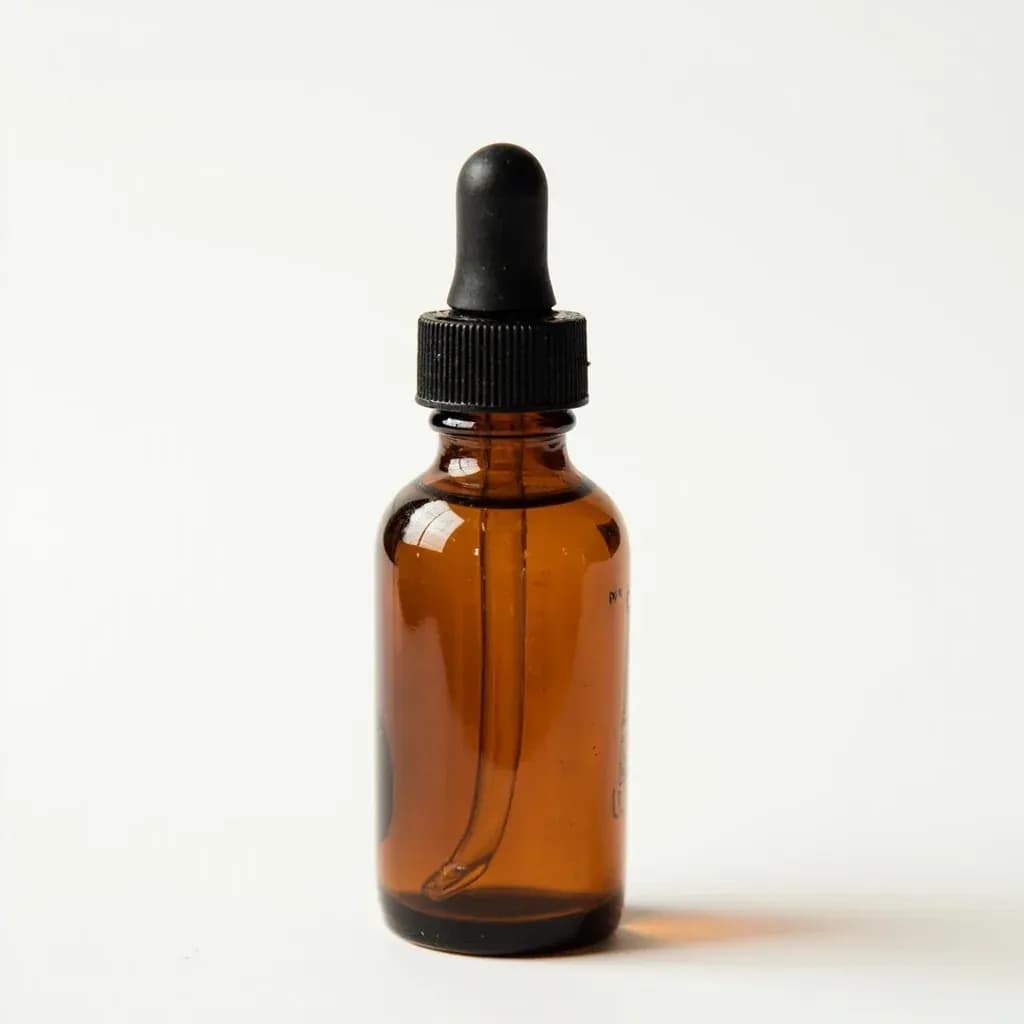
Amber Sample Bottle
Small light-blocking glass bottle for storing oils, tinctures, extracts, and samples.
An amber sample bottle is a small glass bottle whose tinted body blocks light to protect contents from degradation. Cooks and producers use them to store and share essential oils, extracts, bitters, vinegars, and tasting samples that fade or oxidize in clear glass. They usually take a dropper or screw cap, come in milliliter sizes, and the amber tint specifically guards light-sensitive aromatics.
The amber sample bottle is one of the most useful small-wares in a serious kitchen, prized not for its size but for the light-filtering properties of its glass. Amber-tinted soda-lime glass absorbs UV and most blue-light wavelengths (below roughly 450 nm), the spectrum that drives photodegradation of vanillin in vanilla, terpenes in citrus and mint essential oils, and many of the volatile aromatics that give extracts and tinctures their character. A clear bottle, even stored in a cupboard, cannot match this protection because ambient light still strikes the contents every time the door opens. For any liquid where flavor, aroma, or color slowly fades on the shelf, the amber bottle is a quiet upgrade.
The classic form is the Boston Round: a cylindrical body with a rounded shoulder tapering to a narrow neck that accepts a standardized screw thread. That shape exists because apothecaries, then laboratories, settled on it generations ago, and the supply chain followed. A narrow neck minimizes air exchange and splash, the rounded shoulder sheds residue cleanly during washing, and the standardized thread (most commonly 20-400, 22-400, or 24-400) accepts a family of interchangeable caps: phenolic screw caps, polycone-lined caps, glass droppers, tamper-evident rings, and corks. Glass is non-reactive and does not absorb odors or flavors, so a well-cleaned bottle can be reused indefinitely.
The single most common mistake is assuming any small brown bottle is food-safe. Many amber bottles sold through laboratory and craft-supply channels are certified only for non-food contact, and their cap liners may be rubber or pulp compositions not intended for ingestion. For culinary use, source bottles and caps sold specifically for extracts, vanilla, bitters, or edible essential oils, and confirm the liner is food-grade polycone or PTFE.
Alternatives
Types & varieties
The classic rounded-shoulder amber bottle with narrow neck; the default 'sample bottle' form for storage and gifting.
Boston Round fitted with a glass pipette and rubber bulb; ideal for measured dispensing of tinctures and extracts.
Fixed glass pipette sealed by a tamper-evident ring; common for high-value extracts and essential oils.
Black phenolic screw cap with a polyethylene cone liner; the standard for laboratory and home storage of free-pouring liquids.
Tall, slender amber bottle with a small integrated pour spout; the classic bitters bottle used behind the bar.
Smaller amber vials with cork stoppers; good for spice blends, infused salts, and decorative pantry storage.
Fitted with a fine-mist sprayer; used for vanilla mist, bitters spritzes, and light cooking sprays.
Choosing the Right Cap
The cap is half the system, and the wrong one ruins an otherwise good bottle. Match the cap to the viscosity and dose of the contents.
- Phenolic with cone liner — the workhorse for any free-pouring liquid: vanilla, infused oils, tinctures. Reliable, inexpensive, and reseals well.
- Polycone-lined cap — preferred for anything acidic (citrus tinctures, vinegar-based shrubs) because the molded polyethylene cone creates a tighter seal than a paper or pulp liner.
- Glass dropper — for potent extracts, essential oils, and bitters where a measured drop is the standard dose. Not suitable for viscous liquids like honey infusions, which clog the pipette.
- Tamper-evident dropper — choose this for gifting or selling small-batch extracts; the breakaway ring shows the bottle has not been opened.
- Cork — best for dry or semi-dry contents (infused salts, spice blends) or for a decorative pantry aesthetic. Corks do not seal as tightly as screw caps and can dry out.
- Fine-mist sprayer — for vanilla mist on desserts, bitters spritzes on cocktails, or light oil sprays; check that the sprayer mechanism is food-safe.
Food-Safety and Sourcing
Amber bottles are sold through pharmacy, laboratory, craft, and culinary channels, and the certification differs by source. Cooks should treat sourcing as seriously as they would a cutting board.
- Look for bottles and caps explicitly labeled food-safe, FDA-compliant, or intended for edible use.
- Laboratory amber bottles are often cheaper but may use non-food-grade rubber or pulp cap liners; the bottle itself is fine, the cap may not be.
- Aromatherapy and edible-essential-oil suppliers are usually a reliable source for both bottle and cap together.
- If a cap liner material is not specified, contact the supplier or choose a different product — 'mystery liner' is not acceptable for anything you will eat.
- Buy bottles and caps from the same supplier whenever possible; thread finishes (20-400, 22-400, 24-400) are similar but not always interchangeable across manufacturers.
Common uses
Tips & pitfalls
- Sterilize new bottles in a 275°F (135°C) oven for 20 minutes or boil them in water for 10 minutes before first use; wash phenolic caps by hand instead, since dishwashers can warp the liner.
- Label every bottle with the contents and the date — amber glass hides oxidation, evaporation, and color change that would be obvious in a clear bottle.
- Keep amber bottles out of direct sunlight even though the glass filters light; heat alone accelerates degradation of vanillin and essential-oil terpenes.
- Leave about 1/4 inch of headspace when filling oils and tinctures, and consider flushing long-term storage bottles with a puff of inert gas to minimize oxidation.
- For vanilla extract and other high-proof alcohol tinctures, a simple phenolic cap is sufficient — the alcohol is the preservative and the cap just needs to keep evaporation in check.
- Do not use dropper bottles for viscous infusions (honey-based, thick syrups, or oil-heavy blends); the pipette will clog and frustrate every use.
- Avoid the dishwasher's heated dry cycle for any bottle with a phenolic or polycone cap; the sustained heat can deform the liner and compromise the seal.
- Buy caps and bottles from the same supplier to guarantee thread compatibility — a 22-400 cap from one maker will sometimes sit loose on a 22-400 bottle from another.
Good to know
- Material
- Amber-tinted soda-lime glass; food-grade versions are typically Type III or Type II
- Color purpose
- Filters UV and blue light below ~450 nm, the wavelengths that degrade vanillin, terpenes, and other light-sensitive flavor compounds
- Typical capacities
- 1/2 oz (15 mL), 1 oz (30 mL), 2 oz (60 mL), 4 oz (120 mL); larger sizes exist but are less common for true sample use
- Common shape
- Boston Round — rounded shoulder, cylindrical body, narrow neck; the de facto standard for small-format liquid bottles
- Neck finish
- Standard 20-400, 22-400, or 24-400 thread finishes, varying by size and supplier
- Cap options
- Phenolic screw cap with cone liner, polycone-lined cap, glass dropper, tamper-evident cap, cork, or fine-mist sprayer
- Sterilization
- Boil 10 minutes, dishwasher (top rack), or oven at 275°F (135°C) for 20 minutes
- Reusability
- Indefinitely reusable; glass is non-reactive and does not absorb odors or flavors when properly cleaned
- Leaching risk
- None — glass is non-reactive and does not leach chemicals into contents
Also called
Sample Bottle · Sample Vial · Specimen Jar · amber glass bottle · dropper bottle
Related

Freezer Bags
Thick, sealable bags built to fight freezer burn

Storage Bags
Resealable bags for fridge storage and marinating

Storage Container
Lidded container for leftovers, prep, and meal kits

Glass Container
Oven-to-fridge glass that won't stain or hold odors

Plastic Container
Lightweight, stackable storage for everyday leftovers

Vacuum Sealer Bags
Airtight bags for long freezing and sous-vide

Reusable Bags
Washable silicone bags that replace single-use plastic

Mason Jar
Sealed glass jar for preserves, pickles, and storage