Heat & Safety
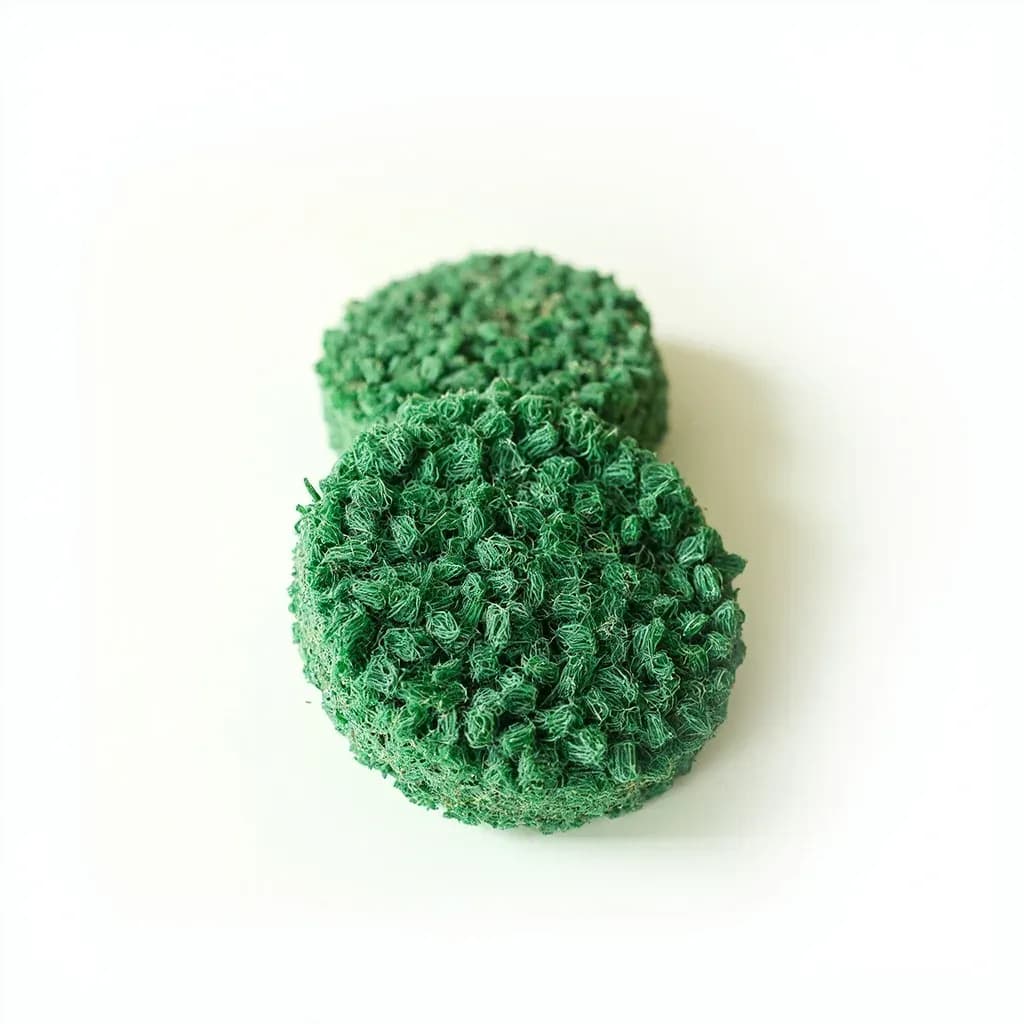
Scouring Pad
Abrasive pad for scrubbing stuck-on food and grease off pots, pans, and grills.
A scouring pad is an abrasive cleaning pad, often the familiar green nylon, used to scrub stuck-on food, grease, and burnt residue off pots, pans, and grill grates. Cooks pair it with dish soap and water for the hard scrubbing a sponge can't manage. Abrasive pads can scratch nonstick coatings and polished surfaces, so they're reserved for stainless, cast iron, and ovenware.
A scouring pad is an abrasive tool used for mechanical cleaning—scrubbing, polishing, and stripping cookware and kitchen surfaces through controlled abrasion rather than chemicals. The material hardness of the pad relative to the surface being cleaned determines whether it restores or damages the cookware. This makes the scouring pad a tool that rewards precision: the same pad that brings a stainless steel pan back to a mirror finish can destroy seasoned cast iron or melt through a non-stick coating in seconds. Understanding the Mohs hardness of both the pad and your cookware is the practical knowledge that separates a cook who maintains their equipment for decades from one who replaces it prematurely. Beyond pot and pan cleaning, scouring pads serve in stripping rust, removing carbonized buildup, and preparing metal surfaces for reseasoning or resealing—tasks that require a deliberate choice of material and grade.
Alternatives
Types & varieties
Most common; grades 0–4 for heavy-duty cookware, 2/0–4/0 for finishing; will not rust but can leave ferrous particles on chrome or nickel surfaces
Softer than steel; won't scratch chrome, nickel, or glass; produces copper oxides that actively inhibit rust on steel surfaces; ideal for seasoned cast iron and aluminum
Similar hardness to copper; preferred in food service for stainless steel polishing; copper compounds in the residue resist oxidation of the cleaned surface
Synthetic mesh with embedded abrasive particles; marketed as 'non-scratch' but varies widely in aggressiveness; some formulations include antimicrobial additives
Nylon pad with interwoven copper strands; combines scouring power with the antimicrobial properties of copper; copper content may provide additional sanitization benefit in food-contact applications
Medium-abrasive nylon; the standard choice for general kitchen cleaning; safe on most surfaces except non-stick coatings
Choosing the Right Pad for Your Cookware
The single most important decision in using a scouring pad is matching the pad's hardness to the cookware surface. Stainless steel (Mohs ~6.5) is hard enough to scratch chrome, damage aluminum, and obliterate non-stick coatings—but it is exactly right for carbon steel and stainless steel pans. Copper and bronze (Mohs ~3) are soft enough for chrome, nickel, glass, and aluminum, and they clean seasoned cast iron without stripping the polymerized oil layer that makes cast iron non-stick. Never assume 'non-scratch' on a nylon pad label means it is safe for every surface: the abrasive particle loading varies by manufacturer, and some heavy-duty green pads will scratch a ceramic non-stick pan irreparably. Before you scrub, identify the material of what you are cleaning and choose accordingly.
- Stainless steel cookware: stainless steel wool (coarse) or green nylon pad
- Seasoned cast iron: copper wool only
- Aluminum and chrome: copper wool or fine nylon
- Non-stick (PTFE or ceramic): no scouring pads—use only soft sponge or non-abrasive cloth
- Carbon steel: stainless steel wool (coarse to medium) or green nylon pad
Cleaning Cast Iron Without Destroying the Seasoning
Cast iron care is where cooks most often make irreversible mistakes with scouring pads. The seasoning on a cast iron pan is a thin layer of polymerized cooking oil—a plastic-like surface that provides natural non-stick properties. Steel wool strips this layer away in seconds, leaving raw iron exposed, which immediately begins to rust. If you must remove heavy rust or carbonized buildup from bare cast iron, use stainless steel wool—but expect to re-season the entire surface afterward. For routine cleaning of seasoned cast iron, run warm water, use a stiff nylon brush or chain mail scrubber, and only reach for copper wool when a more aggressive clean is genuinely needed. After any aggressive cleaning, dry the pan immediately, apply a thin coat of neutral oil, and heat it until it smokes to re-season.
- Never use steel wool on seasoned cast iron—use copper wool or a stiff nylon brush instead
- After stripping seasoning with steel wool, you must re-season the entire pan before use
- Dry cast iron immediately after washing to prevent flash rusting
- For stubborn food: boil water in the pan, then scrub while hot with a nylon brush
Common uses
Tips & pitfalls
- Match pad grade to the job: coarse grades (0–4) for removing heavy carbon, medium (2/0) for general scrubbing, fine grades (3/0–4/0) for polishing only
- Rinse all steel, copper, and bronze residues thoroughly—trapped metal fragments will rust and cause pitting on the cleaned surface
- Wrap steel wool around a fork's tines or use a fork as a handle for better grip when scrubbing stuck-on food in narrow spaces
- Store steel wool in a sealed plastic bag with a dryer sheet to prevent oxidation and extend shelf life between uses
- For aluminum, use nylon or copper only—steel wool leaves gray iron deposits that cause permanent dark staining and accelerated oxidation
- Replace pads when they become clogged with food residue; a clogged pad loses abrasion effectiveness and becomes a bacterial harborage
- Wet the pad before scrubbing to reduce inhalation of airborne metal or synthetic particles
- After using copper or bronze wool on stainless steel, wipe the surface with a damp cloth and mild dish soap, then dry thoroughly to prevent oxidation
- Never use steel wool on cast iron seasoning—it strips the polymerized oil layer and initiates immediate flash rusting
- Avoid all abrasive pads on non-stick coatings—they destroy PTFE or ceramic layers within a single use
Good to know
- Common Materials
- Stainless steel wool, copper, bronze, nylon mesh, or synthetic abrasives
- Steel Wool Grades
- 4/0 (extra fine), 3/0 (fine), 2/0 (medium), 0 (coarse), 1–4 (progressively coarser); copper and bronze use similar grading
- Nylon Pad Grades
- Non-scratch (soft), medium abrasive, heavy-duty; color-coded by manufacturer
- Typical Dimensions
- Steel wool: 2–3 in wide x 25–50 ft rolls; pads: 3×4 in to 4×5.5 in sheets
- Primary Function
- Mechanical abrasion to remove baked-on food, carbon, rust, and scale from cookware
- Storage
- Keep dry; steel wool in airtight container to prevent moisture-induced oxidation
- Reusable
- Steel wool: single-use recommended; nylon pads: rinse and reuse until disintegrated
- Hardness Reference
- Stainless steel Mohs ~6.5; copper and bronze Mohs ~3; nylon varies by abrasive loading
Also called
green-scourer · scourer · scouring-pads
Related

Paper Towels
Disposable sheets for spills, drying, and patting dry

Kitchen Towels
Reusable cloths for drying, gripping, and wiping

Oven Mitts
Heatproof gloves to handle hot pans and trays safely

Disposable Gloves
Single-use gloves for safe, mess-free handling

Cleaning Cloths
Reusable cloths for wiping counters and spills

Tortilla Warmer
Insulated holder that keeps tortillas warm and soft

Trivet
Heatproof stand that shields surfaces from hot pots

Ice Bath Setup
Bowl of ice water that halts cooking and sets color