Heat & Safety
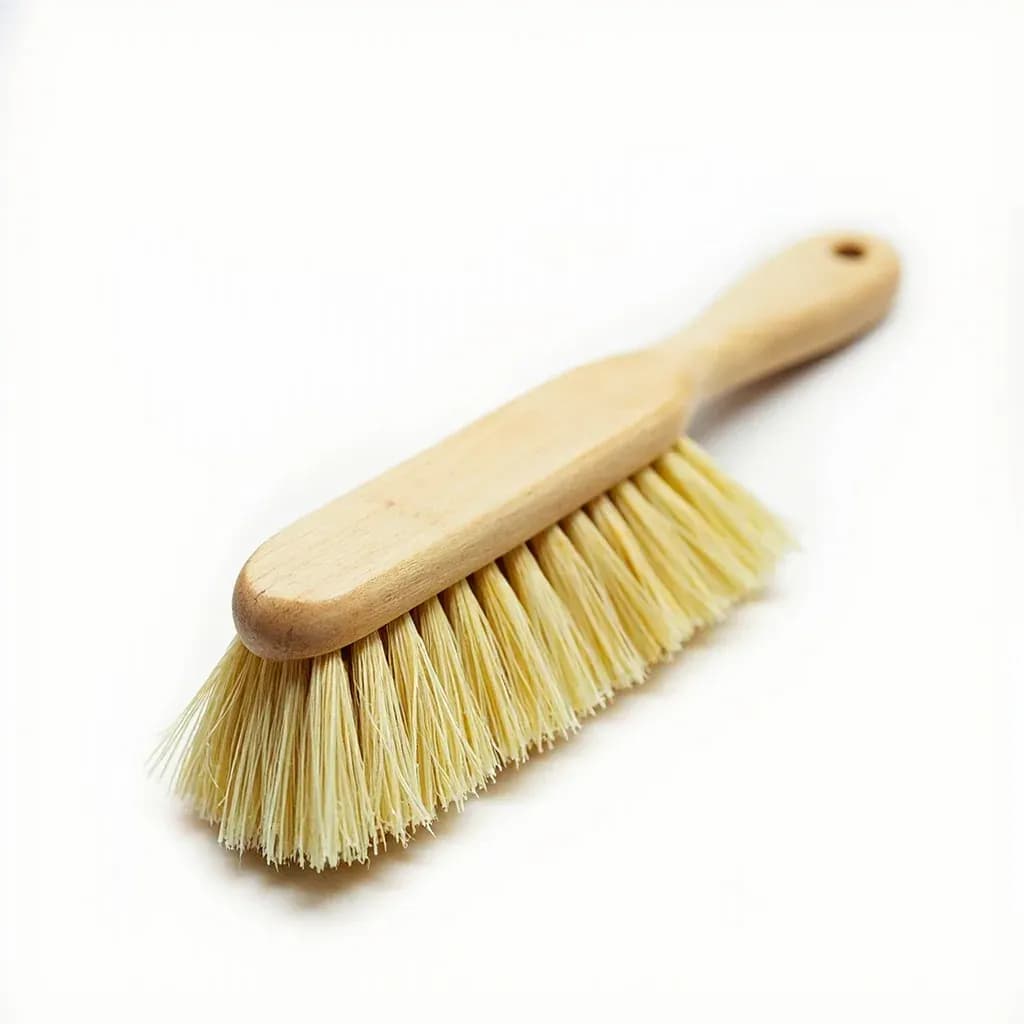
Banneton Scrub Brush
Stiff dry brush for sweeping flour and dough out of bannetons and brushing equipment clean.
A scrub brush here is a stiff-bristled dry brush used to clean bread proofing baskets (bannetons) and other equipment. After a loaf is turned out, the brush whisks dried flour and dough crumbs from the basket's grooves without water, which keeps the rattan from staying damp and molding. Stiffer scrub pads and brushes are also used for scouring pans and grates.
A banneton scrub brush is a stiff, short-bristled brush built for one job: removing flour and dried dough from woven proofing baskets without introducing a drop of water. The cane splines that make up a rattan banneton are hygroscopic and will grow black mold from the inside out if washed, so the entire maintenance routine for these baskets is built around dry mechanical cleaning, and this brush is the tool that does it.
The bristles are firm enough to lift compacted flour out of the spiral grooves of a round brotform, yet fine enough not to shred the woven cane. In practice it behaves less like a scrubber and more like a stiff whisk for dry residue: short, sharp strokes in the direction of the weave, followed by a sun-dry or air-dry. Every serious bread baker who uses cane bannetons eventually owns one, and it quietly defines how long those baskets last.
Alternatives
Types & varieties
Most common; natural agave fiber with firm but slightly flexible stiffness, gentle on cane splines
Stiffer, more abrasive; good for heavy dough buildup but can rough up older bannetons
Vegan option; consistent stiffness, doesn't absorb moisture, lasts longer in damp environments
Standing-height handle for tall oval (batard) bannetons on a pro workbench
Short stubby block held in one hand; preferred by sourdough home bakers for control
General boot or vegetable brush repurposed for bannetons; works in a pinch if a dedicated brush is unavailable
Why dry cleaning only
Cane bannetons look like baskets but behave like sponges. The rattan splines are laced so tightly that they hold shape, yet each strand is still a piece of plant material with open pores along its length. Soak a banneton and those pores fill with water; the water has nowhere to go because the weave traps it, and mold colonizes the damp interior within a day or two. Bleaching or scrubbing with a wet cloth only pushes the problem deeper. Dry brushing is the only routine that keeps the cane clean without ever raising its moisture content above ambient. The brush is therefore not a cleaning accessory — it is the cleaning method.
The maintenance routine
A well-kept banneton, brushed after every bake, will outlast several generations of loaves. The sequence below is the working rhythm in most sourdough bakeries:
- Tap the banneton upside down over a bin or peel to dislodge loose flour before any brushing begins.
- Brush the inside in the direction of the cane weave, using short, light strokes; let bristle stiffness do the work.
- Reach the deep spiral of a round brotform with a small dry toothbrush or stencil brush, where the larger head cannot fit.
- Set the basket in direct sunlight or a warm, breezy spot for 20–30 minutes to flash off any residual moisture from the dough.
- Store the banneton uncovered or in a breathable linen bag — never sealed in plastic while even slightly damp.
Choosing natural vs. synthetic
Tampico and palmyra are the traditional choices because natural plant fibers are firm at the tip, slightly soft at the base, and don't scratch cane. Synthetic bristles are stiffer and more uniform, which is useful in a humid bakery where a natural brush can stay damp and develop its own must. For most home bakers, a tampico brush is the right starting point; for commercial bakers in damp climates, a stiff nylon brush survives the abuse of constant use without softening.
Common uses
Tips & pitfalls
- Always brush dry — never rinse a cane banneton with water, as the woven splines will absorb moisture and grow mold from the inside.
- Brush in the direction of the cane weave rather than against it, which can loosen the splines and shorten the basket's life.
- After brushing, set the banneton in direct sunlight for 20–30 minutes to fully dry and inhibit any mold spores.
- Use a soft, dry toothbrush or stencil brush to reach the deep center spiral of a round banneton where the larger brush can't reach.
- Tap the banneton upside down over a bin before brushing so loose flour falls out first and you need fewer strokes.
- Don't press hard enough to bend the bristles — let the stiffness do the work, or you'll wear the brush out in a season.
- Oil the wooden handle occasionally with food-grade mineral oil so it doesn't crack and shed splinters into your dough.
- If a banneton smells sour or musty, brush thoroughly, sun-dry, and store uncovered; persistent odor means the cane has likely absorbed moisture and the basket should be retired.
- Keep a second brush reserved for bench sweeping so your banneton brush stays dedicated to baskets and isn't contaminated with debris.
- Replace the brush as soon as bristles stay bent or splay outward; a soft brush just smears flour around rather than lifting it out of the weave.
Good to know
- Primary use
- Dry-brushing flour and dried dough residue from cane (rattan) bannetons and proofing baskets
- Typical bristle material
- Tampico (agave) or palmyra (palm) natural fiber; stiff nylon as a synthetic alternative
- Handle material
- Beechwood or other dense hardwood, often finished with food-safe oil
- Brush head shape
- Rectangular block, typically 4–6 in / 10–15 cm long, with a flat or slightly curved profile
- Bristle length
- Roughly 1–1.5 in / 25–35 mm, stiff and upright
- Cleaning method
- Used dry — water is avoided because cane absorbs moisture and can mold
- Replacement cue
- Swap when bristles stay bent, splay outward, or lose stiffness
- Storage
- Hang or stand bristle-up so it dries fully between uses
Also called
Scrub Pad · banneton brush · proofing basket brush · dry pastry brush
Related

Paper Towels
Disposable sheets for spills, drying, and patting dry

Kitchen Towels
Reusable cloths for drying, gripping, and wiping

Oven Mitts
Heatproof gloves to handle hot pans and trays safely

Disposable Gloves
Single-use gloves for safe, mess-free handling

Cleaning Cloths
Reusable cloths for wiping counters and spills

Tortilla Warmer
Insulated holder that keeps tortillas warm and soft

Trivet
Heatproof stand that shields surfaces from hot pots

Ice Bath Setup
Bowl of ice water that halts cooking and sets color