Wraps & Liners
Tortilla Cloth (Servilleta)
Woven cotton cloth that lines a basket or warmer to keep tortillas warm and pliable.
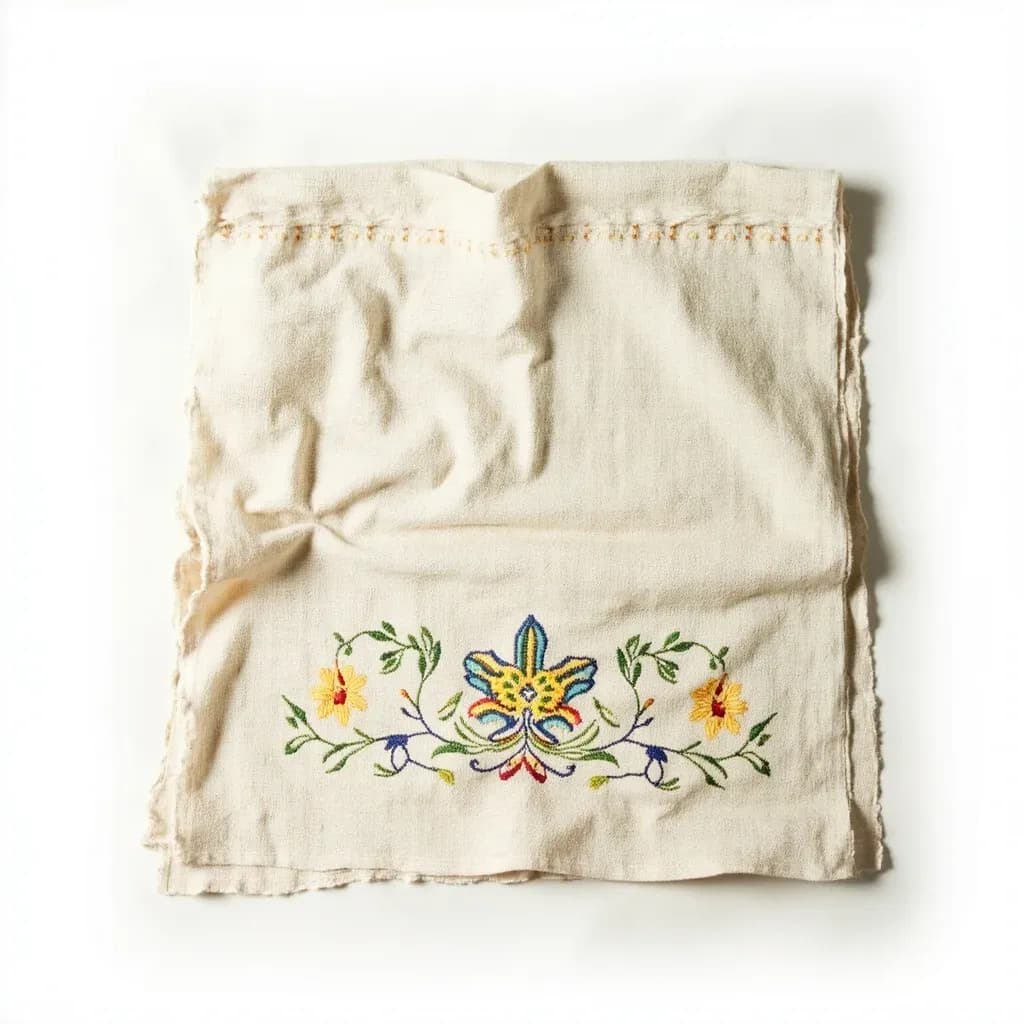
A servilleta is a woven cotton cloth, often embroidered, used to wrap a stack of warm tortillas inside a basket or tortilla warmer. The cloth traps steam and heat so the tortillas stay soft and pliable through a meal without drying out. A staple of Mexican tables, it is reusable, washable, and also lines bread baskets for the same insulating effect.
A servilleta is a square of flat-woven cotton that has quietly become one of the most useful tools in the Mexican kitchen. Its job is deceptively simple: hold just enough moisture to keep a stack of fresh tortillas flexible for 20 to 40 minutes, while breathing enough that condensed steam does not puddle and turn the masa gummy. Plain cotton does this naturally; terry cloth, microfiber, and paper towels do not, which is why the humble woven square has survived generations of kitchen modernization largely unchanged.
The cloth is most often seen lining a tortillero, the woven palm basket that sits at the center of the table during a meal, but it does equal duty off the comal, where a stack of just-pressed tortillas is wrapped and tucked into a warm spot. Traditional versions are handwoven on backstrap or treadle looms, especially in Oaxaca, and carry the characteristic red, white, and natural stripes of regional textiles. Machine-woven utility cloths are more common in everyday kitchens and markets. Either way, the function is identical, and a single cloth typically outlasts years of plastic wrap and foil in a working kitchen.
For cooks outside Mexico, a clean 100% cotton kitchen towel in a similar square cut will perform the same job, though it will lack the tight, flat weave of a true servilleta. The name itself is worth remembering: servilleta simply means napkin, a reminder that before the era of paper towels, one woven square in the kitchen had to do many jobs at once.
Alternatives
Types & varieties
Woven on traditional backstrap or treadle looms with characteristic red, white, and natural stripes. Valued as both a kitchen staple and a small piece of folk art.
Utilitarian version widely sold in Mexican markets; white or unbleached cotton, sometimes with a simple stripe. The everyday workhorse.
Most common decorative pattern; stripes run along the warp or weft and serve no functional purpose beyond aesthetics.
Bigger square (often 60–70 cm) used to wrap a full stack of tortillas or line an oversized tortillero.
The Steam-Balance Principle
A servilleta succeeds by holding a precise middle ground between wet and dry. Too dry, and the tortillas stiffen within minutes as their surface moisture evaporates. Too wet, and the steam condenses into droplets that soak back into the masa, leaving it damp, heavy, and prone to tearing when folded. Cotton's hollow fibers absorb water into the weave itself rather than letting it bead on the surface, which is why a dampened but thoroughly wrung-out cloth feels evenly moist without dripping.
The cloth also needs to be flat-woven. A terry towel holds water in loops and releases it unevenly; a paper towel releases it all at once and disintegrates; a synthetic microfiber traps heat but sheds moisture back as condensation. A flat square of cotton moderates the humidity around the tortillas gently, replenishing steam as it escapes from the stack — a quiet, continuous job that no modern substitute performs as well.
- Dampen the cloth until it feels evenly moist, then wring it out hard; it should never drip.
- Fold into quarters before lining a tortillero so multiple layers buffer against rapid heat loss.
- If tortillas stiffen in the basket, the cloth has dried out; a quick mist of water restores the balance.
Common uses
Tips & pitfalls
- Wash the cloth once or twice before first use to strip factory sizing and soften the weave — skipping this leaves a stiffness that resists steam absorption.
- Slightly dampen the cloth (wrung-out, not wet) before wrapping tortillas; the gentle, retained steam is what keeps them pliable.
- Never use fabric softener or dryer sheets; the waxy coating reduces absorbency, which is the very property you rely on.
- Air-dry flat or hung rather than machine drying, which slowly breaks down handwoven fibers and shrinks plain cotton.
- Keep at least two cloths in rotation — one in the wash, one in use — so warm tortillas are never without a wrap.
- Refresh a dry cloth with a quick water mist if tortillas begin to stiffen in the basket mid-meal.
- Avoid synthetic-blend cloths; they do not absorb steam the same way and can leave tortillas gummy or oddly slick.
- Iron while damp if you want a smooth, table-ready finish; a crisp cloth also folds more neatly into a tortillero.
Good to know
- Also known as
- Servilleta (Spanish for 'napkin'); in Mexican kitchen use it refers specifically to the tortilla-wrapping cloth
- Origin
- Mexico; handwoven versions are strongly associated with Oaxaca and other southern states
- Material
- 100% cotton, flat-woven on backstrap, treadle, or industrial looms
- Construction
- Flat-woven, usually with a plain or twill weave, finished with a simple hem or selvage
- Typical size
- Approximately 50–65 cm (20–26 in) square; some kitchen versions reach 70 cm
- Primary purpose
- Traps steam while letting tortillas breathe, keeping them warm and pliable without becoming soggy
- Heat tolerance
- Suitable for fresh tortilla heat (~60–80°C / 140–175°F); not designed for direct flame or oven use
- Care
- Machine washable; air-dry recommended; iron while damp for a smooth finish
- Lifespan
- Years with regular use; the cloth improves with washing as fibers soften
- Cost range
- Modest for machine-woven; handwoven Oaxacan versions are noticeably more expensive and often sold as artisan goods
Also called
Cotton Cloth (Servilleta) for Tortillas · Tortilla Warmer Cloth (Servilleta) · servilleta · tortilla cloth
Related

Aluminum Foil
Wraps, covers, and tents food for the oven and grill

Parchment Paper
Nonstick liner for clean, even baking and easy release

Wax Paper
Moisture-resistant sheet for wrapping and counter prep

Plastic Wrap
Clings tight to cover bowls and wrap leftovers

Silicone Baking Mat
Reusable nonstick liner that replaces parchment

Cheesecloth
Loose-woven cloth for straining stock and bundling herbs

Beeswax Food Wrap
Reusable wax wrap that molds around bowls and produce

Piping Tips
Shaped nozzles that turn frosting into stars and rosettes