Wraps & Liners
Natural Sheep Casing
Thin natural sheep intestine casing used to stuff and form small-diameter sausages like breakfast links.
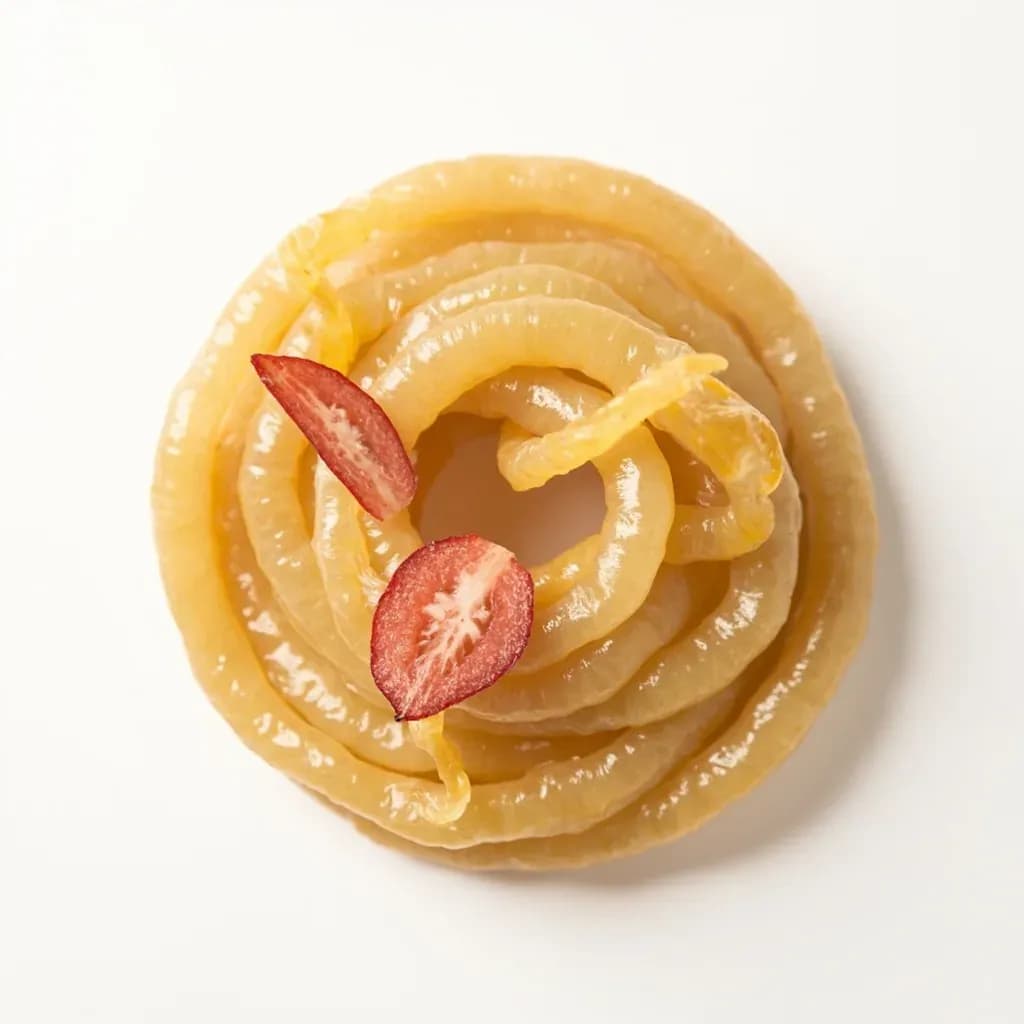
Natural sheep casing is cleaned, salted sheep intestine used as an edible skin for stuffing sausage. Its narrow diameter makes it the standard choice for thin links such as breakfast sausages, merguez, and chipolatas. It is soaked and rinsed before use, then loaded onto a stuffing horn; once cooked it gives a delicate, crisp snap that synthetic casings cannot match.
Natural sheep casing is the cleaned small intestine of sheep, salt-packed and sold as a continuous strand (a hank) or in pre-cut lengths. It is the smallest of the four major natural sausage casings — narrower even than hog casings — and is prized for the tender, audible snap it gives small-diameter sausages. Cooks reach for sheep casing whenever a link needs to be petite, with a delicate bite that doesn't overwhelm the filling.
Behaviorally, the casing is thin-walled, elastic, and translucent when soaked. It hugs the meat emulsion tightly, contracts evenly during cooking, and bites clean when cut — the signature texture of a well-made breakfast link or merguez. Because the wall is so thin, it is also the most forgiving to eat (no chewy casing to peel) and the most unforgiving to stuff: it tears readily if dry, overstuffed, or punctured by trapped air.
In the kitchen it is used both for fresh sausages bound for the pan or grill and for small smoked or poached products like cocktail wieners. Quality casing should be clean, uniformly calibrated, and free of holes or weak spots; the best work feels silky when soaked and stretches without splitting.
Alternatives
Types & varieties
Finest sheep caliber; for cocktail franks, mini frankfurters, and petite breakfast links.
Standard sheep casing; the default for fresh breakfast sausage, fresh Italian sausage, and merguez.
Mid-range; small bratwurst, small-diameter chorizo, and Cumberland-style sausages.
Widest sheep casing; thicker fresh sausages and small frankfurters where a meatier bite is wanted.
Sold in measured lengths (commonly 12 in / 30 cm) for uniform links and easier portioning.
Often co-classified with sheep and used interchangeably; slightly thinner-walled, similar caliber.
Choosing a caliber
Caliber drives both the eating experience and the yield per hank. Match the casing to the size of link you want to plate, not to the meat itself — a fatty emulsion will shrink more than a lean one, so a moderately slack fill in an 18–20 mm casing produces a tidier breakfast link than a tight fill in a 16–18 mm. For cocktail wieners and breakfast links, 16–20 mm is the sweet spot; for merguez and classic fresh Italian, 18–20 mm; for small bratwurst or chorizo that will be sliced after cooking, 20–22 mm gives a meatier presentation.
Working with the casing on the stuffer
Sheep casing is the thinnest natural casing in routine use, which means almost every failure at the stuffer is a casing problem, not a meat problem. The two non-negotiables are moisture and restraint.
- Soak 30–60 minutes in cool water, changing once or twice, until the casing feels silky and pliable.
- Flush each strand inside and out to remove salt; residual salt tastes harsh and wicks moisture from the emulsion.
- Keep a bowl of cool water at the stuffer and keep the working strand submerged between slips onto the horn.
- Slide the casing onto the horn with the thumb of your other hand controlling speed — never force it on.
- Stop and relieve stuffer pressure during any pause; a loaded casing under pressure can burst in seconds.
After stuffing: drying and cooking
Stuffed links benefit from a short uncovered rest on a rack in the refrigerator — at least an hour, ideally overnight. Drying the surface tightens the casing onto the meat, improves browning, and reduces the chance of sticking to the pan or grill. Prick visible air pockets with a sterilized pin before cooking; trapped air is the leading cause of blowouts. Cook over moderate, not aggressive, heat: a hard sear before the interior has warmed will split the casing. Finish low-and-slow if browning is happening too quickly.
Common uses
Tips & pitfalls
- Soak salt-packed casings in cool water for 30–60 minutes, changing the water once or twice, to dissolve salt and restore pliability.
- Flush each casing thoroughly inside and out; residual salt will taste harsh and pull moisture from the meat emulsion.
- Keep casings wet during stuffing — a dry casing tears the moment it touches the stuffing horn.
- Stuff gently; sheep casings are the thinnest natural casings and burst easily when overpacked.
- Relieve stuffer pressure during any pause and never reverse the plunger with a loaded casing on the horn.
- Leave 1–2 cm of empty casing at each end before twisting or tying to give the link room and reduce blowouts.
- Prick visible air pockets with a sterilized pin before cooking; trapped air is the main cause of bursting.
- Refrigerate stuffed links uncovered on a rack for at least an hour, or overnight, to dry the surface — this improves browning and snap.
- Do not twist links too tightly; the casing contracts during cooking and a hard twist can split.
- Re-salt any opened, unused casings and refrigerate in a sealed container; they keep for months.
- Do not confuse natural sheep casings with collagen or fibrous casings — only natural casings give the classic tender, audible snap.
Good to know
- Source
- Small intestine of sheep
- Material
- Cleaned natural intestine, salt-packed for preservation
- Diameter range
- Approximately 16–24 mm caliber
- Common calibers
- 16–18 mm, 18–20 mm, 20–22 mm, 22–24 mm
- Form sold
- Hanks (~30 m / 100 ft) or pre-cut lengths, packed in dry salt
- Approx. yield
- Roughly 250–500 small links per hank, depending on link length
- Storage unopened
- Salt-packed, refrigerated at 0–4 °C; multi-year shelf life
- Storage opened
- Re-salt and refrigerate in a sealed container; use within months
Also called
sheep sausage casing · lamb casing
Related

Aluminum Foil
Wraps, covers, and tents food for the oven and grill

Parchment Paper
Nonstick liner for clean, even baking and easy release

Wax Paper
Moisture-resistant sheet for wrapping and counter prep

Plastic Wrap
Clings tight to cover bowls and wrap leftovers

Silicone Baking Mat
Reusable nonstick liner that replaces parchment

Cheesecloth
Loose-woven cloth for straining stock and bundling herbs

Beeswax Food Wrap
Reusable wax wrap that molds around bowls and produce

Piping Tips
Shaped nozzles that turn frosting into stars and rosettes