Wraps & Liners
Shredded Display Paper (Greengrocer Grass)
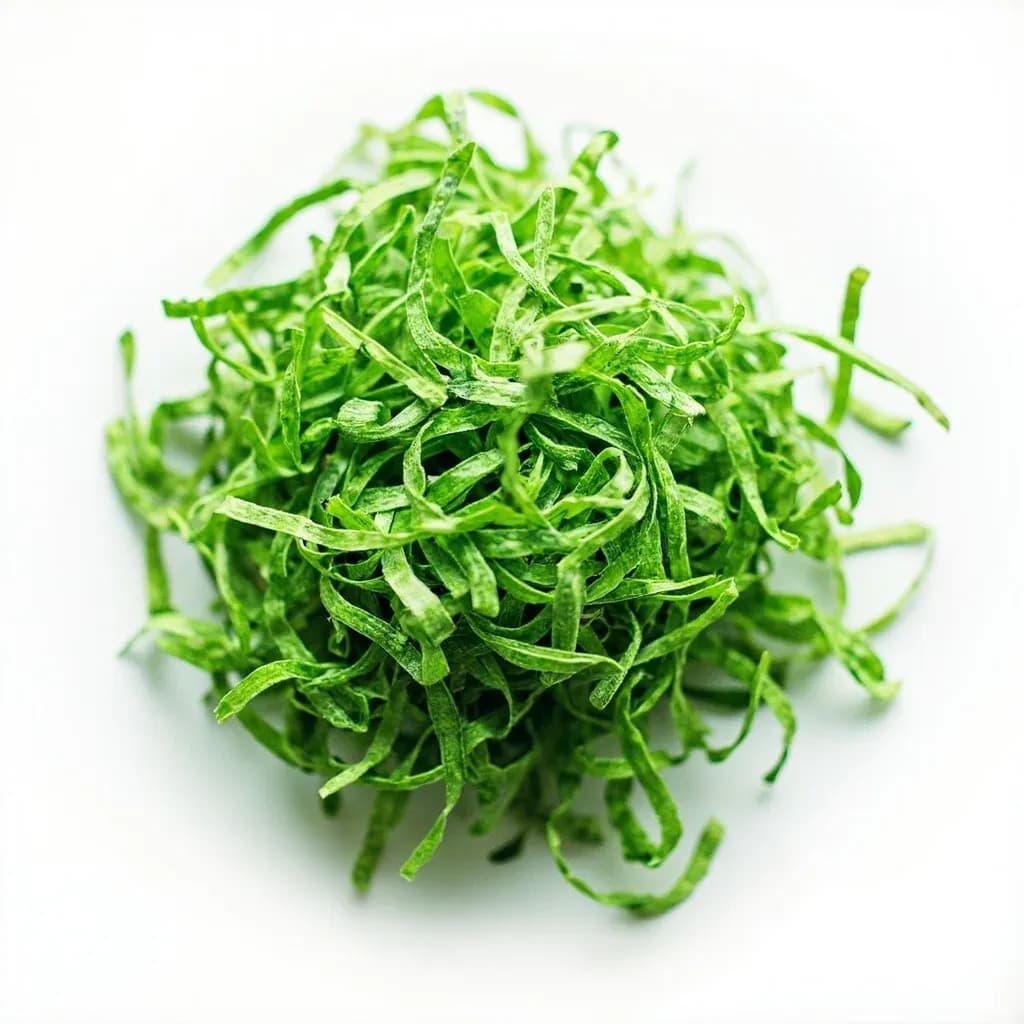
Crinkle-shredded paper used to line crates and platters and cushion produce or gifts.
Shredded display paper is finely cut crinkled paper, often green, used to dress and protect food displays. Greengrocers and delis nest it in crates and baskets to cushion fruit, vegetables, and bottles while adding a fresh, abundant look. It also lines gift hampers and gourmet boxes, filling gaps so items do not shift and bruise in transit.
Shredded display paper — greengrocer's grass, basket grass, paper excelsior — is the crinkled filler you see beneath tomatoes at the market, lining bakery trays, and cushioning chocolate eggs in a wicker basket. It is not a cooking material, but it is a working-kitchen one: how produce, cheese, and baked goods are bedded and transported directly affects how they arrive at the table, and this is one of the cheapest, cleanest, and most versatile cushioning materials available.
The paper comes as thin curled strips, typically 1–3 mm wide and 50–150 mm long, cut from kraft, tissue, or crepe stock and loosely packed for volume. Unbleached kraft is the food-friendliest grade; bleached white reads cleaner behind pastries; dyed pastels and brights carry visual punch on a window display; metallized foil versions are strictly decorative. Paper shred dominates because it is cheap, available in a wide color range, and easy to handle, but wood wool — the original 19th-century excelsior of fine curled poplar or basswood shavings — is still preferred in cheesemongers, curing rooms, and serious delicatessens for the way it absorbs rind moisture without collapsing into a soggy mat.
Treat it as a presentation tool, not a packaging afterthought. Fluffed correctly it gives a generous, forgiving bed that prevents rolling and bruising, and it photographs beautifully on platters and cheese boards. Treat it carelessly — wet produce straight on dyed shred, or a stack of baskets near a candle — and it bleeds, wicks, or ignites.
Alternatives
Types & varieties
Unbleached brown strips; the classic greengrocer look and the most food-friendly grade.
Clean, bright bed suited to bakery counters, confectionery windows, and wedding displays.
Soft pinks, mints, lemons, and baby blues for Easter baskets, baby showers, and patisserie.
Saturated reds, greens, yellows, and blues for greengrocers and fishmongers wanting color impact.
Cut with a crinkler blade so the strips hold their curl and give a loftier, fuller bed.
Thinner, softer strips from crepe or tissue paper; finer texture for delicate chocolates and petits fours.
Laminated or metallized gold, silver, or copper strands; decorative only, never in direct food contact.
Fine curled poplar or basswood shavings; absorbent and breathable; preferred by cheesemongers and curing rooms.
Paper vs. Wood Wool: When to Choose Which
The two materials look similar in a basket but behave very differently. Paper shred is cheaper, comes in colors, and is clean to handle — it is the right call for greengrocer crates, bakery trays, gift hampers, and anywhere visual impact matters. Wood wool is the right call wherever moisture is part of the picture: a wheel of Stilton sweating through its rind, a cured ham in a hamper, fresh mozzarella, a side of smoked salmon. Wood absorbs slowly and releases slowly, so the bed does not collapse into a soggy mat the way dyed paper will. For cheese counters, charcuterie boards with runny cheeses, and cured-meat hampers, default to wood wool. If the food is strongly colored or oily and you want a visual barrier, lay a sheet of baking parchment or food-grade tissue between the food and the shavings — but this defeats the moisture-buffering, so use it only when color or oil is the concern, not humidity.
- Choose kraft paper for fruit, bakery, dry goods, and gift displays.
- Choose wood wool for cheese, cured meats, smoked fish, and anything that releases moisture.
- Choose bleached or pastel paper for clean, photogenic bakery and patisserie work.
Food Safety and Direct Contact
The rule is simple: only unbleached, undyed kraft paper or untreated wood wool should sit against food without a barrier. Dyed grades use colorants that can bleed onto pale or wet items — a pink basket will leave a pink halo on a wheel of Brie and a green basket will mark a ripe fig or a white peach. Metallized and foil-laminated shreds are laminated with plastics or aluminum and are not food-contact materials at all; reserve them for the outer rim of a gift hamper where the food sits inside a box or wrapped in tissue. For wet citrus, washed salad leaves, raw fish on ice, or oily charcuterie, always lay a sheet of baking parchment or food-grade tissue between the food and the shred.
- Unbleached kraft: safe for direct contact with dry to slightly moist produce.
- Dyed paper: indirect contact only; never under wet, oily, or pale foods.
- Metallic/foil shred: decorative only — never under food.
- When in doubt, add a parchment or food-grade tissue barrier.
Building a Display That Holds Up
A good bed of shred is fluffed, not packed. Squeezing a tight handful into a basket underestimates the volume by roughly a third, and the display ends up looking thin and tired before service. Tip the shred into a large bowl, pull it apart with your fingers, and then spoon it loosely into the crate or platter so the strips interlock and support each other. For transport, build the bed in layers — a generous base, a nest for the item, and a top dressing that hides the join. Reuse between batches by shaking out crumbs and refluffing; replace only the bottom third that has compressed.
- Fluff in a bowl before placing — looks ~30–40% fuller than hand-packed.
- Build in layers for transport to absorb vibration.
- Refluff and top up between batches; fully replace only the compressed base.
Common uses
Tips & pitfalls
- Fluff the shred in a large bowl before placing it — squeezing a tight handful into a basket underestimates the volume by roughly a third.
- Use unbleached, undyed kraft or wood wool for anything that will sit against moist produce, soft cheeses, or oily foods; dyed grades bleed onto apples, peaches, and white cheeses.
- Always lay a sheet of baking parchment or food-grade tissue between the shred and any wet item (citrus, washed leaves, fresh fish on ice) to stop wicking.
- Keep display baskets well away from candles, chafing-dish flames, and heated display lamps — paper shred ignites readily and flares fast.
- Pull the strips apart rather than tearing them; pre-cut shred has a directional grain and looks fuller when stroked the right way.
- Reuse between batches: shake out crumbs, refluff, and replace only the compressed bottom third; top up with fresh shred for face-up displays.
- Store in a closed bin or sealed sack, away from direct light — it is a favorite nesting material for mice and warehouse moths, and dyes fade in sunlight.
- Compost spent plain kraft and wood wool with paper waste; do not compost dyed, foil-laminated, or metallic shred.
Good to know
- Material
- Shredded kraft, tissue, or crepe paper; traditional alternative is wood wool (excelsior) from poplar or basswood
- Strip size
- Roughly 1–3 mm wide, 50–150 mm long, cut and crinkled for loft
- Common colors
- Natural kraft brown, white, plus dyed pastels, saturated brights, and metallized gold/silver/copper
- Pack sizes
- Loose bags of ~100 g, 250 g, 500 g, 1 kg, and 5 kg bales for trade
- Food contact
- Plain unbleached kraft and wood wool are food-safe; dyed or metallic grades should not touch moist or fatty foods directly
- Compostability
- Plain paper and wood wool compost readily; dyed, foil, and metallized shred do not
- Flame behavior
- Ignites easily and flares fast — keep away from candles, chafing-dish flames, and pilot lights
- Also called
- Greengrocer's grass, basket grass, Easter grass, paper excelsior, crinkle-cut shred, display shred
Also called
greengrocer grass · crinkle paper fill · display shred
Related

Aluminum Foil
Wraps, covers, and tents food for the oven and grill

Parchment Paper
Nonstick liner for clean, even baking and easy release

Wax Paper
Moisture-resistant sheet for wrapping and counter prep

Plastic Wrap
Clings tight to cover bowls and wrap leftovers

Silicone Baking Mat
Reusable nonstick liner that replaces parchment

Cheesecloth
Loose-woven cloth for straining stock and bundling herbs

Beeswax Food Wrap
Reusable wax wrap that molds around bowls and produce

Piping Tips
Shaped nozzles that turn frosting into stars and rosettes