Heat & Safety
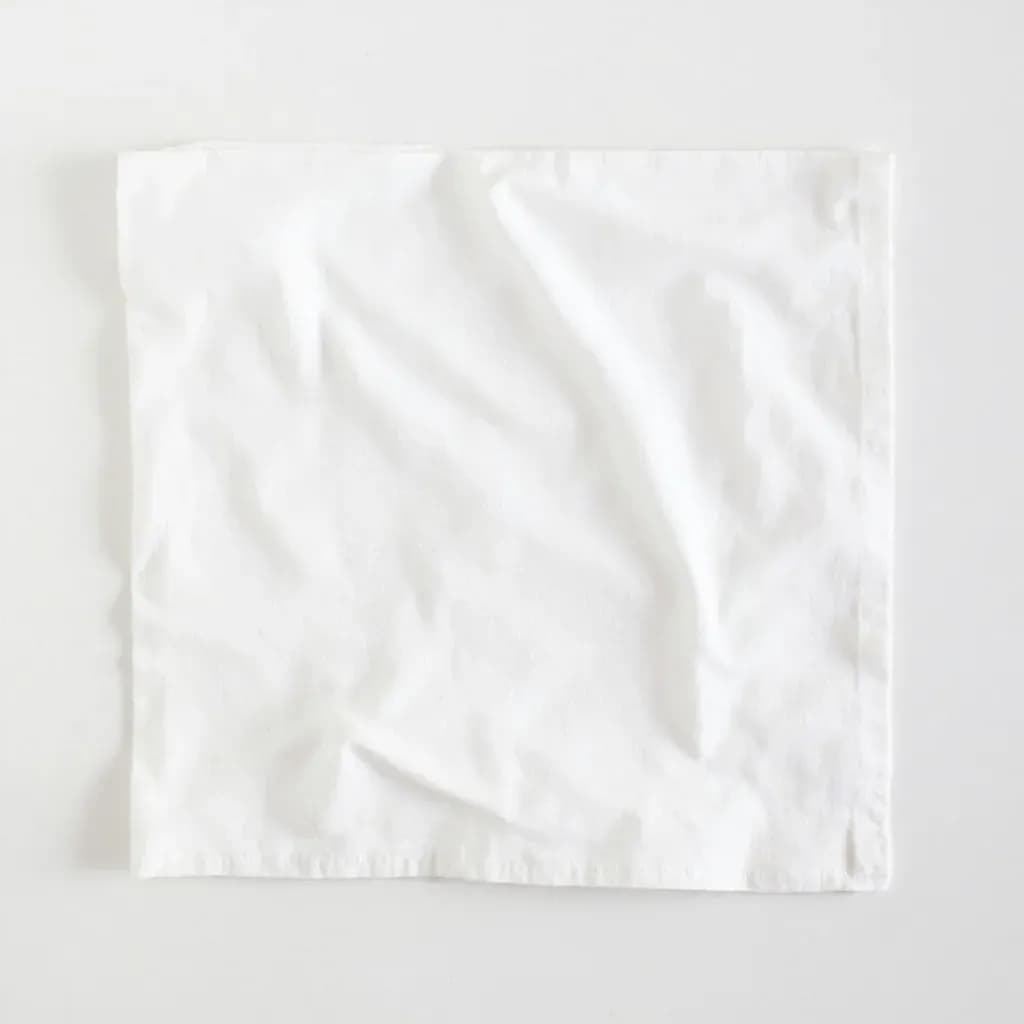
Side Towel
A folded cloth used to grip hot pans, wipe plates, and protect hands on the line.
A side towel is a sturdy cotton or linen cloth a cook keeps at hand to grab hot pans and trays, wipe plate rims, and steady boards during prep. Folded dry, it doubles as a quick pot holder, though a wet towel conducts heat and burns. It is one of the most-used tools on a professional line and is swapped out as it gets soiled.
The side towel is the most handled tool on a professional line — a folded cloth that lives at the cook's hip, shoulder, or belt for instant access during service. It serves two overlapping jobs: giving the cook a fast, dry grip on hot handles and lids, and providing a clean, low-lint surface for finishing plates, wiping rims, and polishing glassware. Codified in the classical French brigade, every station keeps its own stack, and white is the standard so soiling shows immediately.
Cotton dominates as the material of choice because it absorbs well, launders cleanly at commercial temperatures, and tolerates brief contact with metal handles up to roughly 400°F/200°C when dry. Its chief weakness is water: a damp towel conducts heat far faster than a dry one, and the moisture trapped in the weave flashes to steam against the skin in a fraction of a second, producing the classic steam burn that cooks blame on the towel rather than on the water itself.
The side towel is best understood as a short-contact tool for handles, lids, and pan edges — not as protective equipment. Oven mitts, silicone grips, and heat-resistant gloves exist for sustained contact with very hot vessels or oven interiors. Used correctly, a side towel is invisible; misused, it is the fastest way to blister a hand.
Alternatives
Types & varieties
Smooth, low-lint weave favored for plating and wiping rims; absorbs quickly and dries fast.
Looped pile with high absorbency; bulkier, used more for hand-drying and spill response than for finishing plates.
Premium fine-dining side cloth; very low lint, polishes glassware and plates cleanly.
Lightweight, very low-lint, inexpensive; the standard at pastry and bread stations.
Cotton with colored stripes; traditionally behind the bar for glassware, also common in casual line service.
Modern alternative with high absorbency and streak-free wiping; lint and flammability behave differently from cotton.
Wet vs. Dry: The Real Danger
Almost every side-towel injury on a professional line traces back to moisture. Dry cotton is a reasonably good insulator for the second or two it takes to move a sauté pan off the burner, but cotton soaked with water or sauce conducts heat many times faster than the dry cloth, and the water in the weave turns to steam the instant it meets a hot surface. That steam escapes toward the hand, not away from it, and the resulting burn is often worse than touching the pan bare.
The rule is simple: the towel that grips a hot handle must be bone dry, and the towel that has wiped a spill, a rim, or a pair of hands is done with that job until the next laundry cycle. Many stations keep two towels at the hip for exactly this reason — one for heat contact, one for clean dry work.
- Keep a separate dry towel for handles and lids; never use a towel that has touched water, oil, or food.
- If a towel is damp, swap it — do not shake it out and continue.
- Steam burns from wet towels often appear delayed by a few seconds; cool the hand under running water immediately even if it looks fine.
Fold, Carry, and Replace
How a towel is folded and carried is almost as important as which towel you choose. The bistro fold — the towel folded into a long strip and draped over one shoulder — gives the fastest reach to a saucier or a pass cook working fast with both hands. Tucking the same strip into the apron waist-tie at the hip is more secure on a busy station where the shoulder drape might snag on a rack or a sheet pan. Behind the bar, the towel is usually draped from a belt clip or hung from an apron loop.
Modern kitchens often run a color-coded system to control cross-contamination: white for plating and service, a second color (commonly red, yellow, or blue) for spill response and non-contact tasks. The soiled-towel bucket sits at the end of the line, and a fresh stack is brought out at every service change.
- Fold to a long strip — a fully opened towel is slow to grab and slow to fold one-handed.
- Carry at the hip for security, on the shoulder for speed; never drape over the neck.
- Toss any towel with fraying edges or set-in grease — embedded oil is flammable near an open flame.
- Bleach a small corner with each load only if your kitchen protocol requires a visible sanitization cue.
Common uses
Tips & pitfalls
- Keep at least two towels at the station: one dry for heat contact, one kept clean and dry for plate work.
- Use only a bone-dry towel on hot handles; a damp towel conducts heat and produces a steam burn against the skin.
- Tuck the folded towel into the apron waist-tie at the hip rather than the neck strap for a faster, safer one-handed grab.
- Use the bistro fold — folded into a long strip and draped over the shoulder — when speed matters more than security.
- Replace immediately if the towel contacts raw meat, fish, or poultry; never reuse a contaminated towel on cookware or plates.
- Wash at a minimum of 160°F/70°C with oxygen-based bleach and skip chlorine bleach to preserve fiber strength.
- Toss any towel with set-in grease that will not release; grease-soaked cotton can ignite near a gas flame.
- Never substitute a side towel for an oven mitt when reaching into a hot oven; brief glancing contact is for handles and lids, not sustained heat.
- At the pass, lay a clean folded towel under a hot plate so it does not skate on the metal shelf.
Good to know
- Also called
- side cloth, service towel, bar towel, torchon (French)
- Typical material
- 100% cotton (terry or flat-weave); linen in fine-dining settings
- Common size
- roughly 18 × 28 in to 20 × 30 in (45 × 70 cm to 50 × 75 cm)
- Standard color
- white, so soiling is immediately visible
- Where carried
- over the shoulder, tucked into apron waist-tie, or clipped to a belt
- Origin
- codified in the classical French brigade system; each station historically kept its own stack
- Replacement cycle
- changed every 2–4 hours of service, or immediately when soiled or wet
- Heat threshold
- dry cotton tolerates brief contact with handles up to ~400°F/200°C; wet cotton conducts heat fast and can cause steam burns
- Not a substitute for
- oven mitts or heat-resistant gloves for sustained contact with very hot surfaces
- Laundering
- hot wash at 160°F/70°C or above; avoid chlorine bleach, which weakens cotton fibers over time
Also called
service cloth · kitchen towel · tea towel · pan cloth
Related

Paper Towels
Disposable sheets for spills, drying, and patting dry

Kitchen Towels
Reusable cloths for drying, gripping, and wiping

Oven Mitts
Heatproof gloves to handle hot pans and trays safely

Disposable Gloves
Single-use gloves for safe, mess-free handling

Cleaning Cloths
Reusable cloths for wiping counters and spills

Tortilla Warmer
Insulated holder that keeps tortillas warm and soft

Trivet
Heatproof stand that shields surfaces from hot pots

Ice Bath Setup
Bowl of ice water that halts cooking and sets color