Storage & Containers
Silicone Fermentation Lid
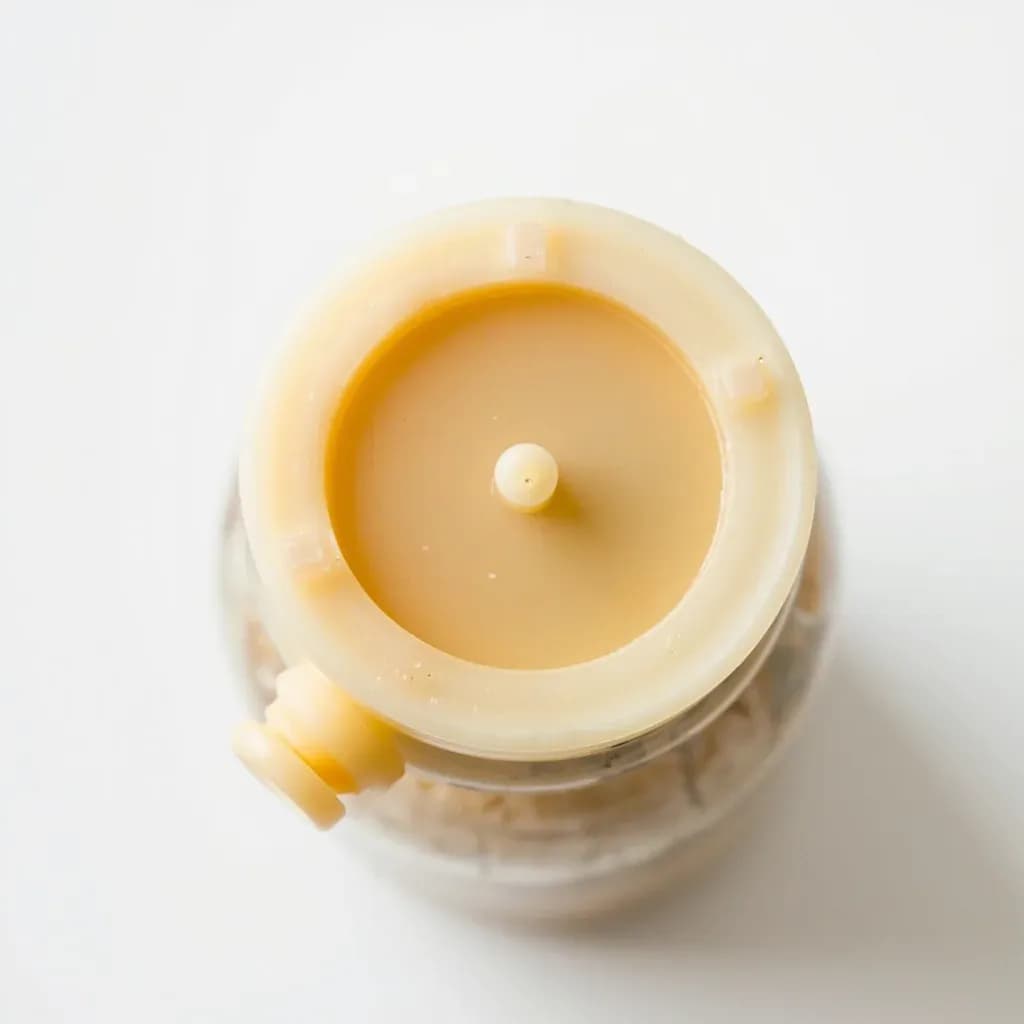
Airlock-style silicone lid that fits a jar so gases escape during fermenting while air stays out.
A silicone fermentation lid is a flexible cap that fits over a mason or preserving jar to ferment foods. A built-in valve or waterless airlock lets the carbon dioxide of an active ferment burp out while preventing oxygen and contaminants from getting in. Cooks use it for sauerkraut, kimchi, pickles, and hot sauce, and the soft silicone wipes clean and reseals for the next batch.
A silicone fermentation lid is a soft, food-grade silicone cap that screws onto a standard mason jar in place of the usual two-piece metal lid, with a small one-way valve molded into its top. As active lactic-acid bacteria (or yeast) consume sugars and exhale carbon dioxide, pressure builds inside the jar and lifts the valve just enough to vent the gas. When the pressure equalizes, the valve reseats, keeping outside air — and the oxygen it carries — from re-entering. That continuous, hands-off venting is what makes the lid so useful: it gives the anaerobic environment fermentation cultures need without the daily ritual of loosening and retightening a metal lid, and without the water-filled chamber of a traditional water-seal airlock that can spill, dry out, or grow mold and biofilm.
In practice, the lid behaves less like a seal and more like a gentle, self-regulating exhaust port. A brief hiss or tiny puff at the valve during peak fermentation is normal, not a leak. Compared with a true water-seal airlock, however, the silicone seal is marginally less oxygen-tight; for short ferments (days to a few weeks) the difference is negligible, but for very long ferments or cultures highly sensitive to oxygen exposure, a water-seal airlock still wins. For the everyday cook doing sauerkraut, pickles, hot sauce, or a jar of sourdough starter on the counter, the silicone lid strikes a near-ideal balance of reliability, reusability, and low maintenance.
Alternatives
Types & varieties
Fits ~70 mm standard mason jars (Ball, Kerr pint/quart); the most common size for small-batch ferments and starter jars
Fits ~86 mm wide-mouth mason jars; easier to pack large vegetable cuts and to slip in a fermentation weight
One small silicone pip that lifts to release gas; simple, easy to clean, common on budget lids
Several thin silicone fins that part under pressure; tighter seal against oxygen ingress and faster gas release — the Pickle Pipe-style design
Silicone lid with an embedded metal band for extra rigidity on larger jars or crock-style vessels
Larger silicone gaskets sized to ceramic fermentation crocks and wire-bail Fido-style jars, rather than threaded mason jars
Silicone Lid vs. Water Airlock vs. Burping
A silicone fermentation lid is one of three common ways to manage gas during home lacto-fermentation, and each has trade-offs worth knowing.
- Water-seal airlock (glass or plastic three-piece with a water-filled chamber): the tightest oxygen barrier and the best choice for very long ferments or cultures sensitive to oxygen, such as some wines, meads, and other oxygen-sensitive ferments. Downsides: water can evaporate, spill during moves, or grow mold or biofilm that needs regular cleaning.
- Silicone fermentation lid: vents continuously with no liquid to top off and no daily handling. Marginally less oxygen-tight than a water airlock, but for ferments measured in days to a few weeks — sauerkraut, kimchi, pickles, hot sauce, sourdough starter — the difference is essentially irrelevant.
- Loose mason-jar band with flat lid ('burp twice a day'): the cheapest method and fine for short, vigorous ferments. It demands daily attention, releases more gas and odor into the kitchen, and lets oxygen in every time you loosen the band, which can encourage surface yeasts and mold on floating bits of food.
Choosing Regular Mouth vs. Wide Mouth
Pick the size that matches both the jar you already own and what you plan to ferment.
- Use wide mouth (~86 mm) for vegetable ferments you need to pack by hand — sauerkraut, kimchi, beet kvass, fermented carrots — and whenever you want to slip in a glass or ceramic fermentation weight.
- Use regular mouth (~70 mm) for small starter jars (sourdough, kombucha SCOBY backups), fermented condiments, and pint-sized pickle batches where the jar opening doesn't need to accommodate a fist.
- If you ferment a lot of both, buy lids in pairs; the lids are reusable for years and the cost per jar is trivial once you have them.
Common uses
Tips & pitfalls
- Keep fermenting food packed under the brine and at least 1–2 inches below the lid so gas has room to vent and floating solids don't clog the valve.
- Weigh shreds and chunks with a glass or ceramic fermentation weight; anything that floats up into the valve can block it or wick oxygen in.
- Sanitize between batches by boiling 5–10 minutes or running through a dishwasher sanitize cycle; disassemble the valve if the design allows so food residue doesn't lodge in the slit.
- Dry the lid thoroughly before placing it on the jar — trapped water under the silicone can wick a small but steady stream of oxygen into the ferment.
- Screw the metal band on firmly, but don't over-torque; the silicone, not the band, creates the seal, and a crushed or distorted lid will leak.
- Expect a brief hiss or puff when the valve opens during peak fermentation; this is normal gas release, not a leak.
- If the valve sticks open or won't reseat, remove the lid, rinse, and check for food residue clogging the slit.
- Do not use these lids for pressure canning, water-bath canning of low-acid foods, or vacuum sealing — they are fermentation valves only and will not hold pressure or true vacuum.
- Do not use on cracked, chipped, or non-standard jar threads; a warped rim will let oxygen in and let the ferment spoil.
- Replace the lid if the silicone yellows badly, develops a persistent odor, warps from heat, or the valve no longer springs closed after venting.
Good to know
- Material
- Food-grade silicone with a molded one-way valve — usually a single nipple or an umbrella-style cluster of thin fins
- Standard sizes
- Regular mouth (~70 mm / 2.75 in) and wide mouth (~86 mm / 3.38 in) to fit Ball, Kerr, Kilner, and other common mason-jar threads
- Temperature range
- Typically -40 °F to ~446 °F (-40 °C to 230 °C); dishwasher, freezer, and boiling-water safe
- Function
- One-way valve vents CO₂ produced by active cultures while preventing outside air (and oxygen) from entering the jar
- Replaces
- Traditional water-seal airlocks, plastic wrap, or the 'burp the lid twice a day' approach with a loose mason-jar band
- Pressure rating
- Vents fermentation gas but is not a pressure seal; not a substitute for pressure-canning lids or vacuum-seal lids
- Cleaning
- Top-rack dishwasher safe; many valves pull apart for thorough cleaning; boil 5–10 minutes to sanitize between batches
- Lifespan
- Multi-year with normal use; replace if silicone warps, yellows badly, tears, or the valve no longer springs closed
Also called
fermentation airlock lid · silicone airlock lid · ferment jar lid
Related

Freezer Bags
Thick, sealable bags built to fight freezer burn

Storage Bags
Resealable bags for fridge storage and marinating

Storage Container
Lidded container for leftovers, prep, and meal kits

Glass Container
Oven-to-fridge glass that won't stain or hold odors

Plastic Container
Lightweight, stackable storage for everyday leftovers

Vacuum Sealer Bags
Airtight bags for long freezing and sous-vide

Reusable Bags
Washable silicone bags that replace single-use plastic

Mason Jar
Sealed glass jar for preserves, pickles, and storage