Storage & Containers
Silicone Food Cup Divider
Reusable silicone cup that separates and portions foods inside bento boxes and lunch containers.
A silicone food cup divider is a small reusable cup placed inside a lunch box or container to keep foods apart. It corrals sauces, fruit, and sides so flavors and moisture stay separate, replacing disposable paper cases. The flexible, washable silicone is freezer- and dishwasher-safe, and some cups are oven-safe for baking individual portions like muffins.
A silicone food cup divider is a small, flexible cup molded from food-grade silicone that nests inside a lunch container to create separate compartments on demand. Unlike fixed dividers built into a bento box, these removable cups can be repositioned, swapped, or omitted depending on the meal—holding a puddle of dressing beside a salad, corraling a handful of nuts next to a sandwich, or keeping yogurt from bleeding into granola. They emerged from Japanese bento traditions, where visually distinct, leak-free components are part of the craft, and silicone versions became mainstream in the 2000s as a durable, reusable alternative to paper or thin plastic portion cups.
The silicone itself is what makes the tool behave well. Quality cups are soft enough to flex and pop food out cleanly, yet firm enough to stand upright on their own. They tolerate roughly −40°F to 450°F, so a single cup can move from freezer to microwave to oven (within its stated limit) without complaint. Capacities run from mini 0.5 oz condiment sizes up through 4 oz portion cups, in round, square, rectangular, oval, and novelty shapes. That range of sizes, profiles, and colors—combined with dishwasher, microwave, and freezer compatibility—is what makes them useful well beyond the lunch box.
In practice, cooks reach for silicone food cup dividers as a leak barrier, a portioning tool, and a small-batch freezer tray in one. They keep wet dressings from soaking crackers, hold a single serving of hummus beside vegetables, and freeze tidy pucks of stock, herb oil, puréed soup, or baby food that release with a twist. They also double as liners for muffin tins and ramekins when baking muffins, egg bites, mini quiches, or chocolate cups—work that overlaps with silicone baking cups but isn't quite the same product.
Alternatives
Types & varieties
The most common shape; versatile for sauces, dips, yogurts, and snacks; nests well for storage
Designed to fit efficiently inside square bento compartments and maximize corner space
Approximately 0.5–1 oz; suited for condiments, berries, nuts, and garnishes
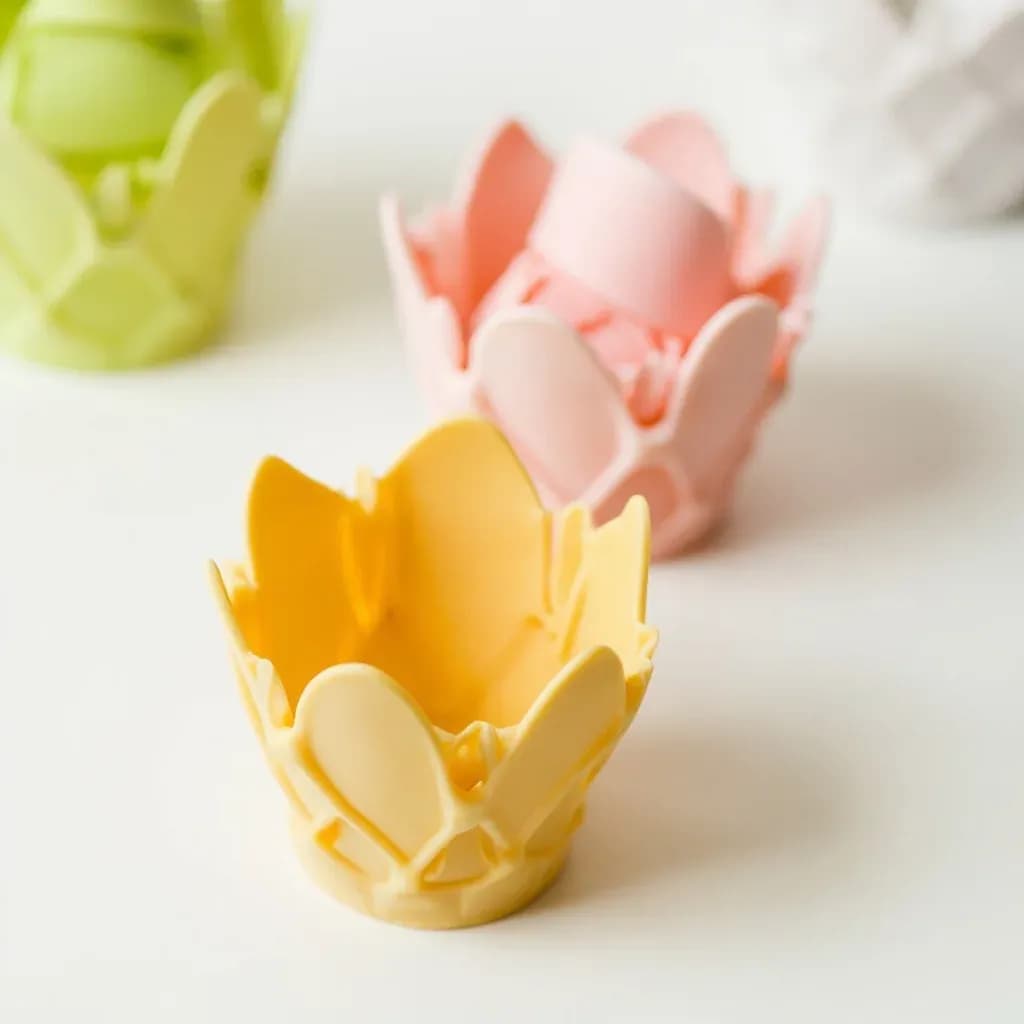
Animal, flower, star, and holiday shapes, popular for children's lunches and decorative bento
Some versions include matching silicone or plastic lids for leak-resistant transport of dressings or sauces
Shallow versions suit spreads and dips; taller versions hold more liquid and stack more stably inside containers
Baking Cups vs. Food Cup Dividers
Silicone food cup dividers are frequently confused with silicone baking cups, but they are distinct products designed for different jobs. Food cup dividers are sized and shaped to nestle inside a lunch container—usually shorter, with a flat or low-profile base that sits flush against the container floor. Baking cups (muffin or cupcake liners) are taller, with flared or straight walls engineered to hold batter rising inside a muffin tin, and they typically lack the flat stability needed to stand alone in a lunch box. A baking cup can pinch-hit as a divider in a pinch, but a proper food cup divider is generally too shallow to give a standard muffin enough headroom to rise properly.
Choosing Quality Silicone
Not all silicone performs the same way in the kitchen, and the difference shows up after a few hundred uses. For food contact, look for silicone that is FDA- or LFGB-certified; LFGB (the German food-safety standard) is generally considered the stricter of the two. Platinum-cured silicone tends to be denser, less porous, and more resistant to odor and staining than peroxide-cured silicone of the same thickness. As a rough quality check, pinch and twist a section of the cup: quality silicone should rebound smoothly to its original shape without persistent creasing, while lower-grade material can hold a wrinkle or feel gummy. A vinegar smell on first use can also indicate fillers; a quick wash and a few cycles in the dishwasher usually clear it.
Care and Longevity
A set of silicone food cup dividers should last for years with reasonable care. The two most common failure modes are mechanical damage from sharp tools and discoloration from strongly pigmented foods. Knives, forks with rough tines, and metal skewers can puncture or tear the walls; stirring with silicone or wooden tools avoids the problem. Turmeric, tomato sauce, curry, and beet juice will eventually tint lighter-colored silicone, and the tint can usually be lifted with a paste of baking soda and a squeeze of lemon, followed by a normal wash. Always let cups air-dry fully before stacking them—trapped moisture between nested cups is the surest route to mildew and off-odors.
Common uses
Tips & pitfalls
- Wash with warm soapy water before first use to remove any manufacturing residue or dust.
- Avoid sharp knives, forks with rough tines, and metal utensils inside the cups; they can puncture or tear the silicone walls.
- Do not place an empty cup directly on a stovetop burner or open flame; silicone is not a direct-heat conductor and will scorch.
- Allow cups to dry completely before nesting and storing to prevent trapped moisture and mildew.
- Strongly pigmented foods—turmeric, tomato sauce, beet juice, curry—can stain silicone over time; a baking soda and lemon paste helps lift discoloration.
- Set the cup into the container first, then add food, so it stays upright and seated when the box is closed and carried.
- When freezing liquids, leave a small amount of headspace to allow for expansion and prevent the cup from bulging.
- If a cup no longer springs back to shape after being squeezed, it has lost its resilience and should be replaced.
Good to know
- Material
- Food-grade silicone, typically FDA-approved and BPA-free
- Typical Temperature Range
- Approximately -40°F to 450°F (-40°C to 230°C)
- Common Capacities
- 1 oz, 2 oz, 3 oz, and 4 oz are most common; mini (~0.5 oz) and larger (~6 oz) versions exist
- Standard Shapes
- Round, square, rectangular, oval, and novelty shapes (hearts, stars, animals, flowers)
- Appliance Safe
- Dishwasher (top rack), microwave, freezer, and oven (within stated temperature limit)
- Reusability
- Rated for hundreds to thousands of uses when cared for properly
- Origin of Use
- Popularized through Japanese bento culture; silicone versions became widespread in the 2000s
Also called
silicone baking cup · bento cup divider · silicone muffin cup
Related

Freezer Bags
Thick, sealable bags built to fight freezer burn

Storage Bags
Resealable bags for fridge storage and marinating

Storage Container
Lidded container for leftovers, prep, and meal kits

Glass Container
Oven-to-fridge glass that won't stain or hold odors

Plastic Container
Lightweight, stackable storage for everyday leftovers

Vacuum Sealer Bags
Airtight bags for long freezing and sous-vide

Reusable Bags
Washable silicone bags that replace single-use plastic

Mason Jar
Sealed glass jar for preserves, pickles, and storage