Storage & Containers
Silicone Ice / Freezer Tray
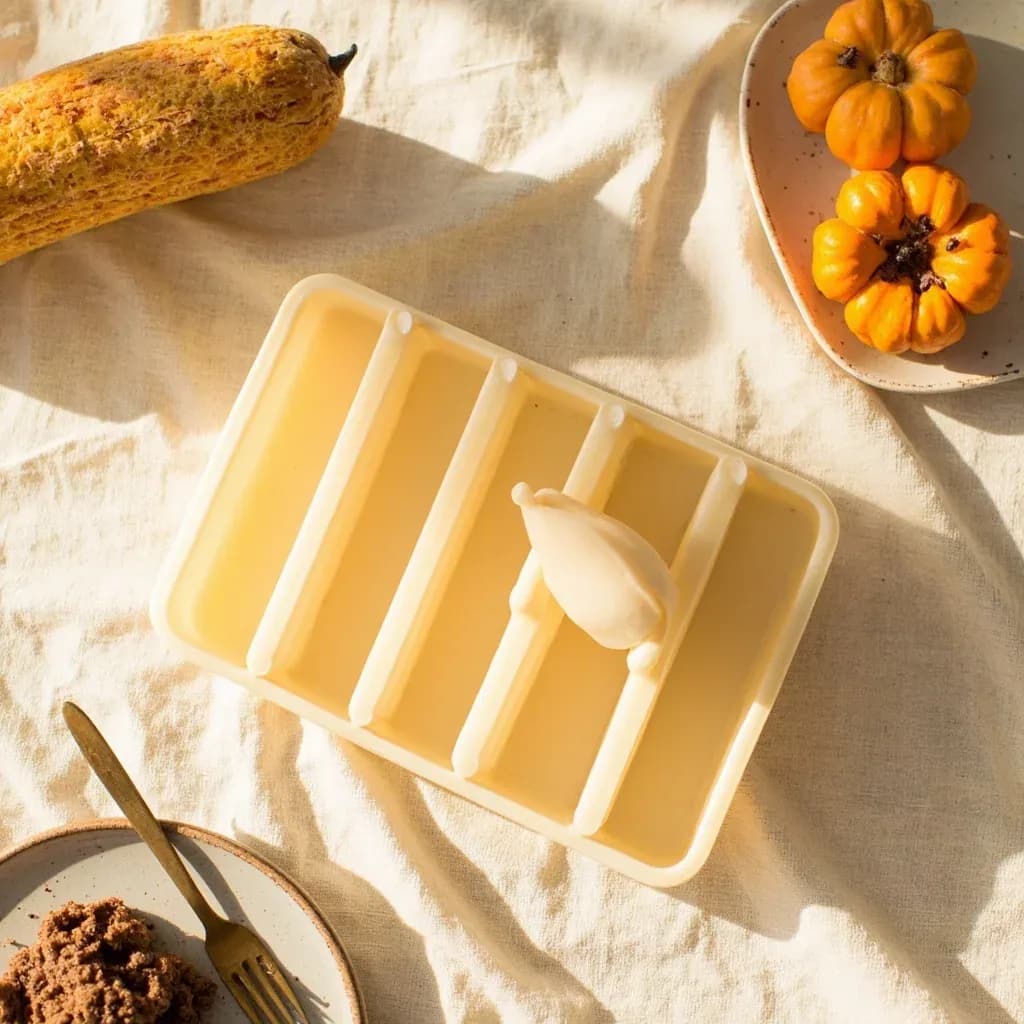
A flexible silicone tray you twist or push from below to pop cubes free; beyond ice it freezes stock, pesto, herb-and-oil, and leftover wine into portioned blocks.
A silicone freezer tray is a flexible, food-grade mold with a grid of cavities used to freeze liquids into uniform, individually portioned blocks. Unlike rigid plastic ice cube trays that demand an aggressive twist or a hard rap on the counter, silicone flexes enough that a press from below pushes each cube free cleanly. That single property — the way the material releases its contents — is what turns the tray from a one-trick ice maker into a general-purpose freezer tool.
Because silicone tolerates a wide temperature range and doesn't impart flavor, cooks use these trays to set anything liquid or semi-liquid they want to measure later: stock and demi-glace, pesto and curry paste, herb-infused oil, leftover wine, compound butter, puréed baby food. The cavities act like tiny measuring cups; a 2-tablespoon cavity becomes 2-tablespoon portions once frozen. That's the real appeal: the freezer becomes a shelf of pre-measured ingredients ready to drop into a pan, a pot, or a blender.
In practice, silicone behaves a little differently from rigid plastic. It is faintly absorbent at the surface, which means strong aromatics — roasted garlic, fish stock, curry — can linger and ghost-flavor a tray's next use. A little hygiene discipline (lids, dedicated trays, thorough washing) keeps that from becoming a problem.
Alternatives
Types & varieties
Small (~1 in) to medium (~1.5 in) cubes; the everyday workhorse for water, juice, and coffee ice
~2 in cubes that melt slowly — the standard for Old Fashioneds, Negronis, and other spirit-forward cocktails
2–2.4 in balls that melt even more slowly than large cubes and look striking in a lowball glass
Narrow, tall cavities sized to slip through a water-bottle or tumbler neck
Small flat or pebble-shaped cubes that chill quickly with minimal dilution, mimicking pebble-style ice
Includes a plastic lid that seals out odors, prevents spills in transit, and lets trays stack in a crowded freezer
A rigid plastic or metal frame with a silicone base — easier to carry full and slide into the freezer than a floppy pure-silicone tray
Geometric, gem, skull, or themed shapes for presentation; Tovolo and similar brands specialize here
Treating the Tray as a Freezer-Portioning System
The most useful mental shift when buying a silicone freezer tray is to stop thinking of it as an ice maker and start thinking of it as a measuring cup that lives in the freezer. Each cavity is a fixed volume — once you know whether yours holds 1 tablespoon, 2 tablespoons, or ¼ cup, you can freeze any liquid in exact portions without dirtying a measuring spoon. A tray of stock at ¼ cup per cube becomes a pan sauce base; a tray of basil oil at 1 tablespoon per cube becomes a week's worth of weeknight sautés with one cube per pan. Over time, a small stack of trays in different sizes effectively replaces a set of freezer containers and turns the freezer into an organized, pre-measured pantry.
- Label lids with the contents and the volume per cube so you don't have to remember which tray is which weeks later
- For very liquid purées like smoothies or yogurt, flash-freeze uncovered for an hour, then transfer the cubes to a labeled freezer bag to free up the tray for the next batch
- Size vinaigrettes, pan sauces, and soup garnishes to one cube at a time so you can build a dish from frozen blocks without thawing
Common uses
Tips & pitfalls
- Set the empty tray on a perfectly level freezer shelf before filling — an off-kilter tray freezes unevenly and the cubes won't release cleanly
- Cool hot liquids to room temperature before pouring; hot stock freezes slowly, stresses lower-quality silicone, and stays cloudy when it finally sets
- Leave about 1/8 in of headroom in each cavity, since water and stock expand roughly 9% as they freeze and will bulge or crack out otherwise
- Release cubes by flexing the tray from underneath and twisting evenly — don't pry at one corner, which stresses and eventually tears the silicone
- If a cube sticks, set the tray on the counter for 30–60 seconds; most releases come from a touch of warmth, not force
- Wash new trays with warm water and a pinch of baking soda before first use to clear the faint silicone odor some factory-fresh molds carry
- Use a lidded tray — or slip the tray inside a freezer bag — when freezing anything pungent like curry paste, fish stock, or roasted garlic, since silicone is slightly porous and can ghost-flavor later batches
- Skip the knife or metal skewer for stubborn cubes; a firm thumb-press from below is the intended release method, and anything sharper will slice the mold
- Dedicate specific trays to sweet versus savory uses — once silicone has soaked in garlic or curry oil, it can transfer flavor to ice or chocolate
- Dry trays fully before storing — trapped moisture can encourage mildew in the crevices of a nested stack
Good to know
- Material
- Food-grade, platinum-cured silicone; typically FDA- and LFGB-approved, BPA- and phthalate-free
- Temperature range
- Roughly –40°F/–40°C up to ~446°F/230°C; freezer use is the relevant range in practice
- Cavity size
- From ~½ oz (15 mL) minis to ~2½ oz (75 mL) king cubes; sphere molds run ~2–2.4 in (60–70 mm) diameter
- Tray footprint
- About 8 × 4.5 in (20 × 11 cm) to 12 × 5 in (30 × 13 cm) for standard cube trays
- Care
- Dishwasher safe on most models (top rack recommended); avoid abrasive scrubbers and sharp utensils
- Replaces
- Rigid plastic ice cube trays that require twisting or banging to release cubes
- Freezer storage
- Lay flat on a level shelf; lidded versions stack and seal out freezer odors
Also called
silicone ice cube tray · flexible ice tray · freezer cube tray
