Storage & Containers
Squeeze Bottle
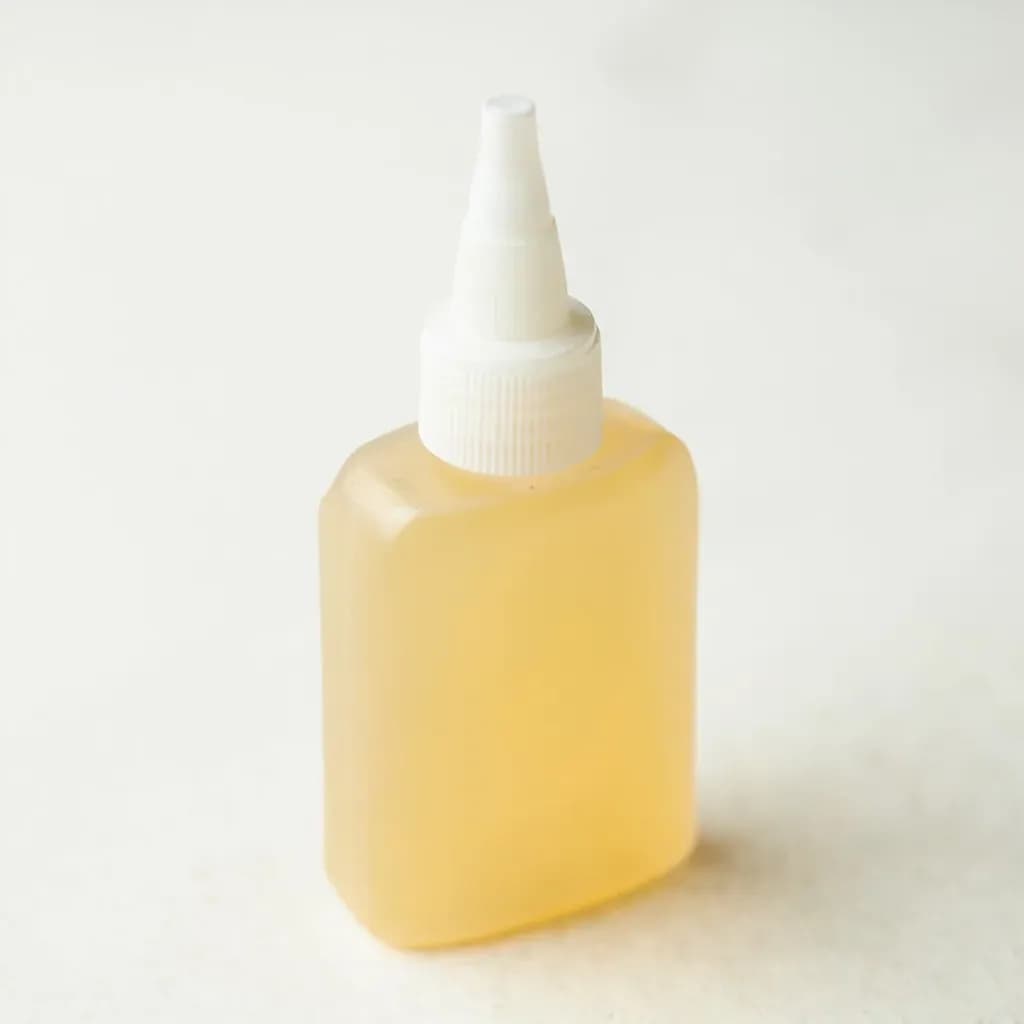
Flexible plastic bottle with a nozzle tip for precise dispensing of sauces, oils, and dressings.
A squeeze bottle is a soft plastic bottle topped with a fine or wide nozzle that releases a controlled stream when pressed. Kitchens use them to plate sauces, drizzle oils and aromatics, dot dressings, and apply batters or glazes with precision. They are dishwasher-friendly, refillable, and often kept inverted in caddies so the contents stay at the tip ready to dispense.
A squeeze bottle is a soft-walled polyethylene container fitted with a tapered nozzle, built so the cook can dispense liquid and semi-liquid foods with one hand and a controlled squeeze. In professional kitchens it has become as ordinary as a sheet pan, and for good reason: it gives the cook precision that no spoon or ladle can match, turning a streak of balsamic glaze, a dot of romesco, or a thin zigzag of sriracha into a one-second action. The wall flexes under thumb pressure, the fluid travels up through a narrow tip, and the flow stops the instant you release — that on/off control is the entire point of the tool.
Squeeze bottles are not new technology, but the chef-sized versions we know today are a product of the 1990s American plating revolution, when composed plates and architectural food styling pushed cooks toward tools that offered more control than a spoon and more speed than a piping bag. Most pro bottles are molded from low-density polyethylene (LDPE), which is food-safe, squeezable, and cheap enough to replace when it clouds or cracks. The narrow Yorker-style cap — borrowed from industrial caulk and glue dispensers — is what separates a chef's squeeze bottle from a diner ketchup bottle: it lets you draw lines, write with batter, and decorate a plate with the same fluency you'd use a pen.
What makes the squeeze bottle quietly indispensable is the way it disappears into service. Sauces stay warm in it, brines apply evenly through it, and dressings travel to the table inside it. Treat it as an extension of your hand rather than a storage container, and it will change the way you finish a plate.
Alternatives
Types & varieties
Long tapered tip for fine lines, dots, and drizzles — the workhorse of the line.
Larger opening for easy filling and cleaning; best for thicker sauces like aioli, ketchup, and sriracha mayo.
Bottles sold with two or three interchangeable nozzles (fine, medium, wide) so one bottle handles multiple line widths.
Distinct bottle or cap colors used to prevent cross-contamination — red for hot sauce, green for herb oil, yellow for mustard.
Wider base for stability on the counter; common at the pass for oil and vinegar service.
Reusable, collapsible, often sold in TSA-approved sizes for dressings on the go; rarely used in pro kitchens.
A related category — pump-style sprayers for misting oils, vinegars, and water; grouped with squeeze bottles on supply shelves but mechanically different.
Choosing the right bottle for the job
The shape you reach for should match the viscosity of what's going in and the line you want to draw. Thin liquids — oils, vinegars, simple syrup, citrus juice — want a standard 12 or 16 oz bottle with a fine Yorker tip so you can write a clean line or a single dot. Thicker emulsions (hollandaise, aioli, ketchup, BBQ) clog a fine tip and benefit from a wide-mouth bottle with a snipped or wide nozzle, where the bigger opening resists clogs and the wide mouth makes refilling and cleaning easier. For a station that handles several sauces, multi-tip sets let you swap one bottle between a fine and a coarse drizzle without grabbing a second container.
Care, cleaning, and food safety
Squeeze bottles live on the line and accumulate residue fast, especially in the narrow nozzle where bacteria love to hide. Build a routine of cleaning the cap and tip after every shift, even if the bottle itself goes through the dishwasher. A soaked nozzle, brushed with a small bottle brush and rinsed under hot water, prevents the sour, off flavors that come from a tip caked with yesterday's hollandaise. Bottles used for dairy- or egg-based sauces (mayo, béarnaise, ranch) should be fully broken down, washed, and air-dried daily, not just refilled.
- Strip the bottle every shift: remove the cap, run the tip and gasket under hot soapy water, and brush the nozzle with a small bottle brush.
- Top-rack dishwasher is fine for the bottle body; the cap and tip last longer when hand-washed.
- Replace bottles every 2–4 months in a busy kitchen — once the plastic clouds, the wall loses elasticity, or the seam starts to weep.
Technique for plating
A squeeze bottle rewards a light hand. Hold it tip-down so gravity feeds the sauce toward the nozzle, and squeeze from the top with the flat of your thumb rather than gripping the whole bottle — that gives you smoother pressure and fewer glugs. For long, steady lines, walk the bottle across the plate at the same speed you squeeze; for dots, touch the tip to the plate, give a quick pulse, and lift straight up. If the sauce is too thick to flow, warm the bottle under hot tap water for a minute before filling; if it's running too thin, switch to a bottle with a finer tip rather than trying to compensate with a death grip.
Common uses
Tips & pitfalls
- Skip boiling-hot liquids — LDPE warps above roughly 190°F / 88°C and may leach. Warm sauces only, never straight off the stove.
- Color-code bottles by use (red for hot/spicy, green for herb oil, yellow for mustard) to prevent cross-contamination on a busy line.
- Label every bottle with masking tape and a Sharpie — once a bottle has held three different sauces, you cannot tell what's inside by eye.
- Clean the nozzle every shift; the narrow tip is a bacteria trap, especially after holding dairy- or egg-based sauces like hollandaise or aioli.
- Pre-warm the bottle under hot tap water before filling it with warm sauce to prevent cracking from thermal shock.
- For thicker sauces, snip the nozzle slightly wider with scissors or use a wide-mouth style from the start — don't force a viscous sauce through a fine tip.
- Don't store highly acidic sauces (citrus-heavy, vinegar-dominant dressings) long-term in plastic; they degrade the bottle and pick up a metallic, off taste.
- Hold the bottle tip-down and squeeze gently with the flat of your thumb for fine work; gravity helps control flow and prevents the glugging that ruins clean lines.
Good to know
- Material
- Low-density polyethylene (LDPE); food-grade and typically BPA-free
- Common capacities
- 8 oz, 12 oz, 16 oz, and 32 oz (≈240, 355, 475, and 950 ml)
- Heat tolerance
- LDPE softens near 190°F / 88°C; rated for warm liquids, not boiling
- Cleaning
- Top-rack dishwasher safe; hand-wash the cap and tip to extend life
- Standard tip
- Yorker-style nozzle, long and tapered with a roughly ¼-inch opening, for fine lines and dots
- Notable brand
- Lloyd's Squeeze Bottles — a long-standing restaurant-supply staple, alongside Tablecraft, Traeger (BBQ), and Winco
- Typical colors
- Natural, white, red, yellow, green, and blue, used for color-coded stations
- Replacement cycle
- Every 2–4 months in heavy pro use, when plastic clouds, seams leak, or the wall loses spring
Also called
Squeeze Bottle (Aroma Oil) · condiment bottle · sauce bottle · plating bottle
Related

Freezer Bags
Thick, sealable bags built to fight freezer burn

Storage Bags
Resealable bags for fridge storage and marinating

Storage Container
Lidded container for leftovers, prep, and meal kits

Glass Container
Oven-to-fridge glass that won't stain or hold odors

Plastic Container
Lightweight, stackable storage for everyday leftovers

Vacuum Sealer Bags
Airtight bags for long freezing and sous-vide

Reusable Bags
Washable silicone bags that replace single-use plastic

Mason Jar
Sealed glass jar for preserves, pickles, and storage