Heat & Safety
Steel Wool Scourer
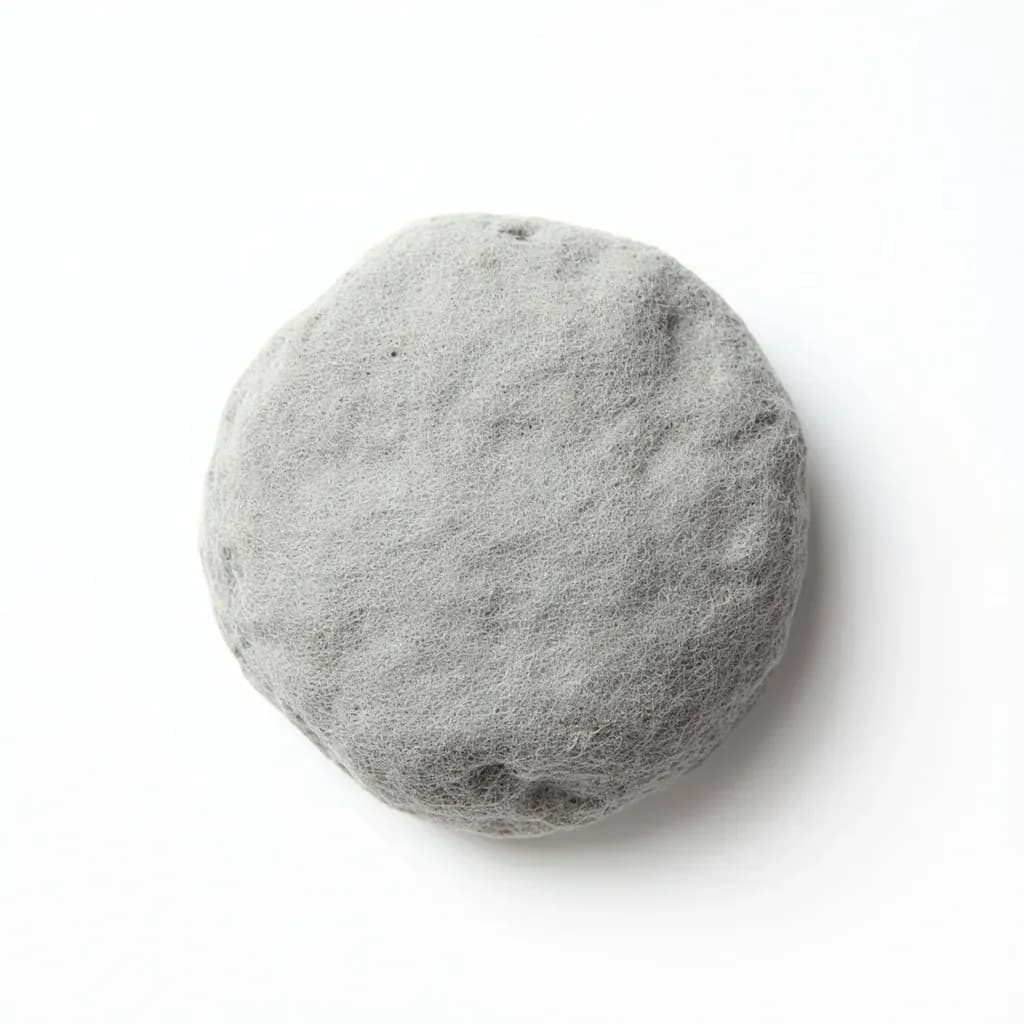
Bundle of fine steel fibers for scrubbing the toughest burnt-on residue from cookware.
A steel wool scourer is a pad of fine, abrasive steel fibers used to scrub off the most stubborn burnt-on food, carbon, and rust from pots, pans, and grill grates. Cooks reach for it when a sponge or nylon pad can't shift baked-on residue. It is highly abrasive and rust-prone, so it's kept away from nonstick coatings and seasoned cast iron, and rinsed and dried after use.
Steel wool scourers are bundles of fine, low-carbon steel fibers—typically 0.05–0.15% carbon content—packed into rolls, pads, balls, or pre-formed shapes. Originally an industrial abrasive adopted for domestic kitchens in the early 20th century, they remain one of the most effective tools for aggressive physical abrasion on cookware that can tolerate it. The fibers cut through burnt-on carbon, baked grease, and rust by physically shredding the debris rather than dissolving it, making them indispensable for cast iron, carbon steel, and bare stainless steel. Their main drawback is the rust risk: plain steel wool sheds fine particles that can flash-rust within hours if not rinsed away and the cookware thoroughly dried. This trade-off is worth managing for the level of cleaning steel wool achieves—nothing else in the home kitchen cuts through a decade of seasoned carbon so effectively.
Steel wool comes in six standard grades, ranging from extra-coarse (grade 3) for stripping heavy rust and paint down to ultra-fine (grade 000) for light polishing. Choosing the right grade is a practical skill: too coarse and you risk gouging the metal or leaving deep scratches that trap food; too fine and you waste effort without results. The grade number system is worth internalizing—higher numbers mean coarser fibers. Beyond plain steel wool, several variants exist to address its limitations: stainless steel wool resists rust longer, copper and bronze wool offer softer abrasion for delicate metals, and soap-filled pads provide convenient single-use scouring for light jobs.
The tool's core purpose is restoring cookware that has accumulated heavy, baked-on buildup—scenarios where dish soap, nylon scrubbers, and even Barkeeper's Friend simply surrender. It is not a daily-use item; rather, it earns its place when nothing else works, and it demands respect for its limitations. Non-stick coatings, enamel, and anodized aluminum are off-limits. Proper technique and aftercare are non-negotiable for safety and longevity.
Alternatives
Types & varieties
Bare metal fibers; the most versatile option but requires rinsing and drying after every use to prevent rusting
Pre-loaded with detergent; designed for one-time use on light baked-on food; generates more waste than plain wool
Softer than steel; less likely to scratch or leave marks on softer metals; a good choice when steel particles are a concern
More rust-resistant than plain steel and longer-lasting; still abrasive enough for heavy-duty jobs on stainless cookware
The softest metal wool; used for delicate surfaces where even copper wool might leave marks
Choosing the Right Grade
Grade selection is the most important practical decision when using steel wool. The numbering runs counter-intuitively for newcomers: higher numbers mean coarser fibers. Grade 3 (extra-coarse) is aggressive enough to strip old paint or heavy rust from tools but will leave deep scratches on cookware if misapplied. Grade 2 (coarse) is the workhorse for cast iron with heavy, built-up seasoning or burnt residue. Grade 1 (medium) balances abrasion and surface preservation for stainless steel cookware with moderate buildup. Grades 0, 00, and 000 (fine to ultra-fine) are for light polishing, removing light rust from tools, or cleaning stainless steel cookware with minimal residue. When in doubt, start finer and work up—it's easier to repeat with coarser wool than to repair deep scratches.
- Grade 3 (extra-coarse): stripping paint, heavy rust on tools
- Grade 2 (coarse): heavy burnt residue on cast iron and carbon steel
- Grade 1 (medium): moderate buildup on stainless steel cookware
- Grade 0 (fine): light rust on tools, light residue on stainless steel
- Grade 00–000 (extra-fine to ultra-fine): polishing copper and brass, final surface cleaning
Preventing and Managing Rust
Rust is the persistent complication of steel wool use on cookware. It occurs in two forms: flash-rusting on the cleaned cookware surface, and oxidation of residual steel wool particles left behind. Both are preventable with consistent aftercare. The sequence matters: rinse immediately under running water, scrubbing with your fingers to dislodge embedded particles; dry with a clean towel, getting into corners and crevices; then place the cookware on a burner over low heat for 30–60 seconds to evaporate any remaining moisture. For cast iron specifically, apply a thin coat of neutral high-smoke-point oil immediately after cleaning. Store in a dry location. If flash-rust does appear—a orange-brown discoloration—scrub it away with steel wool and re-season. The cookware is not ruined; it just needs re-processing.
- Rinse immediately and thoroughly under running water
- Dry with a clean towel immediately after rinsing
- Heat briefly on a burner to evaporate residual moisture
- Apply a thin oil coat on cast iron before storage
- Store in a dry location; even small moisture pockets cause rust within hours
Common uses
Tips & pitfalls
- Match the grade to the job: coarse (grade 2–3) for cast iron with heavy buildup; fine (grade 0–00) for stainless steel cookware and light residue—starting finer and moving coarser if needed prevents unnecessary scratching.
- Rinse thoroughly under running water after every use to flush away loosened particles; residual steel fragments embedded in the surface will flash-rust within hours.
- Dry immediately with a clean towel, then place on a low burner for 30–60 seconds to fully evaporate moisture; this step is non-negotiable for cast iron and carbon steel.
- Never use on non-stick coatings, enamel, or anodized aluminum—steel wool strips the protective layers permanently and leaves scratches that harbor bacteria and accelerate coating failure.
- Wear rubber gloves during use; the fine fibers cause painful splinters and can irritate or cut skin, especially with repeated use.
- Work over newspaper or a plastic tarp when cleaning oven racks or heavily rusted items—liberated rust flakes and food particles scatter easily and stain surfaces.
- Replace when fibers compress and lose their loft; compacted steel wool becomes unevenly abrasive and may scratch the surface rather than clean it.
- For cast-iron stripping: scrub with wet wool in circular motions, rinse, dry immediately, then apply a thin coat of oil and heat to smoke point before storing.
Good to know
- Material
- Low-carbon steel fibers, typically 0.05–0.15% carbon content
- Form
- Packed bundles of fine filaments; available as rolls, pads, balls, or pre-formed scourers
- Common Grades
- Extra-coarse (3), Coarse (2), Medium (1), Fine (0), Extra-fine (00), Ultra-fine (000)
- Temperature Range
- Safe for room-temperature cleaning only; never use on heated or warm cookware
- Key Limitation
- Not safe for non-stick, enameled, or anodized aluminum surfaces—steel wool permanently damages protective coatings
- Rust Risk
- Plain steel wool sheds particles that can oxidize quickly; thorough rinsing and immediate drying are required after every use
- Origin
- Industrial abrasive material adopted for domestic kitchen use in the early 20th century
Also called
steel-wool-scourer · steel-wool-scrubber · steel-wool-pad · steel-scrubber · steel-scourer · steel-scouring-pad · dish-scrubber
Related

Paper Towels
Disposable sheets for spills, drying, and patting dry

Kitchen Towels
Reusable cloths for drying, gripping, and wiping

Oven Mitts
Heatproof gloves to handle hot pans and trays safely

Disposable Gloves
Single-use gloves for safe, mess-free handling

Cleaning Cloths
Reusable cloths for wiping counters and spills

Tortilla Warmer
Insulated holder that keeps tortillas warm and soft

Trivet
Heatproof stand that shields surfaces from hot pots

Ice Bath Setup
Bowl of ice water that halts cooking and sets color