Heat & Safety
Sterno Chafing Fuel
Canned gel fuel that burns under chafing dishes to keep buffet food hot.
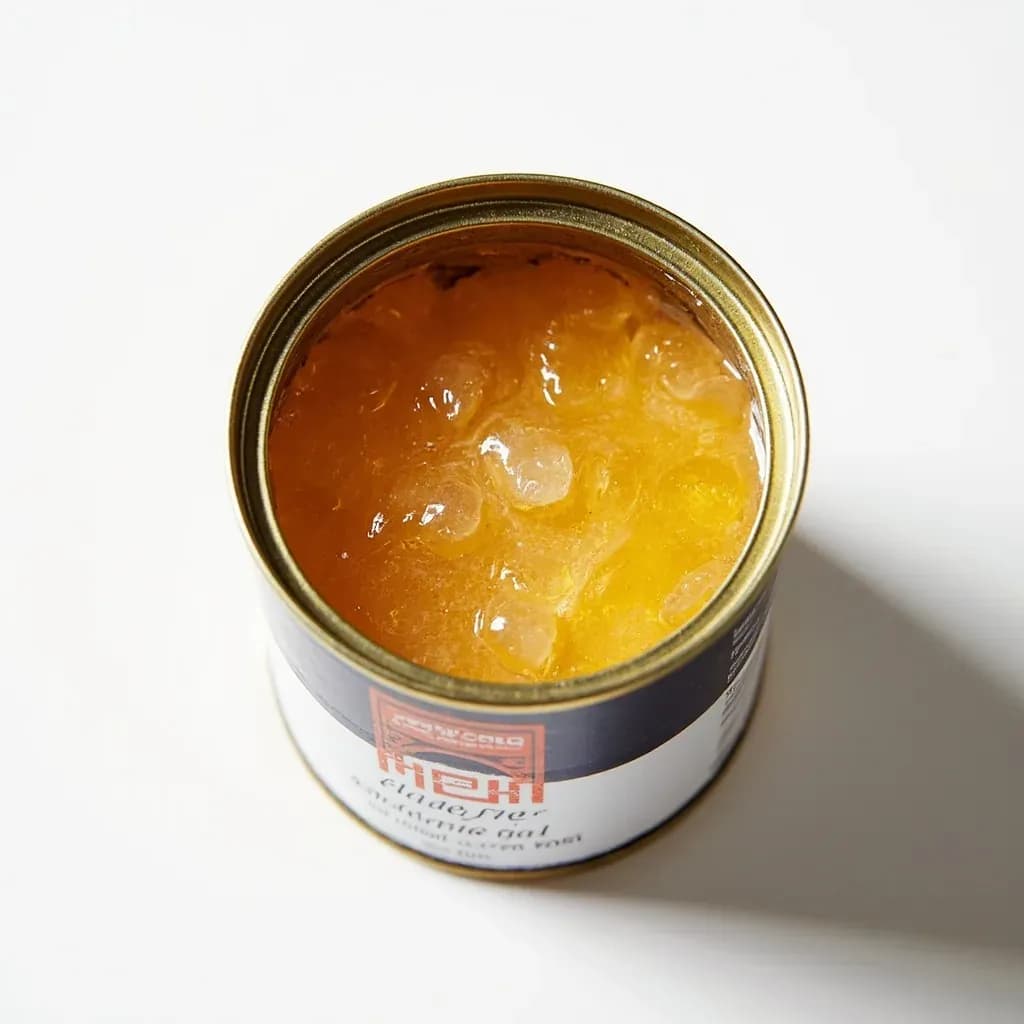
Sterno chafing fuel is a canister of jellied or wick-based fuel (commonly denatured alcohol or diethylene glycol gel) lit beneath a chafing dish to maintain serving temperature. Caterers and buffet hosts place one or two cans in the fuel holder of a chafer for a slow, steady, smokeless flame. A single can typically burns for a couple of hours and can be snuffed and reused.
Sterno chafing fuel is canned gelled alcohol — most commonly methanol, though ethanol-based versions exist — sold in seamed steel cans that friction-fit or twist-off closed until use. Once the lid is removed and the gel is ignited, it produces a steady, pale blue flame that delivers roughly 1,500–2,000 BTU per hour per can, depending on size and formulation. The defining practical virtue of the gel-in-a-can format is that it burns without spilling: even if a chafing-dish frame is jostled, the fuel stays put, which is why this format has dominated banquet and buffet service for nearly a century. The name itself comes from the original Sterno brand, launched in the early twentieth century, and has since become a generic term for any canned gel chafing fuel regardless of manufacturer.
The fuel is sized for holding temperature, not cooking. A standard can heats a chafing-dish water pan to a low simmer — typically enough to keep prepared food at the 140–160°F range required by food-safety guidelines — but it will not bring a cold pan of food up to serving temperature on its own, nor will it cook raw ingredients through. This is why every proper chafing-dish setup is built around a water pan: the flame heats the water, the water heats the food pan with steam, and the food stays gently and evenly hot. Treat the can as a steam generator, not a burner, and the system works as designed.
The single most important thing to know before lighting a can is that the methanol flame is nearly invisible in daylight or under bright buffet lighting. A cook who assumes the fuel is out because they cannot see a flame has the makings of a tip-over or a burn. The tell is heat: hold a hand above the can, watch for shimmer, or look at the gel surface for the faint blue flicker. Always keep a metal lid, snuffer, or baking sheet within reach to smother the flame if the frame is knocked.
Alternatives
Types & varieties
Smallest standard size; good for a single chafing dish, a fondue pot, or short buffet windows.
Mid-size workhorse for typical banquet and catering service; the most common size on a buffet line.
Largest common size; favored for all-day events where mid-service can changes are impractical.
Hotter-burning cans intended for actual cooking, not just holding; useful for tabletop sauté or finish work.
Liquid fuel in a can with a wick; steadier flame but a real spillage hazard if tipped.
Non-methanol alternative marketed as 'clean burn' with a lower toxicity profile; same can-and-gel format.
Small gas canisters with an adjustable flame; instant on/off but visible flame and more combustion byproducts.
How a chafing-dish setup actually works
A standard chafing dish is a three-tier stack: the frame at the bottom, a fuel can in its holder, a water pan in the middle, and the food pan on top. The flame never touches the food. It heats the water pan, the water comes to a low simmer, and the steam bath keeps the food above at a steady, even temperature. Skipping the water pan and setting a food pan directly over an open gel can is a common shortcut at casual events; it scorches the bottom of the food, runs the can hotter and shorter, and gives a much less forgiving temperature margin.
- Fill the water pan with hot tap water before lighting; cold water lengthens preheat and wastes burn time.
- Keep the water level above the bottom of the food pan's contact area so the steam bath is even.
- Check water level every 60–90 minutes on long buffets; evaporation will eventually expose the pan bottom.
Safety essentials
Sterno is a controlled, contained flame, but it is still an open flame, and the methanol fuel is toxic if ingested in significant quantity. The two failure modes that account for nearly every incident are the invisible flame and the refilled can. Treat every open can as lit, keep a metal smothering tool at the station, and never decant loose gel or liquid into a spent can — refilling is the single most common cause of flare-ups because the new fuel can pool, run, and ignite outside the burner cup.
- Use a long-reach lighter or extended match; never lean over the can to ignite it.
- Keep a metal lid, snuffer dish, or baking sheet at the station to smother a tip-over — never a cloth or paper towel.
- Seat the can fully and centered in the fuel holder; an off-center flame scorches one side of the water pan.
- Use only in a stable, level frame; never place a can directly under a freestanding pan with no holder.
Choosing a can size
Burn-time labels are nominal — actual burn depends on draft, water-pan depth, and how often the lid is lifted — so it is better to think of can size in terms of how long you want to go without a change. A 2-hour can is the right call for a brunch or a single-dish station; a 4-hour can is the banquet default; a 6-hour can earns its keep at all-day catering where swapping cans mid-service is disruptive. When in doubt, run shorter cans and replace rather than betting on one long-burning can for an unpredictable-length event.
Common uses
Tips & pitfalls
- Treat every open can as lit — the blue flame is nearly invisible in daylight, so confirm by holding a hand above it or watching for heat shimmer, not by looking for a flame.
- Never refill a spent can with loose gel or liquid fuel — this is the single most common cause of chafing-fuel flare-ups.
- Allow cans to cool completely before stacking, re-capping, or discarding; an apparently 'out' can is often still hot enough to burn skin or ignite debris.
- Store cans upright and sealed; an opened can loses gel mass to evaporation and may burn well short of its labeled time.
Good to know
- Form
- Gelled alcohol (methanol standard; ethanol in some 'clean burn' formulations) sealed in a steel can
- Common can sizes
- 2.5 oz, 4.5 oz, and 7 oz, marketed as 2-hour, 4-hour, and 6-hour burn times
- Approx. heat output
- Roughly 1,500–2,000 BTU per hour per can (varies with size and brand)
- Flame color
- Pale blue; nearly invisible in daylight or under bright room light
- Odor
- Mild alcohol scent; methanol cans are blended to burn cleanly for food service
- Operating temperature
- Designed to hold food at 140–160°F via a water pan, not to cook
- Shelf life
- Several years unopened if the seal is intact; opened cans lose gel mass to evaporation and may burn short
- Disposal
- Cool fully, re-cap if possible, and recycle with metal (follow local rules for any residual gel)
Also called
sterno · chafing fuel · canned cooking fuel · gel fuel
Related

Paper Towels
Disposable sheets for spills, drying, and patting dry

Kitchen Towels
Reusable cloths for drying, gripping, and wiping

Oven Mitts
Heatproof gloves to handle hot pans and trays safely

Disposable Gloves
Single-use gloves for safe, mess-free handling

Cleaning Cloths
Reusable cloths for wiping counters and spills

Tortilla Warmer
Insulated holder that keeps tortillas warm and soft

Trivet
Heatproof stand that shields surfaces from hot pots

Ice Bath Setup
Bowl of ice water that halts cooking and sets color