Storage & Containers
Swing-Top (Grolsch) Bottle
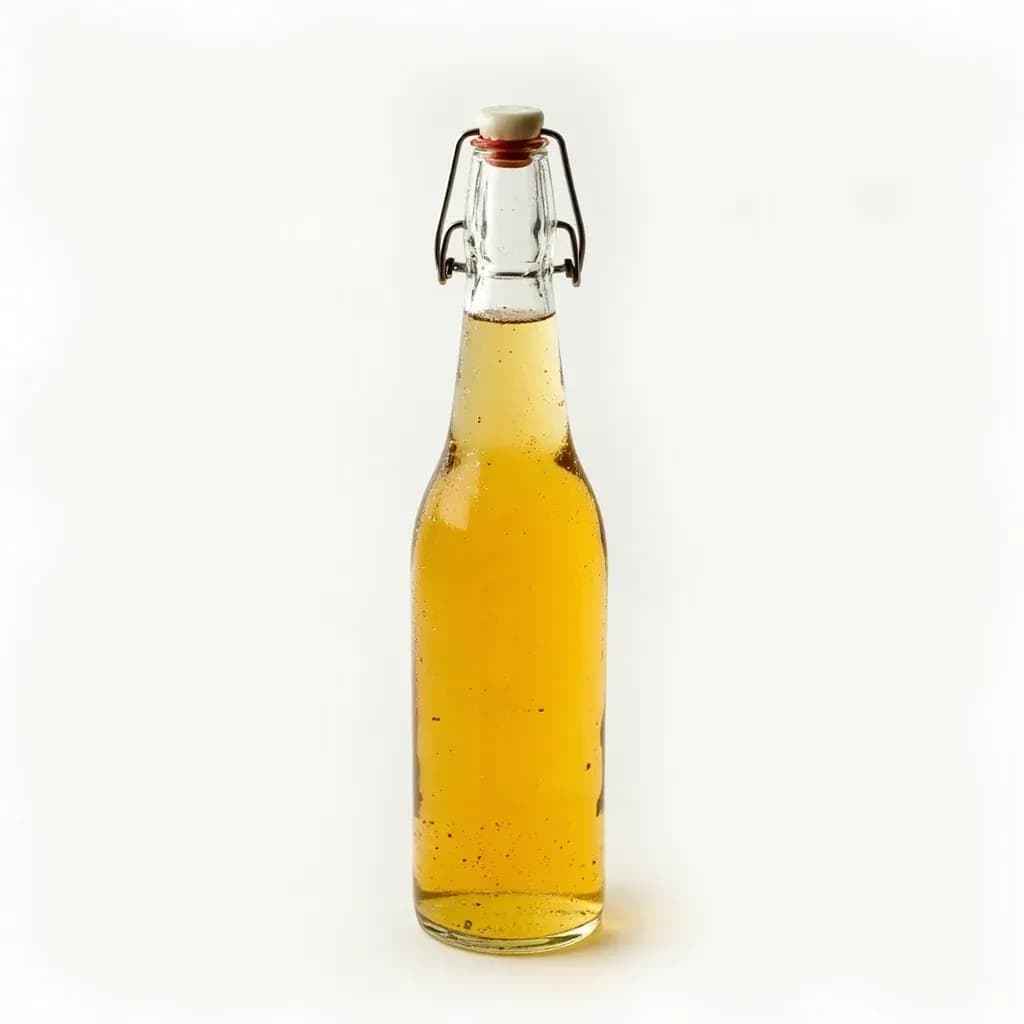
Reusable glass bottle with a hinged ceramic-and-rubber clamp seal for fizzy drinks and infusions.
A swing-top bottle, often called a Grolsch-style bottle, is a glass bottle sealed by a hinged wire bail that clamps a gasketed ceramic or plastic stopper onto the rim. The airtight seal holds carbonation, making it a favorite for home brewing, kombucha, water kefir, ginger beer, and flavored syrups. The clamp reseals indefinitely, so the same bottle is refilled batch after batch.
The swing-top bottle — almost universally called a Grolsch bottle after the Dutch brewery that popularized the design in the 1890s — is a heavy glass bottle sealed by a porcelain or plastic stopper pressed down onto a rubber gasket by a hinged wire bail. That mechanism is unusually robust for a reusable container: when the gasket is sound, it forms a hermetic seal capable of holding several volumes of CO2 pressure, which is why the format has survived more than a century in homebrewing long after most reusable bottles were replaced by crown caps and screw tops. It is one of the few truly reusable systems that genuinely handles carbonation.
For cooks and fermenters, the appeal is twofold. Practically, it handles the few kitchen tasks that demand a pressurized reusable vessel: bottle-conditioning beer and cider, capturing the natural carbonation of kombucha, water kefir, and ginger beer, and storing fermented hot sauces that may build a little gas in the bottle. Aesthetically, the clear or amber glass looks handsome on a table or pantry shelf and reseals cleanly between uses, making it a favorite for syrups, shrubs, vanilla extract, and homemade liqueurs where presentation matters as much as function.
The system has one built-in weakness: the rubber gasket. Glass, porcelain, and the steel bail last decades, but the rubber hardens, cracks, and eventually loses its seal — so a swing-top is only as good as the gasket inside it. Replace gaskets every one to three years, inspect them at every fill, and a brewing-grade bottle will outlast almost anything else in your kitchen.
Alternatives
Types & varieties
The classic: white glazed porcelain stopper, rubber ring, wire bail. Iconic but the stopper is the most fragile part if dropped on stone or tile.
Plastic stopper in place of porcelain; more durable drop-for-drop, slightly less premium feel, same pressure performance.
The default for beer and kombucha; filters UV light and protects against light-struck (skunky) off-flavors in hoppy ferments.
Used for syrups, shrubs, infusions, water kefir, and table service where the contents should be visible.
Decorative alternative to amber with partial UV protection; common in European retail.
The workhorse size for homebrewed beer, kombucha, and water kefir; matches many commercial bottle profiles.
Used for large-format ferments, ginger beer, and shareable infusions.
Single-serving sodas, cold-brew coffee, dressings, and table-bottle service.
Brewing-grade vs decorative bottles
Not all swing-tops are built to hold pressure. Brewing-grade bottles have noticeably thicker glass walls and a properly sized, food-grade rubber gasket that seats flat into a recessed groove — that groove is what lets the bail compress the stopper evenly and form a real seal. Decorative bottles sold for oil, vinegar, or gifts often have thinner glass, a shallower or absent groove, and a gasket that is decorative rather than functional. The difference is invisible until you fill one with actively fermenting kombucha and find it leaking across the counter, or worse, popping its stopper. If you intend to carbonate anything — beer, cider, kombucha, water kefir, ginger beer — buy bottles explicitly sold as brewing-grade, weigh your priming sugar carefully, and avoid the bargain-bin imports whose pressure rating is undefined.
The gasket: your bottle's only wear part
Glass and porcelain are essentially immortal in kitchen use; the steel bail may eventually rust if stored wet, but otherwise the bottle is a buy-it-for-life object. The rubber gasket is the one consumable. It hardens with age, loses elasticity, develops hairline cracks, and stops compressing under the bail — at which point the seal fails. Make gasket inspection a habit: pinch the ring before each fill. If it feels stiff, brittle, or no longer springs back, replace it. Gaskets are sold by size to match your specific bottle's neck diameter, and in a few materials — classic black rubber for brewing, silicone for higher-heat tolerance and longer life. Keep a small bag of spares on hand so a failed gasket doesn't take a bottle out of rotation.
Common uses
Tips & pitfalls
- Inspect the rubber gasket every time you fill the bottle: if it feels hard, cracked, or no longer compresses cleanly under the bail, replace it before sealing. A failing gasket is the cause of nearly every swing-top leak.
- Leave 2–4 cm of headspace when filling carbonating ferments. The space gives CO2 room to build without forcing the stopper or stressing the gasket.
- Never fill with hot liquid. Thermal expansion can unseal the gasket or crack the glass; always cool ferments fully to room temperature before sealing.
- Disassemble stopper, gasket, and bail before cleaning so you actually sanitize the seal groove and the underside of the stopper — the most commonly missed spots.
- Use amber glass for anything hop-based, light-sensitive, or intended to sit more than a few days; clear bottles are fine for short-term, refrigerated use only.
- Distinguish brewing-grade from decorative swing-tops before carbonating anything in them. Thin decorative bottles are not pressure-rated and can leak or pop their stoppers.
- Store sealed bottles upright so the gasket stays compressed evenly and the stopper isn't stressed by resting weight on the bail.
- Label every bottle with the date and contents. Opaque amber hides fermentation cues, and a year-old mystery bottle of unknown liquid is a common kitchen regret.
Good to know
- Also known as
- Grolsch-style bottle, flip-top bottle, bail closure bottle, lightning closure bottle
- Material
- Soda-lime or amber glass body; porcelain or plastic stopper; rubber or silicone gasket; stainless or coated steel wire bail
- Standard capacities
- 125 ml, 250 ml, 330 ml, 500 ml, 750 ml, and 1 L (500 ml and 1 L dominate in Europe; 32 oz / 950 ml is common in US homebrew)
- Pressure rating
- Brewing-grade bottles hold roughly 2–4 volumes of CO2; the gasket creates a hermetic seal suitable for carbonated beverages
- Temperature limits
- Cold or room-temperature liquids only — hot liquids can crack the glass or unseal the gasket
- Reusability
- Bottle and stopper are reusable indefinitely if not cracked; gaskets should be replaced every 1–3 years
- Cleaning
- Hand wash recommended; disassemble stopper and bail from the bottle; sanitize with no-rinse brewing sanitizer before fermentation use
- Origin
- Dutch brewery Grolsch adopted porcelain-stoppered swing-tops in the 1890s as a reusable alternative to cork; earlier versions existed, but Grolsch made the format famous
Also called
swing-top bottle · Grolsch bottle · flip-top bottle · bail-top bottle
Related

Freezer Bags
Thick, sealable bags built to fight freezer burn

Storage Bags
Resealable bags for fridge storage and marinating

Storage Container
Lidded container for leftovers, prep, and meal kits

Glass Container
Oven-to-fridge glass that won't stain or hold odors

Plastic Container
Lightweight, stackable storage for everyday leftovers

Vacuum Sealer Bags
Airtight bags for long freezing and sous-vide

Reusable Bags
Washable silicone bags that replace single-use plastic

Mason Jar
Sealed glass jar for preserves, pickles, and storage