Storage & Containers
Takeaway Container
Disposable lidded box for packing cooked food to go or storing leftovers.
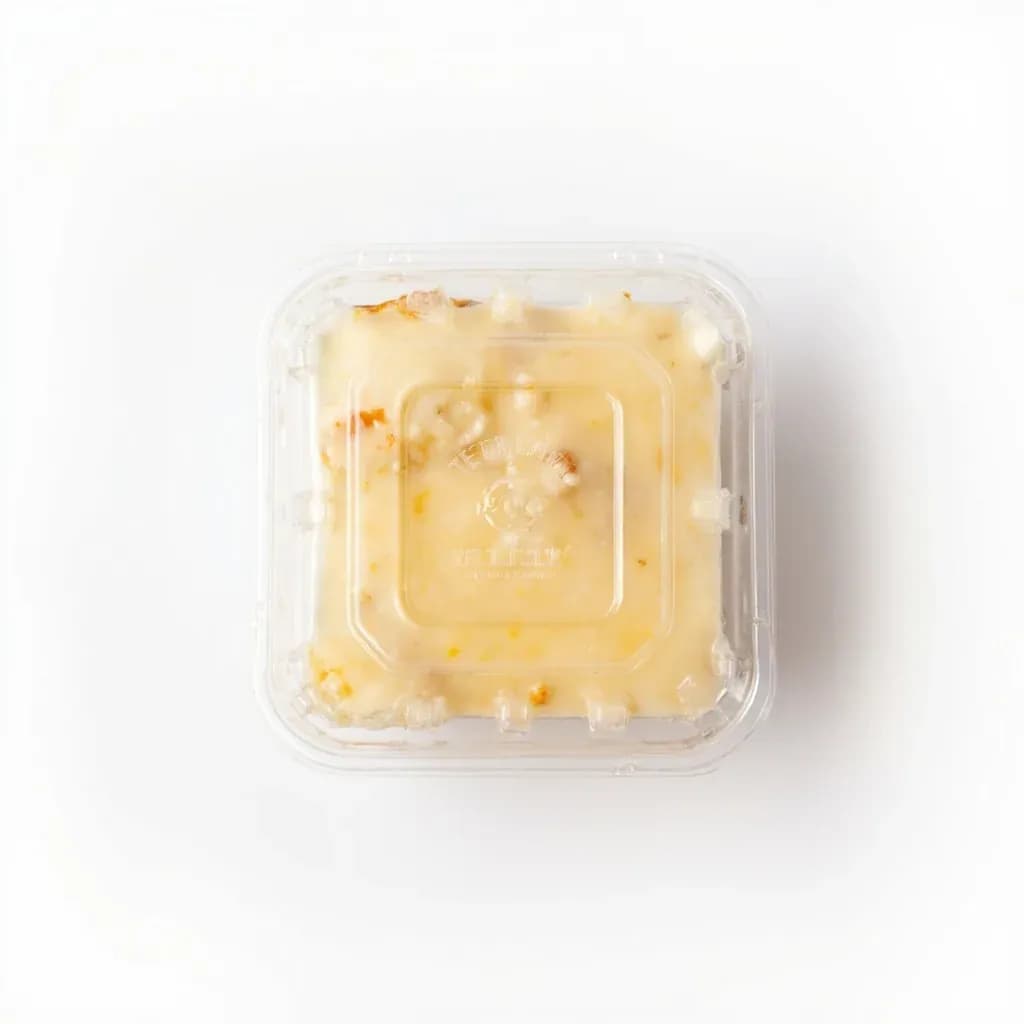
A takeaway container is a single-use or reusable lidded box, made of plastic, foam, paper, or aluminum, for transporting prepared food. Kitchens fill them for delivery and pickup, and home cooks repurpose them to portion meals and store leftovers in the fridge or freezer. Microwave- and freezer-safe versions let the same box go from storage to reheating.
A takeaway container is any lidded, single-use vessel designed to hold cooked food safely from kitchen to table — whether that table is across a delivery route, a car dashboard, or three days into the refrigerator. The category covers a surprising range of materials and forms, and the difference between a soggy, leaking mess and food that arrives intact almost always comes down to matching the container's properties to the food inside.
The single most useful distinction is material. Polypropylene (#5 PP) is the modern workhorse: stiff, translucent, microwave- and freezer-tolerant from roughly -20°C to 120°C. PET (#1) is the crystal-clear choice for cold foods and is the most widely curbside-recycled rigid plastic in this category. Foam polystyrene (#6 EPS) is cheap and insulating but increasingly banned and never microwave safe. Aluminum trays tolerate the oven up to about 220°C but cannot go in the microwave and react with acidic foods. Bagasse (molded sugarcane fiber), PLA bioplastic, palm leaf, and pressed bamboo are the compostable alternatives, each with different heat, grease, and end-of-life rules.
Form follows function: hinged clamshells for sandwiches and burgers, two-piece boxes for saucy mains, compartmentalized trays for plate-style meals, round soup cups with dome lids for liquids, and deli tubs for cold salads and poke. Lid fit matters as much as the body — a tongue-and-groove rim with locking tabs is what separates a soup-safe cup from a deli tub that will leak in a bag.
Alternatives
Types & varieties
Stiff, clear or translucent, microwave- and freezer-safe; the workhorse of modern takeout.
Lightweight and insulating for hot food, but not microwave safe and increasingly restricted by law.
Crystal-clear, rigid, oriented to cold food (salads, cold noodles, desserts); curbside-recyclable in most regions.
With or without a board lid; oven-safe, used for grilled meats, pies, and kebabs; never microwave.
Molded pulp, compostable, microwave- and freezer-safe up to about 120°C; tan or cream in color.
Corn-starch bioplastic that looks like clear plastic; industrial-compostable only, not microwave safe above roughly 50°C.
Cardboard noodle boxes, burger clamshells, and soup cups; the lining determines grease and heat resistance.
Pressed from areca leaf, fully compostable, decorative; common in upscale catering.
Pressed bamboo fiber, compostable, sturdy; an emerging alternative to bagasse.
Bagasse or pulp with 2–5 sections for plate-style meals of protein, starch, and vegetable.
PP or paperboard with a separate dome or flat lid; 8–32 oz, designed to be leak-resistant when upright.
Clear PP with a snap-hinge lid; standard 8–32 oz, used for cold salads, poke, and cut fruit.
Choosing by material
Before choosing a shape, decide on the material, because that decision governs heat tolerance, grease resistance, clarity, and end-of-life.
- PP (#5) is the safe default for hot, saucy, or reheated food; it is the only common plastic that handles the microwave and freezer together.
- PET (#1) is the clear choice for cold display — salads, poke, fruit, cold noodles — and recycles almost everywhere.
- Bagasse or kraft-with-PLA-lining is the best all-rounder for hot takeout when you want a compostable option, and both handle the microwave at serving temperatures.
- Aluminum trays are the only common takeaway format that goes in the oven, which makes them ideal for finishing or reheating at high heat; never put them in the microwave.
- Avoid EPS foam and PLA for any application involving heat or long holding times; PLA softens surprisingly low and foam is now restricted in many cities.
Heating, holding, and food safety
Takeaway containers are not interchangeable with cookware, and the wrong match can ruin food or the container.
- Reheat only in containers marked microwave safe, and look for the resin code: #5 PP is generally fine, #6 PS and most PLA are not.
- Always vent the lid (lift a corner or use vented film) before microwaving so steam can escape — sealed lids can blow off or warp the rim.
- Never put aluminum trays in a microwave; transfer foam clamshells to a plate before reheating.
- Skip aluminum for long holds of acidic or salty hot foods (tomato sauces, citrus curds, kimchi); the metal reacts and lends a tinny taste.
- For freezer storage, leave 1–2 cm (about ½ inch) of headspace above liquids — water expands and will crack rigid containers.
- Label lids with date and contents in marker; rubbing alcohol lifts the ink if you need to relabel.
Sustainability and end-of-life
The environmental story of the takeaway container has shifted sharply since the 2010s. Foam polystyrene clamshells, once ubiquitous, are banned for food service in many U.S. cities (including New York, San Francisco, and Seattle) and restricted in parts of the EU, because they fragment easily, are rarely recycled, and contaminate marine and terrestrial environments. Bagasse, PLA, palm leaf, and bamboo have filled the gap, but 'compostable' is not a single category.
- Bagasse breaks down in a home compost bin within weeks to a few months; palm leaf and bamboo are also compostable but typically take considerably longer to decompose at home.
- All four are accepted by industrial composting facilities, though acceptance varies by region and operator.
- PLA looks and feels like clear plastic but does not degrade in a home compost pile or landfill; it needs the high heat of an industrial facility to break down.
- PET is the most reliably curbside-recycled rigid plastic in this category; PP is recyclable but accepted in far fewer municipal streams.
- When sustainability is a priority, look for BPI or TÜV certification and verify that a nearby facility actually accepts the material, otherwise the container ends up in landfill like the foam it replaced.
Common uses
Tips & pitfalls
- Match the container to the food: hot, oily, or saucy dishes want PP or bagasse with a tight snap lid; cold salads belong in clear PET for visibility and recyclability.
- Always check the resin code and the printed microwave-safe symbol before reheating — #5 PP is the safest bet, #6 PS and most PLA are not.
- Vent the lid before microwaving by lifting one corner or using vented film; trapped steam can pop the lid off or warp the rim.
- Never microwave aluminum trays or foam clamshells — transfer foam food to a plate, and put foil pans in the oven instead.
- Avoid long holds of acidic or salty hot foods in bare aluminum; the metal reacts and imparts a metallic taste to tomato sauces and citrus curds.
- Choose compartmentalized trays for saucy mains so rice or salad on the side stays dry rather than swimming in gravy.
- For soups and curries, use containers specifically labeled leak-resistant or soup-safe with tongue-and-groove rims — ordinary deli tubs will leak when tilted in a bag.
- Don't reuse single-use takeaway containers indefinitely: PP warps in the dishwasher, and EPS foam degrades and can leach styrene over time.
- Stack containers only after they have cooled and the lids are slightly vented, or condensation will pool and turn fried food soggy.
- Pack fried items in vented clamshells or line the box with a paper napkin so steam escapes and the crust stays crisp.
- Buy in case quantities (typically 200–500 per case) for cost efficiency, and store flat so the rims do not crush and spoil the lid seal.
Good to know
- Category
- Disposable food packaging
- Primary materials
- Polypropylene (PP), polystyrene (PS), PET, aluminum, paperboard, bagasse, PLA, palm leaf, bamboo
- Resin codes
- #1 PET, #5 PP, #6 PS; PLA and bagasse are compostable, not curbside recyclable
- Common sizes
- 8, 12, 16, 24, 32 oz (≈240–950 ml); XL trays up to 48 oz
- Microwave-safe options
- PP (#5) and bagasse; PS foam and PLA are not microwave safe
- PP temperature range
- Approximately -20°C to 120°C (-4°F to 248°F)
- Aluminum heat tolerance
- Oven-safe up to roughly 220°C (425°F); never microwave
- Standard shapes
- Clamshell (hinged), two-piece box+lid, round bowl, compartmentalized tray, soup cup with dome lid
- Origin of clamshell
- Polystyrene foam clamshells entered commercial food service in the early 1980s in the U.S.
- Storage
- Store flat in original sleeve, away from heat and direct sunlight; shelf life typically 2–5 years
Also called
takeout container · to-go box · food container · takeaway box
Related

Freezer Bags
Thick, sealable bags built to fight freezer burn

Storage Bags
Resealable bags for fridge storage and marinating

Storage Container
Lidded container for leftovers, prep, and meal kits

Glass Container
Oven-to-fridge glass that won't stain or hold odors

Plastic Container
Lightweight, stackable storage for everyday leftovers

Vacuum Sealer Bags
Airtight bags for long freezing and sous-vide

Reusable Bags
Washable silicone bags that replace single-use plastic

Mason Jar
Sealed glass jar for preserves, pickles, and storage