Heat & Safety
Tea Cloth (Cha Jin)
Small absorbent cloth used to wipe tea bowls and utensils during preparation.
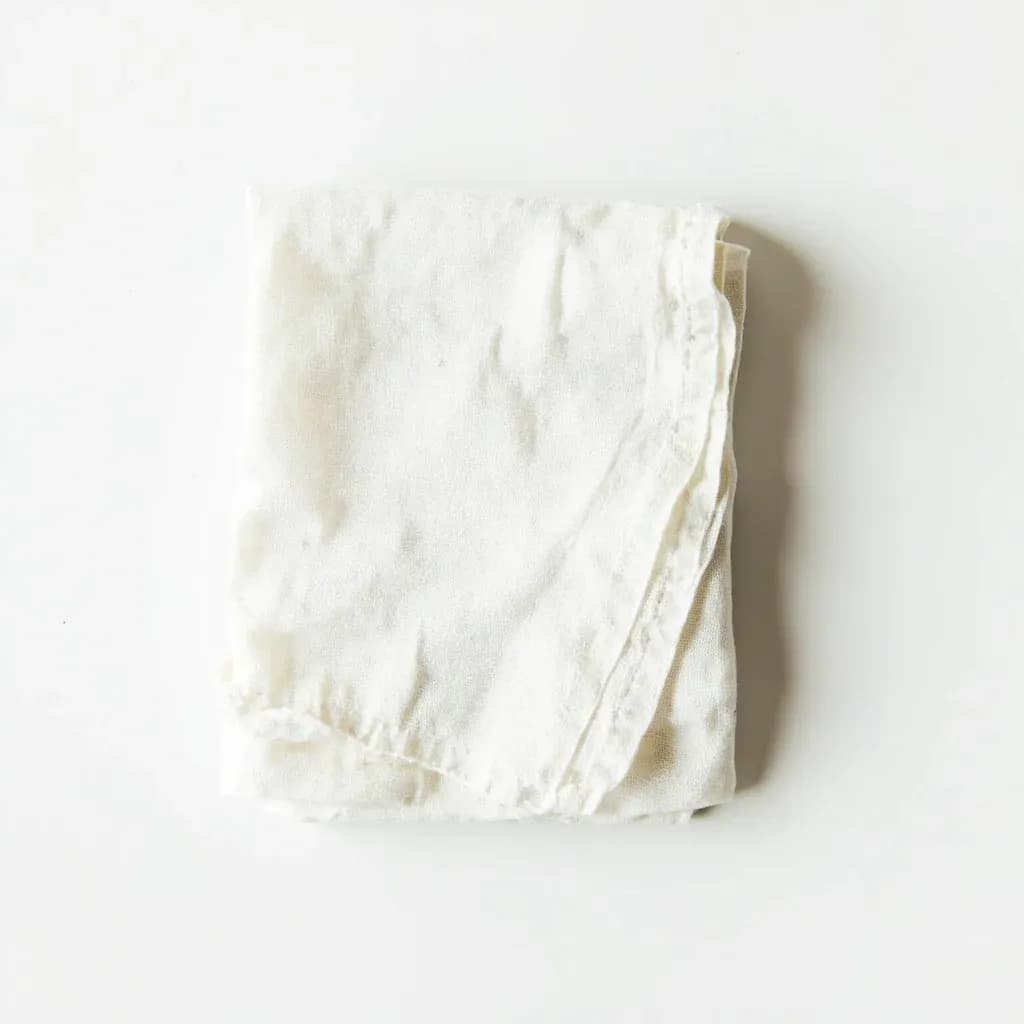
A tea cloth, known as cha jin in the Japanese tea tradition, is a small absorbent linen or cotton cloth used to wipe the rim and surface of tea bowls and to dry utensils. In matcha and gongfu service it keeps surfaces clean and handles hot, damp wares. The cloth is folded in a set way and kept reserved solely for tea work.
The cha-jin is a small, square cloth that sits at the center of the Japanese tea preparation setup, doing the unglamorous work of keeping bowls, scoops, and the host's hands clean and dry while signaling the host's discipline. In chanoyu it is treated as an extension of the host's care: a freshly laundered, neatly folded white square presented in front of the kettle. Outside formal practice the same cloth earns its place at any home matcha station, where a dedicated small linen square absorbs drips from the chasen, catches fine powder from the sifter, and tidies the rim of the chawan between guests. The cha-jin is less a tool than a habit, the small piece of linen that quietly keeps the rest of the equipment honest.
Material matters more than most cooks expect. Traditional cha-jin are woven from asa (linen) or hemp, fibers prized for absorbency, quick drying, and a hand that softens with use rather than pilling. Modern equivalents are usually cotton, easier to launder but holding moisture a touch longer. Silk and decorative dyed versions exist for presentation, but they are not the working cloth. A tea cloth is meant to be used, washed, and used again, and its whiteness is the point: in the tea room, a stained cha-jin is not just unsightly, it has lost its role.
Size, fold, and placement are part of the language of the tea room. A standard cha-jin measures roughly 30 cm square, hemmed on all four sides, folded in thirds lengthwise and then once across, with the clean folded edge facing the guest. The way a host handles it — the direction of a wipe, the order of folds — varies subtly between the Senke schools, but the underlying principle is the same throughout. A cha-jin in good condition and properly presented is a quiet declaration that the host is paying attention.
Alternatives
Types & varieties
Traditional choice; highly absorbent, quick-drying, develops a soft patina with washing
Common modern alternative; easier to launder, slightly less absorbent than linen
Decorated with motifs tied to a month or occasion (cherry blossoms, maple, plum); used for formal or seasonal gatherings
Bears a family or school crest; used in formal contexts and by certain lineages
Occasional decorative or presentation use; less practical for absorbing moisture
Larger or smaller versions appear in non-ceremonial kitchens; the formal cha-jin is consistently a small square
Care and Keeping
A cha-jin lasts for years if treated as the small working object it is. Launder in mild detergent, separately from kitchen towels that carry grease or strong odors, and skip the fabric softener — the waxy coating it leaves on the fibers is exactly what you do not want in a cloth meant to grip moisture. Line drying is preferable to machine drying, which beats the fibers and accelerates thinning. Press flat while still slightly damp, then fold in thirds lengthwise and once across to recreate the ceremonial presentation. Replace the cloth when the hems begin to fray or the body of the linen grows thin; an aged cha-jin is dignified, a ragged one is not.
- Wash in mild detergent, separately from soiled kitchen laundry
- Skip fabric softener and dryer sheets; both coat the fibers and reduce absorbency
- Line dry when possible; press flat while slightly damp
- Store folded, not crumpled, so creases stay even and presentation stays crisp
Cha-jin and Fukusa: A Common Confusion
The cha-jin is sometimes mistaken for the fukusa, the small silk square the host uses to wipe the tea scoop and the caddy. They are different objects with different jobs. The fukusa is decorative, signals the host's aesthetic, and never absorbs water; it is folded and returned to its resting place. The cha-jin is the absorbent working cloth, kept folded beside the host and put into contact with wet bowls, whisks, and fingertips. A practical test: if the cloth is expected to soak something up, it is a cha-jin. If it is expected to be admired, it is a fukusa.
Common uses
Tips & pitfalls
- Keep it scrupulously clean and white — visible staining is a lapse in form and removes the cloth from ceremonial use
- Dampen lightly and wring out thoroughly before wiping a bowl; a soaking wet cloth transfers water and lint to the tea
- Fold in thirds lengthwise first, then once across, so the clean folded edge faces the guest
- Wipe the bowl rim in a single, continuous motion; the direction of the wipe carries meaning within each Senke school
- Avoid fabric softener and dryer sheets; the residue they leave noticeably reduces absorbency
- Wash separately from heavily soiled laundry; mild detergent and line drying preserve fiber strength
- Replace when edges fray or the cloth thins — some schools welcome a soft aged linen, but never a ragged one
- Do not substitute a household kitchen towel in formal practice; size, weight, and presentation are part of the protocol
- For casual home matcha prep, a dedicated 30 cm square linen napkin is the closest authentic stand-in
Good to know
- Japanese name
- Cha-jin (茶巾), literally "tea cloth"
- Other names
- Fukin (general kitchen cloth); cha-kin, chakin
- Origin
- Japan; formalized through chanoyu from the 16th century onward, refined within the three Senke schools
- Traditional material
- Linen (asa) or hemp; modern equivalents commonly cotton
- Typical size
- Approximately 30 × 30 cm (12 × 12 in), square
- Fold
- Folded in thirds lengthwise, then once across, with the folded edge facing the guest
- Color
- Plain white for daily use; seasonal dyed or crested versions for formal occasions
- Care
- Washed separately, no fabric softener, pressed flat, stored folded
Also called
tea cloth · cha jin · chakin
Related

Paper Towels
Disposable sheets for spills, drying, and patting dry

Kitchen Towels
Reusable cloths for drying, gripping, and wiping

Oven Mitts
Heatproof gloves to handle hot pans and trays safely

Disposable Gloves
Single-use gloves for safe, mess-free handling

Cleaning Cloths
Reusable cloths for wiping counters and spills

Tortilla Warmer
Insulated holder that keeps tortillas warm and soft

Trivet
Heatproof stand that shields surfaces from hot pots

Ice Bath Setup
Bowl of ice water that halts cooking and sets color