Wraps & Liners
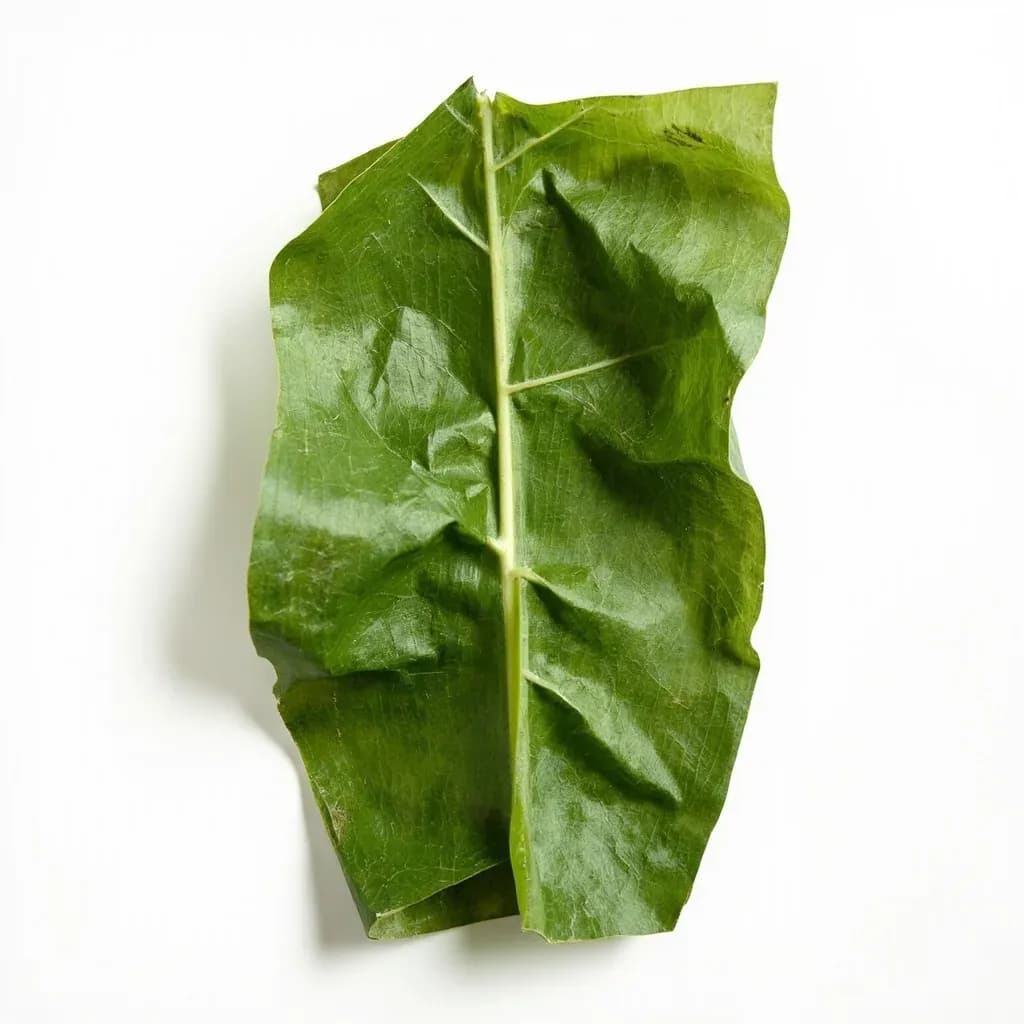
Teak Leaf (Wrapping)
Large teak leaves used to wrap and steam food, lending an earthy aroma in Southeast Asian cooking.
Teak leaves are broad, sturdy leaves used as natural food wrappers, especially in Javanese and Thai cooking. Cooks fold them around rice, fermented soybeans, or meat for steaming and slow cooking, where the leaf imparts a mild herbal aroma. The leaves also serve as biodegradable plates and liners.
Teak leaf (Tectona grandis) is a large, leathery leaf from the true teak tree, used across South and Southeast Asia as an aromatic cooking wrapper. Unlike banana leaf, the more familiar wrapper in Western kitchens, teak leaf brings a drier, more resinous character — earthy, woody, and faintly tannic, with a tea-like finish that whispers rather than announces itself. Because the tree is grown primarily for timber, culinary-grade leaves are a specialty product, most reliably sourced from Thailand, Laos, Myanmar, and parts of Indonesia and Malaysia, and they command a higher price than banana leaves where both are available.
The leaf's value in the kitchen lies as much in function as in flavor. At 30–60 cm long and 20–40 cm wide, it is large enough to wrap a whole fish fillet or to line a steamer basket, and its leathery structure holds up to steaming, grilling, and brief open-flame exposure without disintegrating. It contributes aroma without the moist, grassy sweetness of banana leaf, so cooks reach for it when they want fragrance without softness, and when the dish will be grilled or hot-smoked rather than long-steamed in liquid. The leaf itself is not eaten — it is fibrous and astringent — but the food inside takes on its scent while staying protected from direct heat.
Alternatives
Types & varieties
Picked mature, pliable when briefly warmed; the choice form for steaming and grilling wraps.
Lightweight and brittle until rehydrated or passed over flame; used for tea-style infusions and longer storage.
Sometimes sold flat and trimmed to uniform rectangles as an alternative to banana leaf sheets.
Reddish-bronze juvenile leaves, more aromatic and softer in texture; seasonal and harder to source.
Teak Leaf vs. Banana Leaf
Both leaves play the same structural role in the kitchen — large, non-edible, heat-tolerant aromatic wrappers — but they behave differently and suit different dishes. Teak leaf is drier and more fibrous, with a woodier, more astringent, tea-like fragrance. Banana leaf is plumper, more pliable, and higher in surface moisture; it lends a grassy, slightly sweet aroma and traps more condensation inside the parcel.
- Reach for banana leaf when the dish is liquid-heavy — steamed curries, rice puddings, fish in coconut milk — or when you want a sweet, fresh-green aroma.
- Reach for teak leaf when the dish is grilled, smoked, or dry-steamed, and when you want a resinous, woody note rather than grassiness.
- If swapping one for the other, expect to adjust the added liquid: teak leaf holds less moisture than banana leaf, so reduce liquid somewhat when substituting teak in a banana-leaf recipe.
- Teak leaf tolerates brief direct flame better; banana leaf scorches more quickly and is often shielded with foil or a second layer underneath.
Sourcing and Storage
Outside Southeast Asia, teak leaf is a specialty item. Thai, Lao, and Burmese grocery stores in larger cities may carry it fresh or dried; otherwise, look to online suppliers who specialize in Southeast Asian ingredients. Because the tree is grown for timber rather than for cooking, culinary-grade leaves are usually a side product of pruning, and quality varies.
- Buy fresh whenever possible — the leaves are more pliable and the aroma is cleaner. Inspect for black spots, dry brown edges, or brittleness, all signs of age.
- Store fresh leaves wrapped in a slightly damp cloth in the refrigerator; use within 3–5 days.
- Dried leaves keep for months in a sealed container in a cool, dark place. Steam them for 30–60 seconds before folding or they will shatter.
- Ask your supplier to confirm the leaves are unsprayed; teak orchards are rare, and roadside or plantation leaves may have been treated.
Common uses
Tips & pitfalls
- Pass a cold fresh leaf briefly over an open flame, a hot dry skillet, or dip it in hot water for a few seconds to make it pliable — cold leaves crack along the veins.
- Trim the thick central rib close to the underside with kitchen shears so the leaf folds flat and the seam seals cleanly into a parcel.
- Place the seam side up when steaming or grilling so condensate runs off instead of pooling inside the wrap and diluting the food.
- Do not eat the leaf itself: the texture is fibrous and the tannins are unpleasant. Peel it away before eating the contents.
- If substituting teak leaf for banana leaf, expect less moisture retention and a drier, more astringent aroma — reduce added liquid slightly.
- For grilling, brush or spray the outside of the leaf with oil to slow scorching, and keep parcels small and off direct flame where possible.
- Dried leaves are brittle — steam them 30–60 seconds before folding, or they will shatter mid-wrap.
- Use fresh leaves within a few days of purchase; black spotting, dryness, or cracking means they are past their prime and will leak.
Good to know
- Botanical source
- Tectona grandis, the true teak tree
- Origin
- Native to South and Southeast Asia — India, Myanmar, Thailand, Laos, Malaysia, Indonesia
- Typical leaf size
- Mature leaves 30–60 cm long, 20–40 cm wide; broadly oval to elliptical
- Texture
- Leathery, slightly rough and pubescent, with prominent veining
- Color
- Deep green when mature; reddish-bronze when young
- Form
- Sold fresh by the leaf, or pressed and dried into flat sheets
- Flavor imparted
- Earthy, woody, faintly tannic and tea-like; subtle rather than assertive
- Heat tolerance
- Holds up to steaming, grilling, and brief open-flame exposure without disintegrating
- Edibility
- Used as a wrapper only; the leaf is too fibrous and astringent to eat
- Fresh storage
- Refrigerate wrapped in a damp cloth, 3–5 days
- Dried storage
- Months in a cool, dry, sealed container away from light
Also called
Teak Leaf Wrapper · Daun Jati
Related

Aluminum Foil
Wraps, covers, and tents food for the oven and grill

Parchment Paper
Nonstick liner for clean, even baking and easy release

Wax Paper
Moisture-resistant sheet for wrapping and counter prep

Plastic Wrap
Clings tight to cover bowls and wrap leftovers

Silicone Baking Mat
Reusable nonstick liner that replaces parchment

Cheesecloth
Loose-woven cloth for straining stock and bundling herbs

Beeswax Food Wrap
Reusable wax wrap that molds around bowls and produce

Piping Tips
Shaped nozzles that turn frosting into stars and rosettes