Wraps & Liners
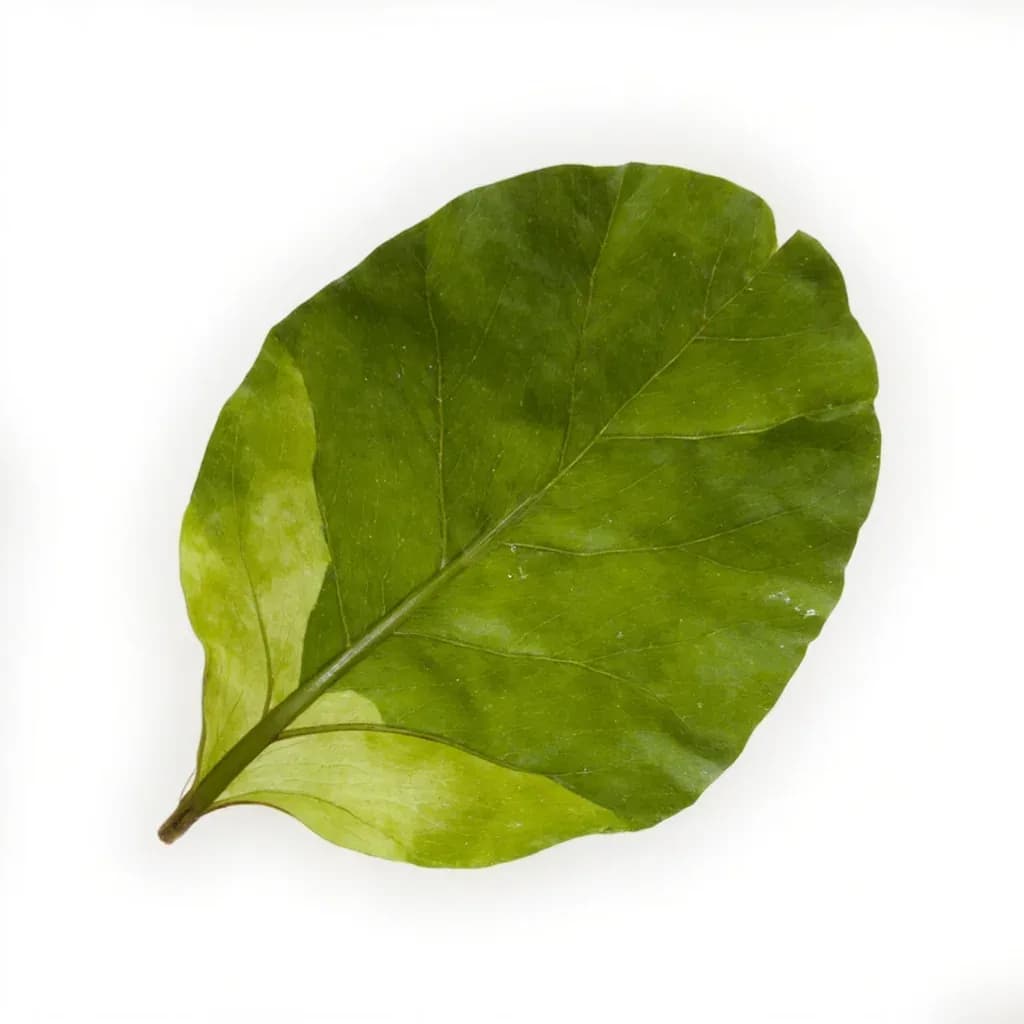
Turmeric Leaf (Wrapping)
Fragrant broad leaf used to wrap fish and rice cakes, lending an earthy aroma.
A turmeric leaf is the broad, fragrant leaf of the turmeric plant, used to wrap fish, batters, and rice cakes before steaming or grilling. As the parcel cooks, the leaf releases a warm, earthy aroma into the food, common in South and Southeast Asian dishes like patra ni machhi and otak-otak. The leaf is discarded after cooking, valued for scent rather than eating.
Turmeric leaf is the broad, glossy blade of the turmeric plant (Curcuma longa) — the same ginger-family perennial that gives us dried turmeric powder, but in a fresher, greener, more herbaceous register. In the kitchen it does two distinct jobs: it acts as a cooking wrapper that steams or grills into a pliable, water-resistant parcel, and, when shredded, it dissolves into curries and stir-fries as a soft aromatic ribbon. The aroma is recognizably turmeric — earthy, slightly peppery, faintly bitter — but lifted with leafy, almost minty brightness that the dried rhizome never delivers. The leaf is most at home in Indonesian, Malaysian, Singaporean, Thai, and South Indian cooking, where it defines whole families of dishes from Sundanese pais to Javanese botok to the grilled fish-paste logs of otak-otak.
The leaf's strength is also its weakness: it is large, fibrous, and stubbornly folded along a thick central midrib. That midrib must be removed or softened before the leaf will cooperate, and brittle leaves tear during folding. Treated properly — wilted over a flame, brushed with oil, secured with pandan or banana-leaf ties rather than wire — it survives bamboo steamers, charcoal grills, and even brief pan-frying, releasing a steady stream of aroma into whatever it encloses. For many cooks outside Asia it remains a specialty item, but a single leaf changes the smell of a plain steamed fish or rice cake into something immediately recognizable.
Turmeric leaves are essentially a by-product of rhizome cultivation, which makes them one of the more sustainable natural wrappers available: the plant is grown primarily for the root, and the leaves are taken fresh as needed where the plant grows. Outside those regions they are most often frozen for export, since dried leaves keep poorly and lose most of their volatile aroma. They are not interchangeable with banana leaf — banana gives tensile strength and a grassy, tea-like note, while turmeric gives flavor — and the two are frequently layered, with banana on the outside for structure and turmeric on the inside for aroma.
Alternatives
Types & varieties
The standard culinary wrapper. Large, broad, deep green leaves with a strong but balanced aroma; the reference leaf for Indonesian pepes and most Thai curry work.
Smaller and more intensely fragrant leaves, used in some regional curries and ceremonial cooking in South and Southeast Asia; the rhizome is better known than the leaf.
Closely related plant whose leaves appear occasionally in Indonesian and southern Thai cooking, with a slightly more camphoraceous, sharper aroma than common turmeric.
Leaves used in some Bengali and South Indian households as a flavoring wrapper; milder aroma with a faint raw-mango note and a more delicate texture.
Identifying turmeric leaf at the market
Fresh turmeric leaves look like oversized, deeply veined versions of a canna or ginger leaf — long, oblong, and slightly ribbed, with a glossy dark-green upper surface and a paler, matte underside. The midrib is the giveaway: it is thick, pale, and runs the full length of the blade, and it is the part that has to come off before wrapping. Avoid leaves that are yellowing, split along the rib, or brittle at the tip; they have either aged past their useful life or been stored too dry. At Asian markets the leaves are sometimes sold individually, sometimes stacked and tied in bundles, and increasingly available frozen or vacuum-sealed for export. Banana leaf is often sold alongside — the two look superficially similar in pre-cut pieces, but banana leaf is broader, more oval, and has parallel veins running straight from midrib to edge, while turmeric leaf's secondary veins branch off the central rib at an angle.
Working with the leaf: midrib, wilting, and tying
Treat the leaf in three stages — strip, soften, fold — and most wrapping problems disappear. Strip means removing or scoring the midrib with the back of a knife so the leaf can lie flat. Soften means passing the leaf briefly over a gas flame, dipping it in hot water for 5–10 seconds, or laying it on a hot pan until it relaxes from crisp to pliable; this also wakes up the aroma compounds. Fold means bringing the leaf shiny-side out around the filling, leaving 1–2 cm of headroom for steam, and securing the parcel. Ties matter: pandan strips knotted around the parcel, thin folded strips of banana leaf, or plain toothpicks all work; bare metal wire heats up on the grill and will cut straight through the leaf. For parcels that will be turned on a grill or in a pan, lay a banana leaf underneath for tensile strength and a turmeric leaf inside for flavor.
The pepes, pais, and otak-otak family
Turmeric leaf is the defining wrapper of a whole cluster of dishes across the Malay world. Indonesian pepes — most famously pepes ikan (fish) and pepes ayam (chicken) — bind spiced protein with grated coconut, shallot, garlic, chili, candlenut or macadamia, lemongrass, and a small amount of terasi, then wrap it in turmeric leaf and steam or grill it. Sundanese pais is the same family with a slightly different spice balance, often including kaffir lime and more chili. Javanese botok wraps a similar mixture, sometimes with tempeh or vegetables, in a smaller, tighter parcel. Across the strait, Malay and Singaporean otak-otak turns the fish-paste mixture into a log or patty, wraps it in turmeric leaf, and grills it over coconut-shell coals until the leaf chars at the edges and the paste inside is just set. In all of these, the leaf is not a garnish — it is the flavor vehicle, and substituting banana leaf alone changes the character of the dish.
Beyond wrapping: shredded leaves in curries and rice
Outside the wrapping tradition, turmeric leaves are also sliced into fine ribbons and stirred into Thai-style curries and stir-fries, where they soften into silky green strands that give a dish its characteristic fresh-turmeric perfume. In South India, particularly Kerala and parts of Karnataka, the leaves appear in regional steamed snacks and rice preparations, sometimes layered in a steamer with rice or grated coconut for puttu-style dishes, sometimes wrapped around spiced lentil or coconut fillings. Frozen or shipped turmeric leaves work fine for these shredded applications, where the leaf is going to cook down anyway; for whole-leaf wrapping, fresh is meaningfully better.
Common uses
Tips & pitfalls
- Score or strip out the thick central midrib before folding; the rib causes the leaf to crack along the fold and traps steam unevenly, leaving the center underdone.
- Pass the leaf briefly over an open flame or dip it in hot water for 5–10 seconds to make it pliable and to amplify its aroma before wrapping — folding a cold, stiff leaf almost guarantees a split parcel.
- Brush the outside with coconut oil or a thin neutral oil before grilling to slow charring and give a glossy finish; do this after wilting, not before, or the oil will slide off.
- Don't overfill the parcel. Leave at least 1–2 cm of headroom so steam can circulate; tightly packed parcels stay raw in the center and burst the leaf open.
- Use the freshest leaves you can find. Dried turmeric leaves lose most of the volatile aroma and turn papery and brittle — they are not a reliable substitute for fresh or properly frozen leaves.
- Avoid bare metal wire or thin metal skewers as ties. They conduct heat and will cut straight through the leaf on a hot grill; use toothpicks, knotted pandan strips, or thin folded banana-leaf ties instead.
- For large fish or whole birds, layer two turmeric leaves with their midribs at right angles — the cross-grain structure stops the parcel from tearing along a single fold line.
- Rest finished parcels for 2–3 minutes before unwrapping. The leaf releases a final burst of aroma as it cools, and the filling finishes setting in the residual steam.
Good to know
- Botanical source
- Curcuma longa (turmeric plant), family Zingiberaceae — the same species as the dried spice
- Leaf size
- Typically 30–100 cm long, 10–20 cm wide, oblong to lanceolate, with a thick fibrous midrib
- Aroma profile
- Earthy, mildly peppery, fresh herbal, with a faint ginger-mint note — softer and greener than the dried rhizome
- Key aroma compounds
- Sesquiterpenes including turmerone, atlantone, and zingiberene, plus leafy aldehydes
- Storage (fresh)
- Wrap in a damp paper towel, seal in a bag, and refrigerate for 5–7 days; mist if the towel dries out
- Storage (longer)
- Blanch 10–15 seconds, drain, and freeze flat in bags for several months; dried leaves lose most of their aroma
- Heat behavior
- Holds shape in steam and over moderate coals; chars quickly over open flame and tears if the midrib is not softened
- Common partners
- Banana leaf (for structure), coconut, fish, shrimp paste (terasi/belacan), chili, lemongrass, galangal, kaffir lime
Also called
turmeric leaf · haldi leaf · daun kunyit
Related

Aluminum Foil
Wraps, covers, and tents food for the oven and grill

Parchment Paper
Nonstick liner for clean, even baking and easy release

Wax Paper
Moisture-resistant sheet for wrapping and counter prep

Plastic Wrap
Clings tight to cover bowls and wrap leftovers

Silicone Baking Mat
Reusable nonstick liner that replaces parchment

Cheesecloth
Loose-woven cloth for straining stock and bundling herbs

Beeswax Food Wrap
Reusable wax wrap that molds around bowls and produce

Piping Tips
Shaped nozzles that turn frosting into stars and rosettes