Storage & Containers
Vacuum Seal / Sous-Vide Bag
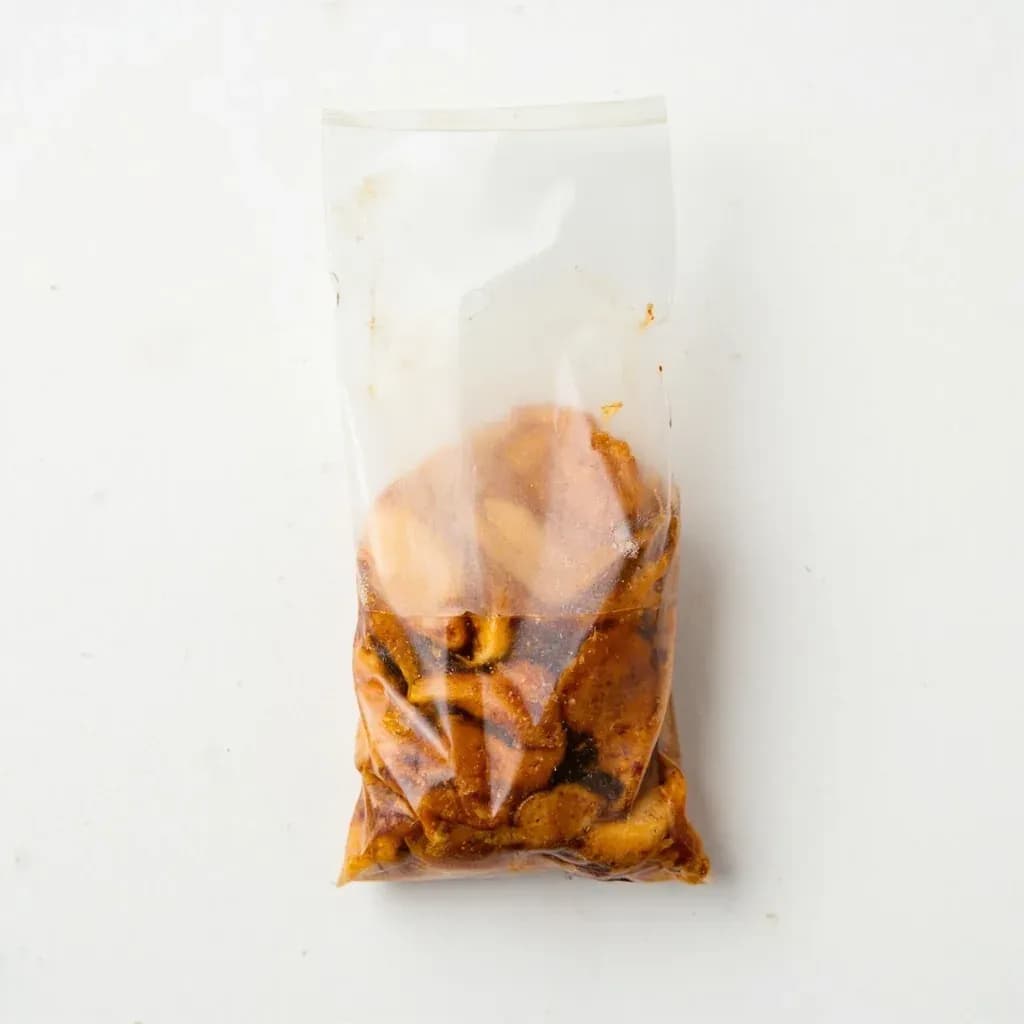
Air-tight plastic pouch sealed by a vacuum machine for storage and sous-vide cooking.
A vacuum seal bag is a sturdy plastic pouch from which air is drawn out by a vacuum sealer before the open end is heat-fused shut. Removing air extends fridge and freezer life, prevents freezer burn, and packs food compactly. The same bags are used for sous-vide, where food cooks submerged in a precisely temperature-controlled water bath while sealed against the water.
A vacuum seal bag is a heat-sealable plastic pouch engineered to create an airtight, watertight closure capable of withstanding the external pressure differential generated when air is evacuated. Unlike ordinary zip-top storage bags, vacuum bags are constructed from polyethylene, nylon, or multi-layer laminates that fuse under controlled heat and pressure, producing a seal that remains intact under vacuum conditions, during submersion in water baths, or under the weight of frozen food. This material distinction is critical: standard zip-lock bags lack the structural integrity for vacuum sealing and are not certified safe for sous-vide cooking, where prolonged exposure to elevated temperatures can cause them to fail or leach contaminants. The bags come in smooth-edge and textured varieties matched to specific vacuum systems, and range from lightweight 3-mil storage pouches to heavy-duty 6-mil reinforced options rated for sous-vide immersion at 200°F or higher.
Alternatives
Types & varieties
Designed for external vacuum sealers with tube extraction; air is pulled through the bag and out the connection port
Nylon construction with internal channels that allow air to be evacuated in chamber sealers; required for these machines
Multi-layer construction rated for sustained temperatures of 200°F or higher; essential for precision water-bath cooking
Continuous rolls cut to custom sizes; most economical for variable portion sizes and sous-vide cooks
Ready-to-use pouches in standard dimensions; convenient but less economical than roll stock
Heavy-duty construction for sharp-edged items or extended freezer storage where puncture resistance matters
Gusseted bottom allows bags to stand upright; ideal for soups, liquids, or pantry organization
Material Construction and Why It Matters
Vacuum seal bags are distinct from ordinary zip-top storage bags in their fundamental construction. True vacuum bags use heat-sealable materials that fuse under controlled temperature and pressure, creating a closure that withstands the external pressure differential when air is evacuated. Standard zip-lock bags are not rated for vacuum sealing or sous-vide cooking and may fail under vacuum pressure or release microplastics at elevated temperatures. For sous-vide applications, bags must be specifically certified for the target temperature and cooking duration.
- Multi-layer laminates combine polyethylene's food-safe properties with nylon's temperature and puncture resistance
- Bags marked "food-safe" and BPA-free meet FDA requirements for food contact
- Thickness (mils) directly correlates to durability: heavier bags resist punctures and withstand longer sous-vide cooks
Choosing the Right Bag for Your Vacuum System
Matching bag type to your vacuum sealer is essential for proper air removal. Using the wrong combination results in incomplete evacuation and wasted bags.
- External (tube) vacuum sealers require smooth-edge bags; air exits through the machine's tube connection
- Chamber vacuum sealers require textured or channel bags; the internal ridges allow air to be pulled evenly across the bag surface
- Mixing bag types between systems produces poor seals and air retention
Common uses
Tips & pitfalls
- Use only bags specifically rated for vacuum sealing—regular plastic bags will split under vacuum pressure
- For sous-vide cooking, choose high-temperature nylon bags (not standard polyethylene storage bags) to prevent leaching and seal failure
- Smooth-edge bags work with external vacuum sealers; textured bags are required for chamber machines—using the wrong type causes poor air removal
- Double-seal critical for sous-vide: seal twice or fold the bag edge before sealing to guard against single-seal failures during long cooks
- Never overfill bags—leave 2–3 inches of space above food to ensure the seal area stays clean and dry
- Pre-chill or freeze liquids before vacuum sealing to prevent liquid being drawn into the vacuum port
- Clean the sealing bar and gasket regularly—residue causes weak or failed seals
- For fatty foods (sausage, bacon), use a lower vacuum level or pre-freeze the item briefly to prevent fat extraction that breaks the seal
Good to know
- Common Materials
- Polyethylene, nylon, or multi-layer constructions (nylon/polyethylene blends)
- Thickness Range
- 3–6 mils for standard storage; 4–6 mils for sous-vide applications
- Typical Sizes
- 8"×10" (single portion) to 12"×18" (bulk storage); rolls allow custom sizing
- Temperature Resistance
- Standard bags: -40°F to 160°F; High-temp nylon bags: up to 200°F or 210°F for sous-vide
- Food Safety
- FDA-approved, BPA-free materials; look for "food-safe" marking
- Reusable Options
- Some silicone and heavy-duty nylon bags rated for multiple uses; most are single-use
- Vacuum System Compatibility
- Smooth-edge bags for external (tube) vacuum sealers; textured/coarse-edge for chamber vacuums
- Shelf Life Extension
- Refrigerator: 1–2 weeks (vs. 2–3 days standard); Freezer: 2–3 years when properly sealed
Also called
kitchen-roll-bag-vac · Sous-Vide Bag · sous-vide-bag · Vacuum-Seal Bags · vacuum-seal-bags · Vacuum Pouch Roll · Vacuum Seal Bag Roll · vacuum-pouch
Related

Freezer Bags
Thick, sealable bags built to fight freezer burn

Storage Bags
Resealable bags for fridge storage and marinating

Storage Container
Lidded container for leftovers, prep, and meal kits

Glass Container
Oven-to-fridge glass that won't stain or hold odors

Plastic Container
Lightweight, stackable storage for everyday leftovers

Vacuum Sealer Bags
Airtight bags for long freezing and sous-vide

Reusable Bags
Washable silicone bags that replace single-use plastic

Mason Jar
Sealed glass jar for preserves, pickles, and storage