Wraps & Liners
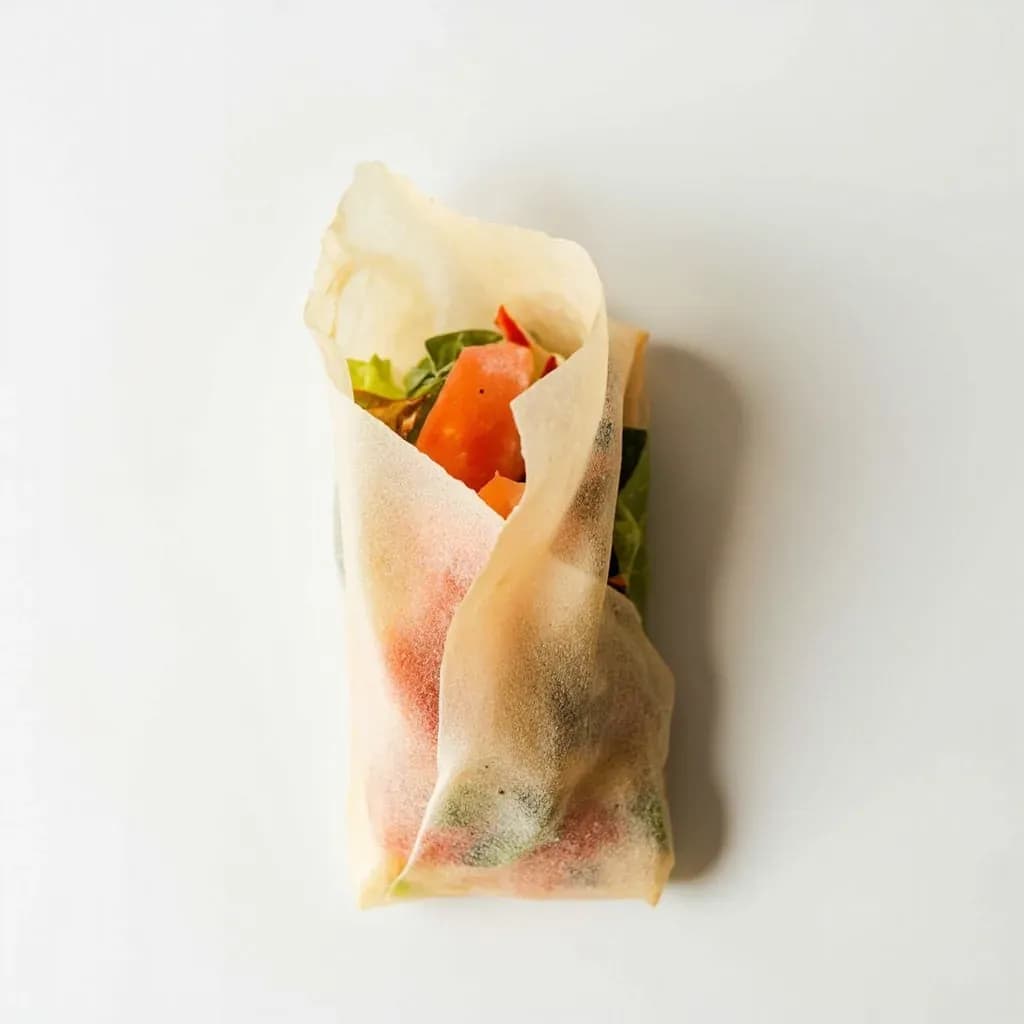
Vegan Food Wrap
Plant-wax coated cloth wrap that clings to bowls and food without beeswax or plastic.
Vegan food wrap is a reusable cloth, usually cotton coated with plant wax, plant oil, and tree resin, used in place of plastic wrap and beeswax wrap. Warmed by the hands, it softens and molds around bowls, cut produce, and bread, then sets to hold its shape. It is washed in cool water and reused for up to a year, then composted.
A vegan food wrap is a square of cotton, hemp, or recycled-cotton cloth impregnated with a plant-based wax blend — most commonly candelilla, sometimes carnauba, soy, or rice bran wax — and almost always a small dose of pine rosin to give it grip. The wax fills the weave and leaves a soft, slightly tacky surface that moulds to bowls, jars, bread, and cheese with the warmth of your hands, then stiffens again as it cools to hold its seal. It is the direct, animal-free cousin of the beeswax wrap, and the broader cloth food-wrap category was pioneered by Abeego in British Columbia in 2008.
For a cook, the appeal is twofold. It is genuinely plastic-free and home-compostable at end of life, replacing cling film for cold and room-temperature storage of bread, cheese, produce, and covered bowls. And it behaves well in the hand: a quick scrunch between the palms re-softens the wax, the wrap drapes where you want it, and the rosin makes it self-adhesive without ever being truly sticky. Its limits are real, though — the wax softens at around 60–65 °C, so it cannot handle hot food, dishwashers, or microwaves, and it should not be used with raw meat or fish because it cannot be sanitised with hot water or bleach.
Alternatives
Types & varieties
The most common vegan style; harder than beeswax, glossier, with the strongest cling thanks to a typical candelilla-plus-rosin blend
Use palm-derived carnauba wax; very hard and high-gloss, often blended with a softer wax for pliability
Softer hand and lower melt point; usually blended with candelilla or carnauba and rosin to recover cling
Byproduct of rice bran oil refining; smooth, slightly creamy feel, almost always used in a blend
The default fabric: light to medium weight, available printed or plain, easy to fold
Stronger, more textured, and longer-lasting than cotton; the original Abeego-style construction
Made from upcycled textile offcuts; a lower-impact fibre choice
Pre-coated fabric sold by the metre for cutting and heat-sealing custom sizes at home
Understanding the wax blend
The wax is what does the work, and the choice of wax changes how a wrap feels in the hand. Harder waxes (candelilla, carnauba) give a stiffer, glossier wrap that grips aggressively and holds sharp folds — good for wrapping cheese or sealing a bowl. Softer waxes (soy, rice bran) feel closer to fabric and drape more naturally over odd shapes, but cling less firmly and wear through faster. Pine rosin, a tree resin, is the third leg: it adds the tack that lets the wrap self-seal, and most manufacturers keep it at a small percentage so the surface grips without ever feeling sticky. Jojoba or coconut oil is often added in tiny amounts to keep the blend from cracking.
- Candelilla-dominant blends: stiffest, longest-lasting, strongest seal
- Carnauba-dominant blends: hardest surface, high shine, can feel board-like cold
- Soy- or rice-bran-heavy blends: fabric-like drape, gentler cling, faster to wear
- Rosin content: higher = tackier and better seal, but can yellow and slow composting
Refreshing and reviving a tired wrap
A well-used vegan wrap loses wax long before it loses fabric, and a few minutes in a low oven will put the coating right. Lay the wrap on a sheet of parchment on a baking tray, slide it into an oven at 80–100 °C / 175–215 °F for 2–4 minutes until the wax has just melted into the cloth, then lift it out and smooth the surface with a spatula as it cools. If the wrap is patchy or sticky, sprinkle a little extra grated candelilla or soy wax over the bare spots, sandwich between two sheets of parchment, and press with a warm iron. Refreshed this way, a good wrap can last close to two years; one that has torn fabric, soaked-up odours, or worn through to bare cloth is finished and should go in the compost, cut into small pieces to help the rosin break down.
Common uses
Tips & pitfalls
- Scrunch the wrap between your palms for 10–20 seconds before each use — body heat re-softens the wax and dramatically improves cling
- Never use with raw meat, raw fish, or raw poultry: the wrap cannot be washed hot enough to sanitise it
- Let food cool to room temperature before wrapping; anything above ~60 °C / 140 °F will melt the wax into the food
- Wash in cool or lukewarm water with mild soap only — hot water strips the wax and a dishwasher will ruin a wrap in one cycle
- Avoid prolonged contact with highly acidic wet foods (cut pineapple, citrus halves, raw onion for more than a day); acid degrades the wax coating
- Air-dry flat or hung; never wring, which cracks the wax and breaks the seal
- Fold food inward against the waxed side, not the raw fabric edge, so nothing touches an uncoated surface
- Layer two wraps for awkward shapes — half an apple, a bunch of herbs, the cut end of a cucumber — where one wrap cannot get a good grip
Good to know
- Material
- Plant-based fabric (cotton, organic cotton, hemp, or recycled cotton) coated with plant waxes and usually a little pine rosin
- Common waxes
- Candelilla (most common), carnauba, soy, and rice bran wax, often blended
- Heat limit
- Wax softens at 60–65 °C / 140–150 °F; not for hot food, microwaves, or dishwashers
- Standard sizes
- Small (~18 × 20 cm), Medium (~25 × 28 cm), Large (~33 × 36 cm)
- Lifespan
- Roughly 6–24 months with normal use; the coating can be refreshed and the wrap is compostable at end of life
- Care
- Hand-wash in cool water with mild soap, air-dry, refresh briefly in a low oven
- Cost range
- Typically £8–£16 / $10–$20 per wrap, on par with beeswax versions
- Origin of category
- The cloth food-wrap category was pioneered by Abeego in British Columbia in 2008 using beeswax; vegan plant-wax versions emerged shortly after as animal-free alternatives
Also called
vegan food wrap · vegan beeswax wrap alternative · plant-wax food wrap
Related

Aluminum Foil
Wraps, covers, and tents food for the oven and grill

Parchment Paper
Nonstick liner for clean, even baking and easy release

Wax Paper
Moisture-resistant sheet for wrapping and counter prep

Plastic Wrap
Clings tight to cover bowls and wrap leftovers

Silicone Baking Mat
Reusable nonstick liner that replaces parchment

Cheesecloth
Loose-woven cloth for straining stock and bundling herbs

Beeswax Food Wrap
Reusable wax wrap that molds around bowls and produce

Piping Tips
Shaped nozzles that turn frosting into stars and rosettes