Heat & Safety
Grapevine Cuttings (Sarmientos)
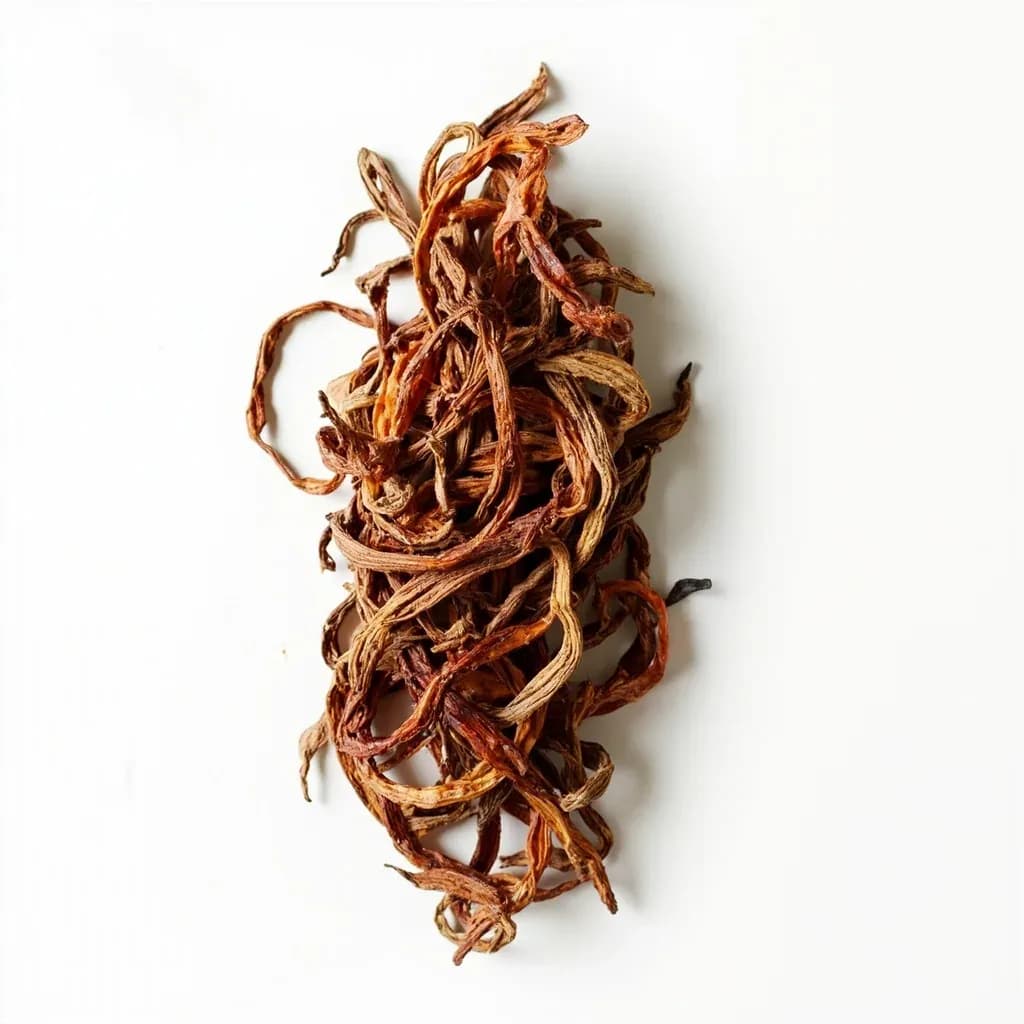
Dried prunings of grapevine burned as aromatic fuel for grilling, especially Spanish chuletas and seafood.
Grapevine cuttings, called sarmientos in Spanish, are the dried woody prunings of grapevines used as a fast, fragrant grilling fuel. They burn hot and quick to glowing embers, imparting a delicate smoky-fruity aroma prized for grilling lamb chops, chorizo, and seafood. Because they flame up and die down rapidly, cooks feed them in handfuls to keep a lively fire over an open grill.
Sarmientos are the dried woody canes pruned from dormant grapevines each winter — a byproduct of vineyard work that, across northern and central Spain and northern Portugal, has been turned into one of the Iberian Peninsula's most prized grilling fuels. Sold in tied bundles, faggots, or loose sacks, the cuttings range from pencil-thin whips to finger-thick rods, all of Vitis vinifera. In the asadores of Castilla y León, Galicia, and La Rioja they are treated as a specialty fuel rather than ordinary firewood.
What makes sarmientos distinctive is the combination of fierce radiant heat and a remarkably delicate smoke. The canes ignite almost instantly and burn down to a deep bed of glowing embers within minutes — hotter and faster than oak or holm oak, but far less dense and resinous than softwoods like pine. The smoke carries a faint vinous, slightly sweet note, light enough to season a chuletón or a whole turbot without overwhelming the food. That balance of heat and restraint is why Spanish cooks reach for them over generic hardwood.
Their short burn time is the trade-off. Sarmientos are a sear fuel rather than a low-and-slow fuel, and on an open grill they need constant replenishment. In practice they are used alone for quick, high-heat cooking of steaks, fish, and shellfish, or in combination with slower hardwoods that provide the bed while the cuttings add the aroma. Outside Iberia they remain a specialty import, but for cooks chasing the flavor of a true Spanish asador they are difficult to replace.
Alternatives
Types & varieties
The benchmark from Castilla y León and La Rioja; the traditional choice for chuletón de buey
Wider, fleshier canes from old bush vines in Aragón and Rioja; burn slightly slower
Galician and Bierzo prunings, prized for grilling octopus (pulpo a la brasa) and shellfish
Generic commercial bundles, often a regional blend; serviceable but less characterful than single-variety lots
Building a Sarmiento Fire
Sarmientos are best treated as a high-heat sear fuel and an aromatic accent rather than a primary heat source for long, slow cooks. In many Spanish asadores the cuttings are burned alone, piled into a compact pyramid that collapses inward and burns down to a deep, even bed of embers within minutes; in others they are laid over a base of oak or encina embers to spike the heat and perfume the smoke while the slower hardwood provides the body. Both approaches work — what matters is that the food is cooked over glowing ash-gray embers, never over open flame.
- Light a base of lump charcoal or split oak — or work with sarmientos alone — until you have a deep bed of glowing coals
- Pile sarmientos on top in a tight cone; they will collapse inward and burn down within minutes
- Wait until flames have died and the embers glow evenly before laying the cooking grate
- Cook over radiant embers, not flame — direct flame scorches and imparts a harsher smoke
- Add small handfuls of fresh cuttings as needed to maintain heat during short, high-heat cooks (searing multiple cuts in succession)
- For fish and octopus, rake the embers flat and use indirect heat to avoid flare-ups and ash sticking to the skin
Common uses
Tips & pitfalls
- Use only fully dried cuttings — green or damp wood produces acrid white smoke and bitter off-flavors that ruin seafood and steak alike
- Build sarmientos into a compact pyramid or 'sombrero' shape so the bundle collapses inward and burns evenly rather than scattering
- Feed the fire often — they consume in minutes, so keep a generous bundle within reach of the grill
- Cook over the glowing embers, not the open flame; lay the grate once the flames have died down for the cleanest flavor and best crust
- Pair with oak or holm oak (encina) when you want a steadier, longer burn — sarmientos provide the aroma, the hardwood provides the body
- Do not soak sarmientos in water; unlike chips, they are low-density and will simply steam, producing no useful smoke
- Sieve or rake the embers before grilling delicate fish or octopus — fine ash clings to soft skin and can taste bitter
- Source after local pruning season (January to early March) for the best price and freshness; many vineyards will sell or even give away prunings
Good to know
- Material
- Dried woody canes of Vitis vinifera (common grapevine)
- Also called
- Sarmientos (singular: sarmiento); regionally 'tiras' or 'viña'
- Origin
- Iberian Peninsula — Castilla y León, Galicia, La Rioja, and northern Portugal
- Harvest season
- Winter vine pruning, January through early March
- Curing time
- Air-dry 6–12 months; well-seasoned cuttings snap cleanly when bent
- Burn character
- Very hot, very fast — hotter than oak, with a short, intense burn
- Smoke profile
- Light, fragrant, faintly sweet and vinous; far less dense than hardwood smoke
- Storage
- Keep dry, off the ground, under cover — like seasoned firewood
- Typical cost
- Inexpensive in wine regions; specialty importers charge a premium per kilogram elsewhere
Also called
Sarmientos · Vine Prunings · Grapevine Wood
Related

Paper Towels
Disposable sheets for spills, drying, and patting dry

Kitchen Towels
Reusable cloths for drying, gripping, and wiping

Oven Mitts
Heatproof gloves to handle hot pans and trays safely

Disposable Gloves
Single-use gloves for safe, mess-free handling

Cleaning Cloths
Reusable cloths for wiping counters and spills

Tortilla Warmer
Insulated holder that keeps tortillas warm and soft

Trivet
Heatproof stand that shields surfaces from hot pots

Ice Bath Setup
Bowl of ice water that halts cooking and sets color