Wraps & Liners
Waxed Paper Disc
Small waxed paper round laid on jam or preserves to seal out air under the lid.
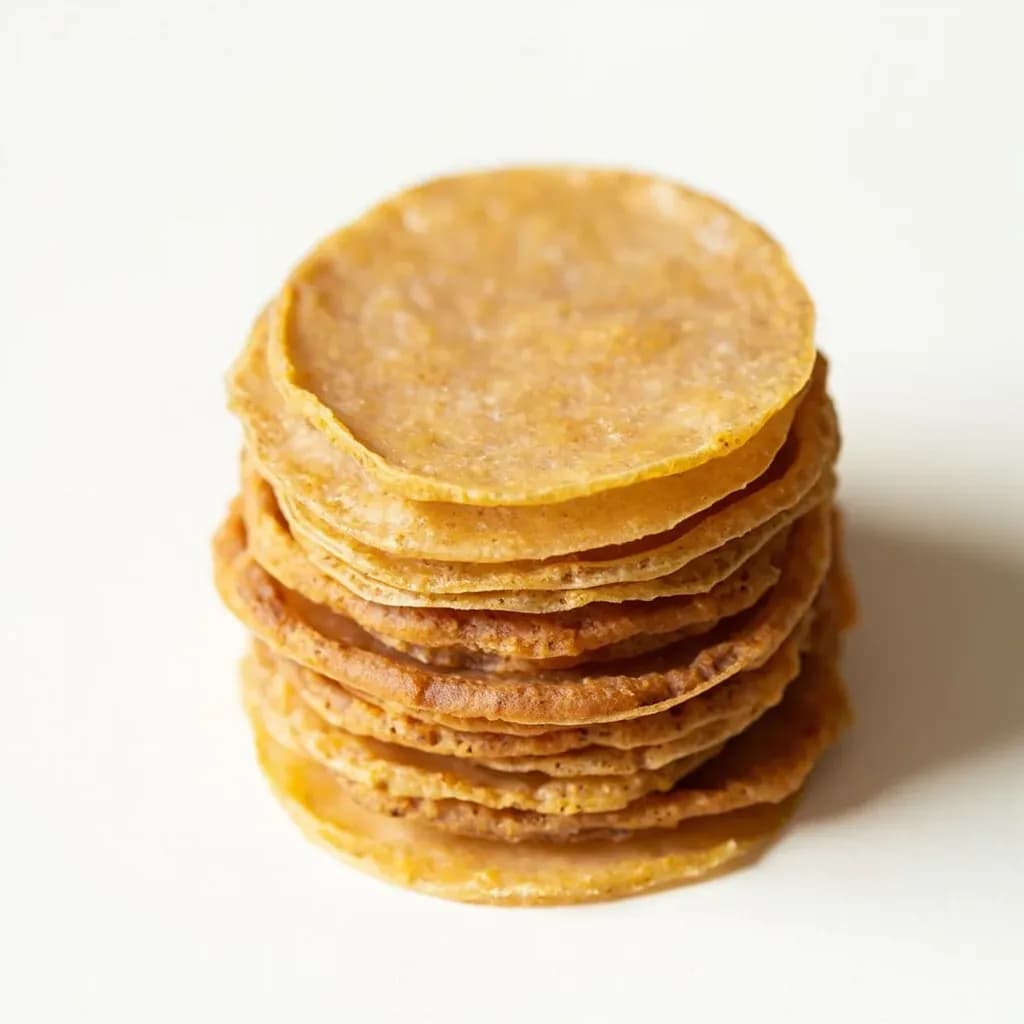
A waxed paper disc is a small round of waxed paper pressed directly onto the surface of hot jam, jelly, or potted preserves before the lid goes on. The wax side seals against the food to keep out air and slow mold growth in traditional preserving. Discs are cut to the jar's inner diameter and used once per jar.
A waxed paper disc is a small, pre-cut circle of food-grade paraffin-coated paper sized to sit flat on the surface of a filled preserving jar. Dropped onto still-hot jam, jelly, or conserve, the wax softens just enough to bond to the preserve, forming a custom airtight film that blocks oxygen during the crucial first 24 hours of cooling, when surface mold is most likely to take hold. In effect it acts as a floating inner lid — snug to the rim, skin-tight to the preserve, and tucked beneath the screw band so the metal lid can still set its vacuum without touching the food directly.
The discs come in diameters matched to common jar mouths (roughly 2 in for 4 oz jars, 2.5–2.75 in for half-pints, and 3.5 in for pints), and a modern wax-free version made from unbleached parchment handles hotter fills and is preferred by many current canning guides. Paraffin discs remain standard in the UK and across Europe, where they are a routine line item from preserving suppliers, while in North America brands such as Ball, Kerr, and Mrs. Wages stock them alongside their other preserving lines.
They are not a substitute for sterilization, correct headspace, or a tested water-bath or pressure-canning process. Current USDA and National Center for Home Food Preservation guidance treats them as optional extra insurance rather than a required step. Where they earn their keep is in refrigerator jams, open-kettle preserves meant for short-term storage, and small-batch gift jars where a tidy surface and an extra margin of safety are welcome.
Alternatives
Types & varieties
Traditional style; paraffin-coated paper that softens into the surface of very hot preserves to form a continuous airtight film
Modern wax-free alternative; do not melt, tolerate hotter fills, and are the safer pick when food-grade paraffin status is uncertain
Generic term used by preserving suppliers; may be paraffin or parchment depending on brand
Waxed paper sold in squares or rolls so cooks can cut their own discs to fit non-standard jars, crocks, or tins
Sizing and Selection
Matching the disc to the jar is the single most useful habit. Measure the outer diameter of the jar opening at the rim — not the threads — and choose a disc roughly 1/4 in (6 mm) larger so it grips the glass just under the lip. A disc that sits flush on the surface but does not touch the rim will slide, wrinkle, or sink as the preserve cools and contracts. A disc that is too large crumples against the threads and prevents the lid from seating cleanly. Most home preservers keep three sizes on hand (4 oz, half-pint, pint) and reach for them by jar rather than improvising with kitchen shears at the stove.
- Measure the outer rim, not the thread diameter, when sizing custom cuts
- Keep at least three standard sizes stocked: 2 in, 2.5 in, and 3.5 in
- Err slightly larger rather than smaller — a disc that grips the rim stays put
- Parchment discs forgive more sizing error because they do not melt and conform
Legacy Practice and Modern Canning
Waxed discs belong to the era of paraffin-sealed refrigerator jams and early Ball/Kerr home canning kits, when a layer of melted wax was the primary barrier between preserve and air. Today's two-piece metal lids, with their sealing compound and vacuum action, do that job for shelf-stable goods. For water-bath and pressure-canned jars, most modern guides recommend skipping the disc entirely: it can shift during processing, melt into the preserve, or interfere with lid seating. The disc still earns its place when a jar is headed for the fridge, an open-kettle batch is being poured hot into gift jars, or a small ferment needs solids held under brine — situations where the lid is loose, absent, or not designed to form a vacuum.
- Use discs for fridge jams, conserves, curds, and fruit butters stored short-term
- Skip discs for jars going through a tested water-bath or pressure-canning process
- Parchment rounds are the better choice for ferments, where waxy residue would cloud the brine
- Old recipes that called for candle wax should be updated — only food-grade paraffin or parchment is safe
Common uses
Tips & pitfalls
- Cut or buy the disc about 1/4 in (6 mm) larger than the jar opening so it grips the rim and does not slide down into the preserve
- Place the disc while the preserve is still hot — around 185 °F (85 °C) — so the wax softens and bonds to the surface; a cold disc traps air pockets
- Smooth out wrinkles and press gently with a clean spoon or chopstick to expel trapped air bubbles before wiping the rim clean
- Never reuse a disc: it tears, loses its wax film, and can carry mold spores from the previous batch
- Skip the disc for jars going through a water bath — it may shift, melt, or interfere with lid seating; rely on headspace and the two-piece lid alone
- Store paraffin discs flat and away from heat; in a warm kitchen they can stick together and become unusable
- Choose parchment rounds over paraffin if you cannot verify the wax is food-grade — older recipes calling for candle wax are not food-safe
- Wipe the jar rim with a damp cloth before applying the lid so wax or syrup does not prevent a clean seal
Good to know
- Type
- Pre-cut circle of waxed or parchment paper sized to fit standard preserving jar openings
- Primary material
- Food-grade paraffin wax coated on paper, or unbleached parchment (modern alternative)
- Standard jar sizes
- ~2 in (5 cm) for 4 oz jars; 2.5–2.75 in (6–7 cm) for half-pint regular mouth; 3.5 in (9 cm) for pint regular mouth
- Application temperature
- Place onto preserve at roughly 185–200 °F (85–93 °C) so the paraffin softens and bonds; parchment versions tolerate higher fills
- Storage
- Flat in original packaging, cool and dry, away from heat sources to prevent wax softening or discs sticking together
- Reusability
- Single-use only — discard after one preserving cycle
- Regulatory status
- Optional under current USDA / NCHFP guidelines; considered extra precaution, not a requirement
- Approximate cost
- $3–6 USD per box of 75–100 discs, depending on size and brand
Also called
waxed paper discs · wax disc · jam covers · preserving discs
Related

Aluminum Foil
Wraps, covers, and tents food for the oven and grill

Parchment Paper
Nonstick liner for clean, even baking and easy release

Wax Paper
Moisture-resistant sheet for wrapping and counter prep

Plastic Wrap
Clings tight to cover bowls and wrap leftovers

Silicone Baking Mat
Reusable nonstick liner that replaces parchment

Cheesecloth
Loose-woven cloth for straining stock and bundling herbs

Beeswax Food Wrap
Reusable wax wrap that molds around bowls and produce

Piping Tips
Shaped nozzles that turn frosting into stars and rosettes