Storage & Containers
Waxed Produce Box
Wax-coated cardboard box that resists moisture for storing and shipping wet produce and seafood.
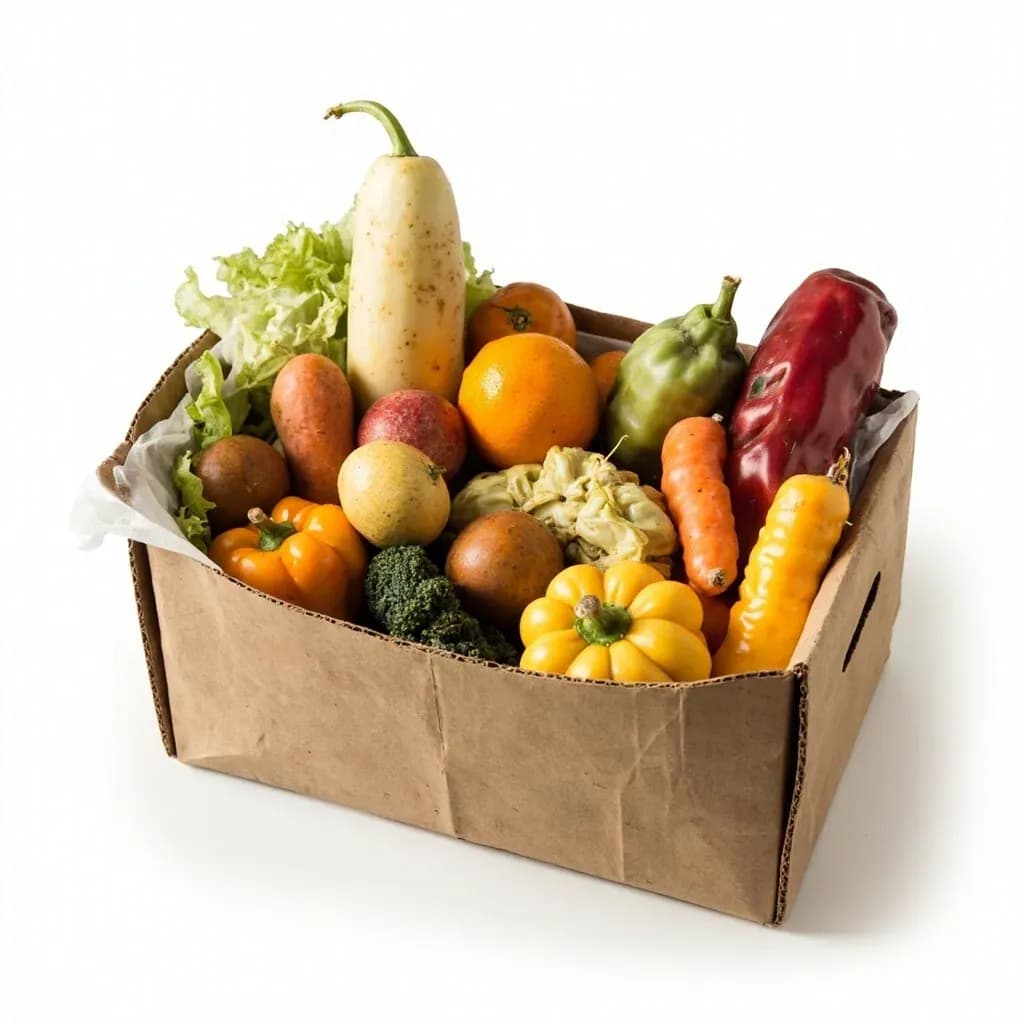
A waxed produce box is a corrugated cardboard box coated with wax so it holds up to moisture, ice, and humidity. Groceries and farms pack vegetables, fruit, and iced seafood in them for cold storage and transport without the box collapsing. The wax barrier keeps the carton sturdy in walk-in coolers where plain cardboard would soften.
The waxed produce box is the unmarked hero of the back-of-house. It is a corrugated or solid fiberboard shipping container whose walls have been impregnated or coated with food-grade paraffin wax, giving plain cardboard the moisture resistance it would otherwise lack. That single upgrade — a curtain of molten wax run across the board at the packing plant — turns a flimsy shipping carton into a vessel that can sit in a puddle of ice melt, hold wet fish on a buffet, or spend a week in a walk-in cooler without going to pulp. The format is standardized around fractions of a US bushel, which is why the same 1 1/9-bushel box turns up holding apples at a packing shed, onions at a terminal market, and citrus in a restaurant cooler.
For a working kitchen, these boxes are a free, nearly indestructible resource that solves dozens of small problems. Chefs stockpile them behind the line for cold storage, fish service, compost collection, and improvisation (drawer liners, drip trays, seedling starts for the garden). The two practical limits to internalize: paraffin softens around 115–150°F, so the box never goes near a stove, oven, or microwave; and the seams are stapled or glued rather than waxed, so the container will weep under standing liquid. For wet service — fish on ice, brining, marinating — always drop in a food-grade plastic bag or a sheet of butcher paper first.
There is also an end-of-life question worth knowing. Waxed cardboard is rejected by standard paper mills because the paraffin must be stripped from the fibers before repulping, so most municipalities send these boxes to landfill. Composting in small, torn pieces is the more sustainable kitchen exit; the wax slows breakdown but does not prevent it. Color carries meaning: blue is industry-standard for seafood and finfish, while green, kraft, and white are the common colors for produce — a quick visual cue that helps segregate deliveries in the receiving area.
Alternatives
Types & varieties
Standard double- or single-wall corrugated run through a curtain of molten paraffin; the most common type in produce shipping.
Solid (not fluted) fibreboard with wax soaked throughout; used for seafood and poultry where a tougher, leak-resistant wall is needed.
Used for berries, cherry tomatoes, and small stone fruit; lighter duty, often single-wall.
Common tomato and citrus box; a familiar sight at farmers markets.
Workhorse size for cucumbers, peppers, eggplant, and other medium vegetables.
Larger apple, onion, and potato box with deeper walls for heavier weights.
Often solid-fibreboard and wax-saturated with reinforced corners, sized to nest with ice-packed whole fish or fillets.
Pint, quart, and larger waxed tills used throughout the mushroom industry; frequently repurposed by restaurants for cold storage.
Kitchen Improvisation
Cut flat, a waxed panel becomes one of the most useful pieces of protective material in a kitchen. The wax sheds water and grease, so the cardboard will not soak through the way ordinary cardboard will.
- Line refrigerator drawers and produce bins to catch drips and simplify cleanup.
- Set beneath potted herbs or microgreens on the line to catch irrigation runoff.
- Use as a protective sheet under proofing baskets or heavy dough tubs on the bench.
- Flatten and stack as a disposable surface for shucking oysters, breaking down fish, or portioning raw poultry.
- Cut into seedling trays or pot covers for the kitchen garden — wax slows but does not stop decomposition.
End of Life
Because the paraffin must be stripped from the cellulose before repulping, municipal paper mills reject waxed boxes. Plan the exit before the box piles up.
- Tear into small pieces (roughly palm-sized or smaller) before adding to compost — the wax slows breakdown, and smaller fragments compost faster.
- Confirm with the local waste hauler; many programs still allow waxed cardboard in the paper stream, but most do not.
- Reuse for non-food tasks — recycling sortation, hardware storage, garden transplanting — rather than disposing prematurely.
- Never burn, even in a fireplace or burn barrel: the paraffin ignites readily and the smoke is unpleasant at best.
Common uses
Tips & pitfalls
- Treat the box as single-use; once the cardboard has absorbed moisture or the wax has cracked, structural integrity is gone.
- Never microwave, oven, or expose the box to any heat source — paraffin softens well below cooking temperatures and the cardboard can scorch or ignite.
- For direct wet food contact (fish on ice, marinating, brining), drop in a food-grade plastic bag or a sheet of butcher paper first; the wax coating is food-safe but the seams and staples are not immersion-grade.
- Staples and glues are not waterproof — assume the box will leak at seams if you overfill with liquid, even though the walls are waxed.
- Stack heavy boxes on a dolly or pallet; wet waxed cardboard loses crush strength fast once saturated, and a collapsing stack is a real back-of-house injury risk.
- Reuse only for non-food tasks (compost, recycling sortation, hardware storage, garden transplants); do not reuse a box that held raw fish or meat for produce service without full relining.
- Check local recycling rules before tossing in the paper bin; most municipalities require waxed cardboard to go to landfill or a specialty drop-off.
- Let wet boxes drain and air-dry before stacking for storage — trapped moisture accelerates both wax failure and mold growth on the cardboard beneath.
Good to know
- Material
- Corrugated or solid fibreboard impregnated or coated with food-grade paraffin wax
- Primary function
- Moisture resistance for shipping and storing wet, iced, or high-humidity perishables
- Service life
- Designed as single-use, disposable shipping containers
- Heat sensitivity
- Paraffin softens around 115–150°F; boxes deform, leak, or ignite near open flame
- Sizing
- Standard produce-industry dimensions in fractions of a US bushel (1/2, 5/9, 1, 1 1/9)
- Color coding
- Blue = seafood/finfish; green, kraft, and white are common for produce
- Recycling
- Not accepted in standard curbside paper recycling; must go to a specialty waxed-cardboard recycler or landfill
- Food contact
- Wax coating is generally food-safe, but FDA-compliant boxes are typically used with a plastic or waxed-paper liner for direct wet contact
Also called
waxed cardboard box · waxed produce box · wax box
Related

Freezer Bags
Thick, sealable bags built to fight freezer burn

Storage Bags
Resealable bags for fridge storage and marinating

Storage Container
Lidded container for leftovers, prep, and meal kits

Glass Container
Oven-to-fridge glass that won't stain or hold odors

Plastic Container
Lightweight, stackable storage for everyday leftovers

Vacuum Sealer Bags
Airtight bags for long freezing and sous-vide

Reusable Bags
Washable silicone bags that replace single-use plastic

Mason Jar
Sealed glass jar for preserves, pickles, and storage