Storage & Containers
Blind Tasting Bottle Bag
An opaque sleeve that hides a wine bottle's label for blind tasting.
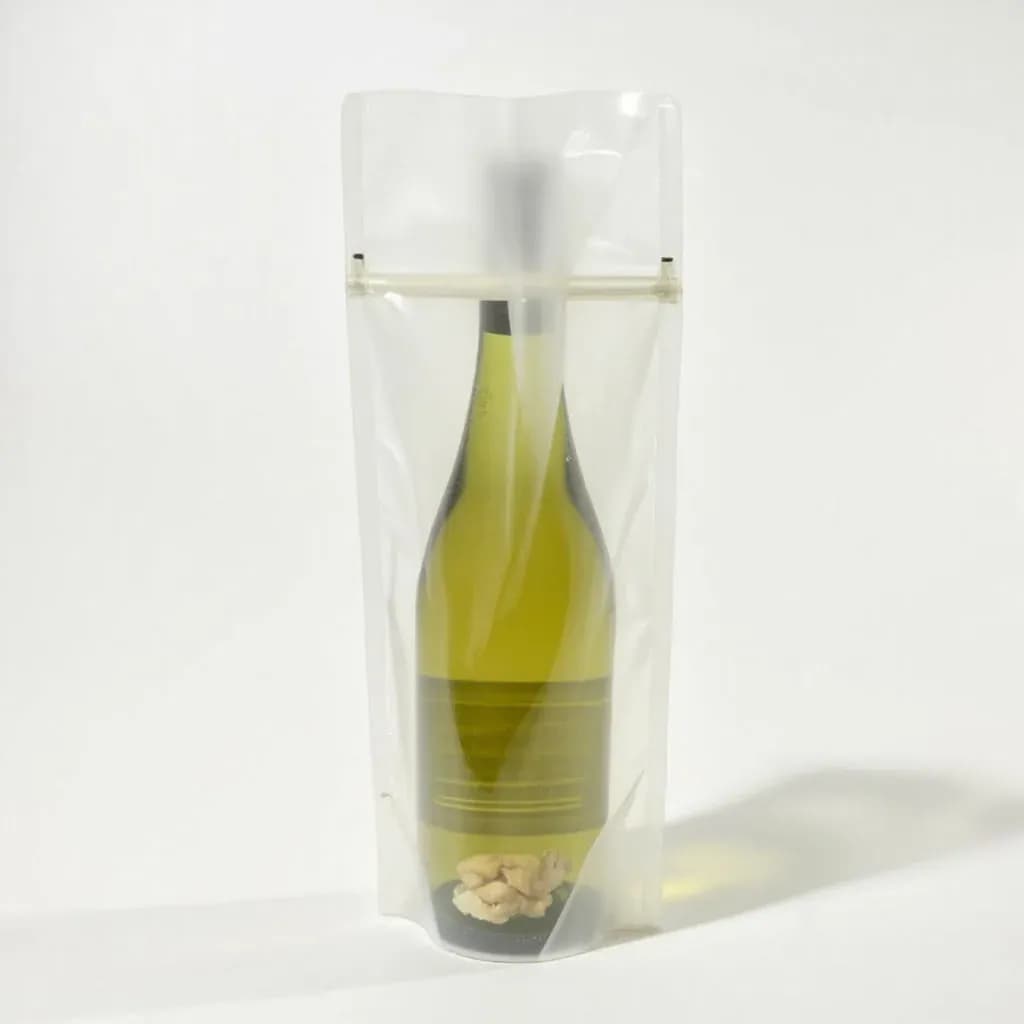
A blind tasting bottle bag is a fabric or paper sleeve slipped over a wine bottle to conceal its label and shape. Tasters use it to evaluate wine without bias from the brand, vintage, or price. The same bags also gift-wrap or protect bottles in transit.
A blind tasting bottle bag is an opaque sleeve that conceals every visual cue a wine can give away — the front and back label, the capsule, the punt, the bottle's silhouette, and any embossing on the glass. Its job is information suppression: by removing sight from the equation, the taster's nose and palate are forced to do the analytical work, free of bias toward a famous château, a familiar region, or an assumed price point. In that sense the bag is less packaging than a piece of tasting equipment.
In professional wine work — competitions such as the International Wine Challenge or Decanter World Wine Awards, sommelier certification exams (WSET, Court of Master Sommeliers), and formal research trials — every bottle passes through a bagging step before it is poured. The bags live on the wine-program and service side of a serious kitchen, tasting room, or restaurant cellar rather than the home pantry, and they are typically used in sets, paired with numbered stickers and a sealed master list that maps each bag number to the bottle inside.
Fabric and neoprene versions are the standard; aluminum foil wrapped fully around the bottle is a workable DIY stand-in for a casual home tasting. Quality varies less by brand than by opacity — a thin or light-colored sleeve defeats the purpose by letting label print or wine color bleed through under a tasting room's bright lights.
Alternatives
Types & varieties
Stretchy, soft, reusable; the most common professional style, available from wine competition suppliers.
Classic fabric option, often sold in sets; quiet to handle and fully opaque when doubled.
Cheap disposable option, often used at large tastings and consumer events; can crinkle during handling and must be wrapped to fully cover the capsule and punt.
Plain opaque paper sleeve, single-use, common at trade tastings.
Larger version for 1.5 L bottles, used in competitions and comparative vertical tastings.
Some suppliers offer bags with event branding for competitions and corporate tastings.
What the bag has to hide
A good blind-tasting bag does not just cover the front label — it has to defeat a long list of visual cues that an experienced taster reads in seconds. Miss any of these and the tasting is no longer blind.
- Front and back label, including producer name, region, vintage, and any medals or importer stickers
- The capsule (foil or plastic) on top, which often matches the bottle's region of origin
- Glass color: dark green, light green, clear, or amber — dark green glass often signals a red wine
- Bottle shape: Burgundy shoulder, Bordeaux shoulder, Rhône slope, German flute, sparkling, or jug
- Punt depth, which can hint at age and regional tradition
- Embossed or shape-distinctive glass — Dom Pérignon embosses the producer name; Roederer Cristal's flat punt and many Mosel producer marks on the base are also give-aways
- Visible sediment or tartrate crystals, which reveal age, filtration, and storage history
Common uses
Tips & pitfalls
- Cover the entire bottle including the capsule, cork, and punt — Burgundy and Bordeaux bottle shapes alone can give away a wine's origin.
- Number each bag and keep a sealed master list matching numbers to actual bottles; the person bagging should not be the same as the taster when true anonymity is required.
- Use black or very dark fabric; light-colored or thin cloth can let the label or wine color show through under bright light.
- Pre-chill or decant before bagging so tasters cannot infer the wine from bottle temperature or sediment cues.
- Pour glasses outside the bagging area so that the shape of the bottle is never revealed during service.
- If using foil, wrap the bottle completely top to bottom and tape or fold the seam so light cannot pass through.
- Wash neoprene bags between uses to prevent transfer of cork taint or aromas from a previous wine.
- For group tastings, have a neutral party do the bagging and pouring; never let the host reveal cues by tone of voice or hesitation.
Good to know
- Also called
- Blind tasting bag, wine sleeve, black-out bag
- Primary material
- Opaque neoprene, heavy cotton, velvet, or paper; aluminum foil pouches are a common disposable alternative
- Standard size
- Fits a standard 750 ml wine bottle (roughly 30–33 cm tall, 7.5–9 cm diameter); larger versions exist for magnums (1.5 L)
- Closure
- Drawstring, Velcro flap, or open top; must fully conceal the capsule and any embossing on the glass
- Origin and use history
- Standardized in professional wine judging and sommelier competitions from the late 20th century onward, popularized by the Institute of Masters of Wine, WSET, and the Court of Master Sommeliers
- Reusability
- Fabric and neoprene versions are washable and reusable; paper and foil are single-use
- Color
- Black or very dark to ensure no label or wine color is visible through the material
- Approximate cost
- Around $1–3 per fabric bag; bulk foil sleeves are inexpensive per unit
Also called
Wine Bottle Bag · Tasting Sleeve · Bottle Sleeve
Related

Freezer Bags
Thick, sealable bags built to fight freezer burn

Storage Bags
Resealable bags for fridge storage and marinating

Storage Container
Lidded container for leftovers, prep, and meal kits

Glass Container
Oven-to-fridge glass that won't stain or hold odors

Plastic Container
Lightweight, stackable storage for everyday leftovers

Vacuum Sealer Bags
Airtight bags for long freezing and sous-vide

Reusable Bags
Washable silicone bags that replace single-use plastic

Mason Jar
Sealed glass jar for preserves, pickles, and storage