Heat & Safety
Wooden Stirrer
Thin disposable wood stick for stirring drinks and small mixes without scratching.
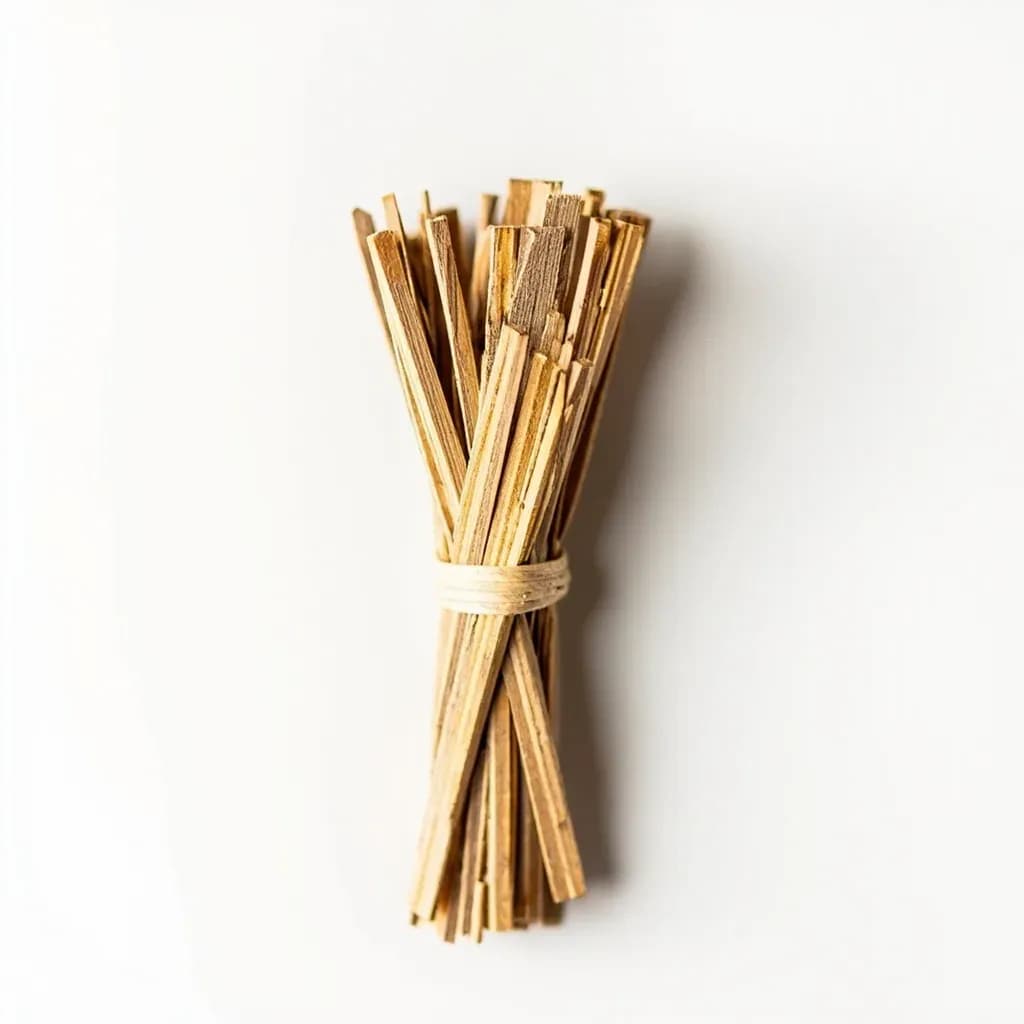
A wooden stirrer is a thin, flat or rounded disposable wood stick used to stir coffee, tea, cocktails, and small batters or sauces. It is gentle on cups and nonstick surfaces, heat-safe, and compostable after a single use. Cafes and home cooks keep a cup of them on hand for quick mixing without dirtying a spoon.
A wooden stirrer is a thin, flat stick of untreated birch — occasionally beech, maple, or bamboo — used to mix drinks, samples, and small craft mixtures where a metal spoon would scratch delicate vessels and a plastic one is now restricted in many jurisdictions. Standard food-service sticks run 110–140 mm long, 2–5 mm wide, and 1–2 mm thick: slim enough to slip through a takeaway coffee lid, stiff enough to break up a clump of cocoa in hot water, and soft enough not to score the glaze on a porcelain espresso cup or the wall of a glass beaker. The wood is porous and food-safe when untouched, but impossible to sanitize once it has met saliva or food residue, so the sticks are single-use by design.
The wooden stirrer has largely replaced the plastic stir stick in cafés, offices, and events since the EU Single-Use Plastics Directive (2019/904) prohibited plastic stirrers from July 2021, with similar rules spreading through parts of Canada, the US, and the UK. Untreated birch breaks down in industrial composting within weeks and is home-compostable when uncoated, which is why suppliers lean on FSC-certified stock. The wider family of flat wood sticks — including popsicle and craft sticks — is a related category of disposable aids, not a substitute for the structural wooden spoons and spatulas used in serious cooking.
Alternatives
Types & varieties
110 mm flat birch stick sized to pass through espresso cups and standard takeaway lids
140 mm version for tall glasses, iced coffees, and tumblers where a short stick cannot reach the bottom
Harder and smoother than birch; tolerates a quick rinse and air-dry if reuse is unavoidable
Slim stick with a pointed end for garnishes and stirring cocktails
Wider flat stick (around 11 cm) used for spreading glazes, sampling, cake-pop construction, and craft work rather than drink stirring
Beyond the stir stick: the wider wooden-stick family
A few implements sit close to the wooden stirrer and are worth distinguishing. The professional cupping spoon is paddle-shaped, broader, and shallow — its job is not to dissolve sugar but to lift and slurp a fixed volume of brewed coffee so tasters can evaluate aroma and body; it is a sensory instrument, not a mixing tool. Popsicle and craft sticks are the same wood in a wider cut, used for spreading thin layers of chocolate or glaze, scoring pastry, or as splints when assembling cake pops and lollipops. None of these replace a wooden spoon or spatula: those are structural tools with the mass to push through a risotto or sear vegetables, while stir sticks and their kin are disposable aids for small, quick tasks.
Common uses
Tips & pitfalls
- Choose uncoated, untreated birch if composting matters — wax or varnish coatings slow breakdown considerably.
- Keep the stick moving; leaving it to sit in boiling liquid for several minutes softens the fibres and causes splintering.
- Reach for a 140 mm stick in tumblers and iced-coffee glasses so the end actually reaches the bottom.
- Pre-dissolve thick powders like whey protein in a small splash of liquid first — a dry clump will snap a thin stick if you force it.
- For longer reaches, lash two sticks together; the joint makes them noticeably stiffer than a single thin length.
- Store sticks in a dry, sealed sleeve or tin — humidity warps the wood and leaves a musty, cardboard-like smell.
- Wood will not scratch enamel, non-stick, or glass, which is the main practical reason to reach for it over a metal spoon in delicate vessels.
- Never reuse a stick that has touched someone's mouth — wood's porous grain traps bacteria that a quick rinse will not remove; bamboo outlasts birch but should still be treated as single-use.
Good to know
- Material
- Untreated birch is standard; beech, maple, and bamboo appear as alternatives
- Typical length
- 110–140 mm (4.3–5.5 in); 110 mm for espresso, 140 mm for tall tumblers
- Thickness
- Roughly 2–5 mm wide and 1–2 mm thick
- Shape
- Flat stick, usually with rounded or square ends; cocktail variants carry a pointed tip
- Heat tolerance
- Safe in boiling water and microwaves; will soften and splinter if left sitting in very hot liquid for minutes
- Compostability
- Uncoated sticks are home- and industrially compostable within weeks; wax or varnish coatings slow breakdown
- Hygiene
- Wood is food-safe but porous — single-use only after any contact with mouth or food
- Sustainability
- FSC-certified birch is the norm; renewable, and plastic-stirrer bans in the EU, parts of Canada, the US, and the UK have driven demand
Also called
wooden stirrer · coffee stirrer · wood stir stick
Related

Paper Towels
Disposable sheets for spills, drying, and patting dry

Kitchen Towels
Reusable cloths for drying, gripping, and wiping

Oven Mitts
Heatproof gloves to handle hot pans and trays safely

Disposable Gloves
Single-use gloves for safe, mess-free handling

Cleaning Cloths
Reusable cloths for wiping counters and spills

Tortilla Warmer
Insulated holder that keeps tortillas warm and soft

Trivet
Heatproof stand that shields surfaces from hot pots

Ice Bath Setup
Bowl of ice water that halts cooking and sets color