Storage & Containers
Resealable Plastic Bag (Ziploc)
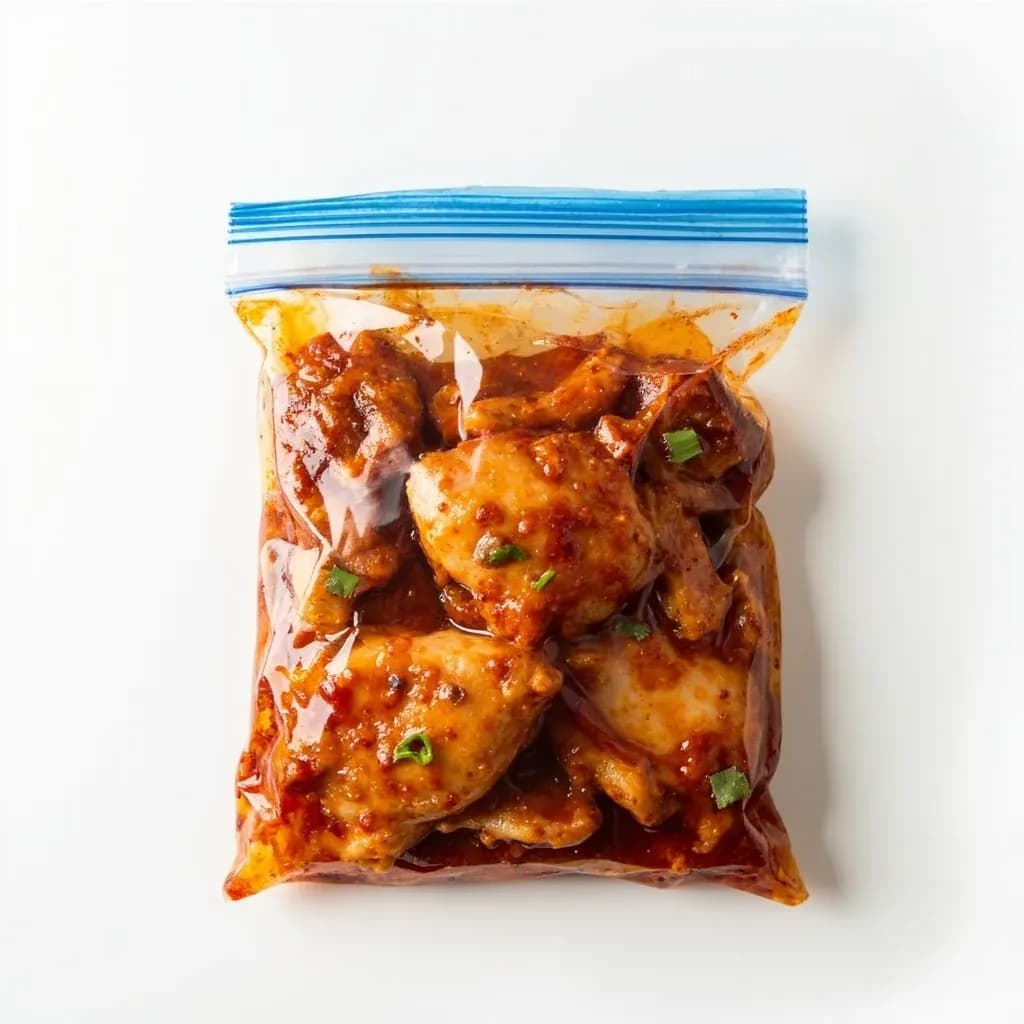
Plastic bag with a press-shut zipper seal for storing, marinating, and portioning food.
A resealable plastic bag has a press-to-close zipper seal that lets cooks open and reseal it repeatedly. It is used to store leftovers and snacks, marinate proteins evenly, and portion ingredients, and it doubles as a makeshift piping bag when a corner is snipped. Using the water-displacement method, a partly sealed bag also works for low-cost sous-vide by pushing out the air.
The resealable plastic bag—commonly known by the brand name Ziploc, which has become genericized in common parlance like Band-Aid or Thermos—is one of the most versatile and underutilized tools in a home kitchen. At its core, it is a pouch of low-density polyethylene (LDPE) fitted with an interlocking zipper closure that forms an airtight or nearly airtight seal when pressed shut. This simple construction creates a controlled microenvironment that slows oxidation, limits moisture loss or gain, and protects food from the drying effects of freezer air. Freezer bags use a multi-layer construction for enhanced durability and moisture-barrier performance, making them distinct from lighter-weight storage bags intended for short-term refrigerator use. Beyond storage, the sealed pouch becomes a vessel for marinating, sous vide cooking, portion control, and even baking in a water bath—transforming an ordinary plastic bag into a precision tool that professional cooks rely on daily.
The critical distinction that many home cooks overlook is the difference between storage and freezer bags. Storage bags are lightweight and designed for short-term refrigerator use—keeping cut fruits, vegetables, or leftovers organized and protected from drying out for a few days. Freezer bags have substantially thicker walls and a multi-layer construction that resists ice crystal penetration, protecting food from the cellular damage that causes freezer burn during long-term storage at 0°F and below. Reusable silicone alternatives have gained popularity for environmental and cost reasons; they withstand a broader temperature range and are dishwasher-safe, though they require thorough drying before reuse to prevent mold. The choice between disposable and reusable depends on frequency of use, budget, and environmental priorities.
Alternatives
Types & varieties
Lightweight for refrigerator storage; not recommended for extended freezer use
Thicker plastic with enhanced moisture barrier to prevent freezer burn; most commonly used for long-term food storage
Feature a sliding plastic piece that pulls the zipper closed; easier for some users to seal completely
Have a reinforced gusseted bottom that allows the bag to stand upright when filling
Smaller format for single-serving portions, lunches, and on-the-go food transport
Specially marked for defrosting and reheating; must not be sealed during microwaving
Made from food-grade silicone; dishwasher-safe and more environmentally friendly; typically withstand -40°F to 400°F
The Water Displacement Method
One of the most useful techniques for maximizing seal quality is the water displacement method, particularly valuable for marinating and sous vide cooking. The principle is simple: seal the food and marinade with a small air pocket, then lower the bag into a container of water, leaving the seal above the water line. The water pressure pushes air out through the zipper, collapsing the bag around the food. For marinating, this creates maximum surface contact between food and marinade. For sous vide, complete air removal ensures the food stays submerged and cooks evenly at the precise target temperature.
Safety Considerations
While BPA-free bags have been standard since the 2010s, there are a few safety practices worth observing. Never seal hot food directly—allow it to cool to room temperature first to prevent condensation that can create a bacterial breeding environment. For the microwave, use only bags specifically marked as microwave-safe, and always leave the seal open during microwaving to prevent steam pressure buildup. For high-temperature sous vide cooking above 150°F, double-bagging is a standard precaution against seal failure.
Common uses
Tips & pitfalls
- Squeeze out as much air as possible before sealing—the primary purpose of the zipper is air removal to prevent oxidation and freezer burn
- For freezer storage, lay bags flat until fully frozen before stacking; this maximizes space and speeds freezing
- Double-bag pungent foods (fish, garlic, strongly spiced dishes) to prevent odor transfer to other items
- Always cool hot foods to room temperature within 2 hours before sealing to prevent condensation and bacterial growth
- Write directly on the bag with a permanent marker or use masking tape labels with date and contents
- For marinating, use the water displacement method: seal the food with marinade, lower into water leaving the seal above the surface, then zip closed as water pressure pushes out air
- Avoid overfilling—leave 1 to 2 inches of space at the top to ensure a complete seal
- Freezer bags are not interchangeable with storage bags—freezer bags' thicker construction resists ice crystal penetration
- For sous vide, use only food-grade bags designed for the temperature range; double-bag high-temperature cooks above 150°F as a precaution against seal failure
Good to know
- Material
- Low-density polyethylene (LDPE); freezer bags use multi-layer construction for increased durability and moisture barrier
- Introduced
- 1968 by Dow Chemical Company; brand acquired by S. C. Johnson in 2000
- Closure Type
- Press-shut interlocking zipper or slider mechanism forming an airtight seal
- Standard Sizes
- Snack (6"×5"), Sandwich (6.5"×5.875"), Pint (7"×5.5"), Quart (7"×8"), Gallon (8.5"×10.75"), 2-Gallon (10.5"×14")
- Temperature Range
- Safe to -40°F for freezer use; microwave-safe versions available for defrosting and reheating only (not cooking)
- BPA Status
- BPA-free (standard since 2010s)
- Dishwasher Safe
- Top rack only for reusable bags; single-use bags not recommended for reuse
Also called
ziplock-bag · zip-lock-bag · ziploc-bags · resealable-bag · zip-bag · zip-storage-bag · zip-top-bag · snaplock-bags · food-storage-bags · sandwich-bag-zip
Related

Freezer Bags
Thick, sealable bags built to fight freezer burn

Storage Bags
Resealable bags for fridge storage and marinating

Storage Container
Lidded container for leftovers, prep, and meal kits

Glass Container
Oven-to-fridge glass that won't stain or hold odors

Plastic Container
Lightweight, stackable storage for everyday leftovers

Vacuum Sealer Bags
Airtight bags for long freezing and sous-vide

Reusable Bags
Washable silicone bags that replace single-use plastic

Mason Jar
Sealed glass jar for preserves, pickles, and storage