Prep Tools
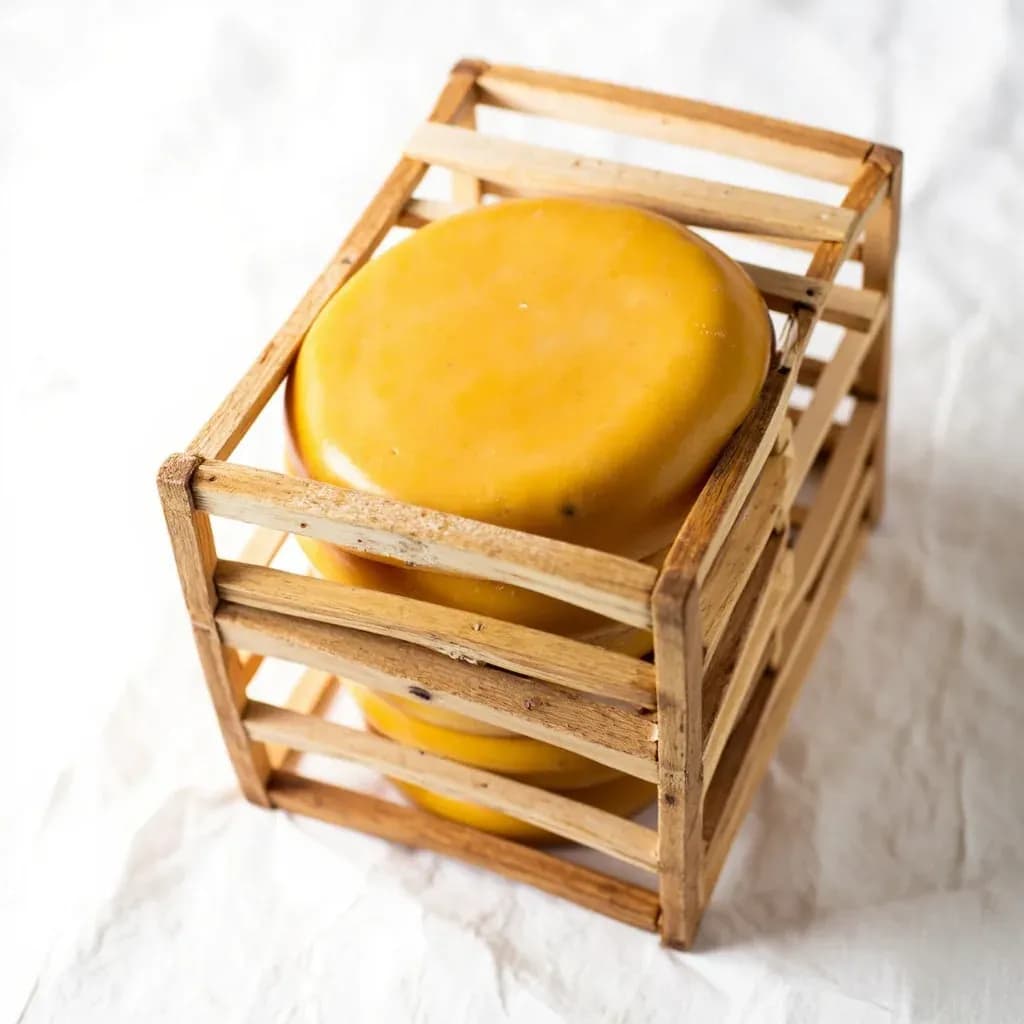
Aging Rack
A ventilated wooden or wire shelf that holds cheese, charcuterie, or dough to dry and mature with airflow.
An aging rack is an open shelf, usually wood or coated wire, that supports food while air circulates around it during maturation. Cheesemakers turn wheels on wooden boards to develop rind, while charcuterie and bread also rest on racks to dry evenly. Good airflow on all sides prevents trapped moisture and uneven ripening or mold.
An aging rack is a passive piece of equipment: a slatted or grid-like shelf, usually hardwood or stainless steel, that holds cheese, charcuterie, dough, or other foods in an elevated, exposed position so air can reach them from multiple sides. It does not control temperature, humidity, or airflow itself — those jobs belong to the cave, refrigerator, wine cooler, or curing chamber the rack sits inside. What the rack contributes is geometry: a stable, food-safe surface that keeps each item separated, lets the underside breathe, and keeps draining whey, curing drip, or surface moisture away from the contact point.
A flat plate will not do the same job. Moisture pools wherever food touches a solid surface, and pooled moisture invites unwanted mold, soft rinds, and uneven drying. A rack's open bottom and raised feet solve that by ensuring the contact face dries at roughly the same rate as the top. For cheese, that means a uniform rind; for charcuterie, a casing that dries evenly without flat spots; for bread, a crust that stays crackling instead of sweating into a damp crumb.
Racks are usually sized to fit a specific environment — a small countertop tower for a home fridge, modular panels for a converted refrigerator or wine cooler, and tall vertical frames for hanging salamis. The wood-versus-wire choice is a real decision: untreated hardwood (maple, beech, oak) wicks a small amount of surface moisture and is gentle on developing rinds, which is why affineurs favor it, while stainless steel is non-absorbent, cleans in seconds, and tolerates the high humidity charcuterie needs.
Alternatives
Types & varieties
Removable wooden slats on a frame; the standard surface for aging wheels of hard and semi-hard cheese.
Stainless or food-safe coated wire grid that drops into a cheese cave or refrigerator; maximizes airflow beneath the wheel.
Vertical or ceiling-hung frame with S-hooks for suspending salamis, sausages, capocollo, and lonza.
Wide wooden slatted surface used to support shaped loaves, retard dough, and cool baked bread without a soggy bottom.
Multi-tier stainless steel rack for cooling pastries, drying herbs, or holding dehydrator trays.
Flat bamboo mat used for drying fresh pasta, shaping some cheeses, or resting laminated doughs; small-scale and short-term.
Sized to fit inside a converted fridge or wine cooler used as a cheese cave.
Wood or wire: choosing the right material
Material is not a stylistic choice; it changes how the rack behaves with the food on it. Hardwood slats wick a small amount of surface moisture, which helps rinds develop evenly on cheese without drying out too fast. Stainless steel is non-absorbent, cleans in seconds, and tolerates the high humidity that charcuterie needs. Bread bakers tend to split: a slatted wooden board is often chosen for cooling hearth loaves because it lets the crust breathe without trapping steam, while a wire rack is the standard for pastries and rolls where fast airflow matters more than moisture buffering.
- Use untreated, food-grade hardwood (maple, beech, oak, birch) for cheese aging; the wood buffers humidity gently and is kind to natural rinds.
- Use stainless steel for charcuterie and sausage, where the rack must be thoroughly sanitizable between batches and tolerant of fat drippings.
- Avoid pressure-treated lumber, plywood, and MDF, which can off-gas; avoid cedar, pine, fir, and redwood, which flavor food.
- Bamboo works for short-term tasks like drying pasta or resting dough but is less durable under repeated humidity cycles.
Sizing the rack to the environment
The rack's job is to give each item enough surrounding air to dry at the rate the recipe expects. Cramming wheels or sausages together defeats it, and a rack that is too large for its container wastes climate control. Match the rack to the chamber: a converted refrigerator or wine cooler takes modular panels around 30 x 60 cm; a countertop cheese cave takes a small stackable tower; a salami hanging setup needs a vertical frame tall enough for the longest sausage plus clearance for hooks and air movement.
Common uses
Tips & pitfalls
- Choose unfinished, food-grade hardwood — never pressure-treated lumber, plywood, or MDF, which can off-gas or shed into food.
- Avoid cedar, pine, fir, and redwood for any food contact; their resins and tannins flavor cheese and charcuterie noticeably.
- Leave at least 2–3 cm of space between wheels or sausages so air moves around every surface, and rotate items every 1–3 days for even drying.
- Flip cheese wheels rather than just rotating them so the contact face dries evenly and the rind does not develop a wet spot.
- Wipe wooden racks with a cloth dampened in white vinegar or light salt brine between batches; do not submerge them or run them through a dishwasher.
- Hang sausages so they do not touch each other, and add a small weight if the casing is slack so the salami cures straight rather than sagging.
- Line a wire rack with parchment only when the food is sticky — bare wire gives better airflow for aging and drying tasks.
- Store the rack dry and uncovered between batches so residual moisture does not breed mold that transfers to the next round of food.
- Label the position of each wheel or sausage with tape on the rack so rotation order and aging time stay clear across a long project.
Good to know
- Primary function
- Holds food in a stable, elevated position so air circulates on multiple sides during aging, curing, drying, or cooling.
- Common materials
- Food-grade hardwood (maple, beech, oak, birch) and stainless steel wire; sometimes food-safe plastic-coated wire or bamboo.
- Airflow design
- Open bottom, slatted or mesh surface, and raised feet so air reaches the underside of the food.
- Form factors
- Slatted wooden shelves, open wire grids, stackable tower racks, and vertical frames with hanging hooks.
- Sizes
- From small 20 x 20 cm countertop units to full refrigerator or cellar shelving panels (around 30 x 60 cm or larger modules).
- Woods to avoid
- Softwoods and aromatic woods (cedar, pine, fir, redwood) — their resins and tannins transfer off-flavors and may contain unsuitable extractives.
- Cleaning
- Wipe hardwood with diluted white vinegar or a light salt brine; do not soak. Stainless steel is generally dishwasher-safe.
- Storage environment
- Performance depends on the ambient temperature and humidity of the cave or refrigerator; the rack itself is passive, not climate-controlled.
Also called
Wooden Aging Shelf · Cheese Drying Rack · maturing rack
Related

Peeler
Swift blade for stripping skin off fruit and vegetables

Grater
Sharp-toothed surface for shredding cheese and vegetables

Microplane
Ultra-fine rasp for citrus zest, garlic, and hard cheese

Mixing Bowl
All-purpose bowl for combining, whisking, and tossing

Whisk
Looped wires that beat air into eggs, cream, and sauces

Spatula
Flat blade for flipping, lifting, and scraping

Slotted Spoon
Pierced spoon that lifts solids and drains the liquid behind

Wooden Spoon
Gentle, heat-friendly spoon for stirring anything