Prep Tools
Airlock
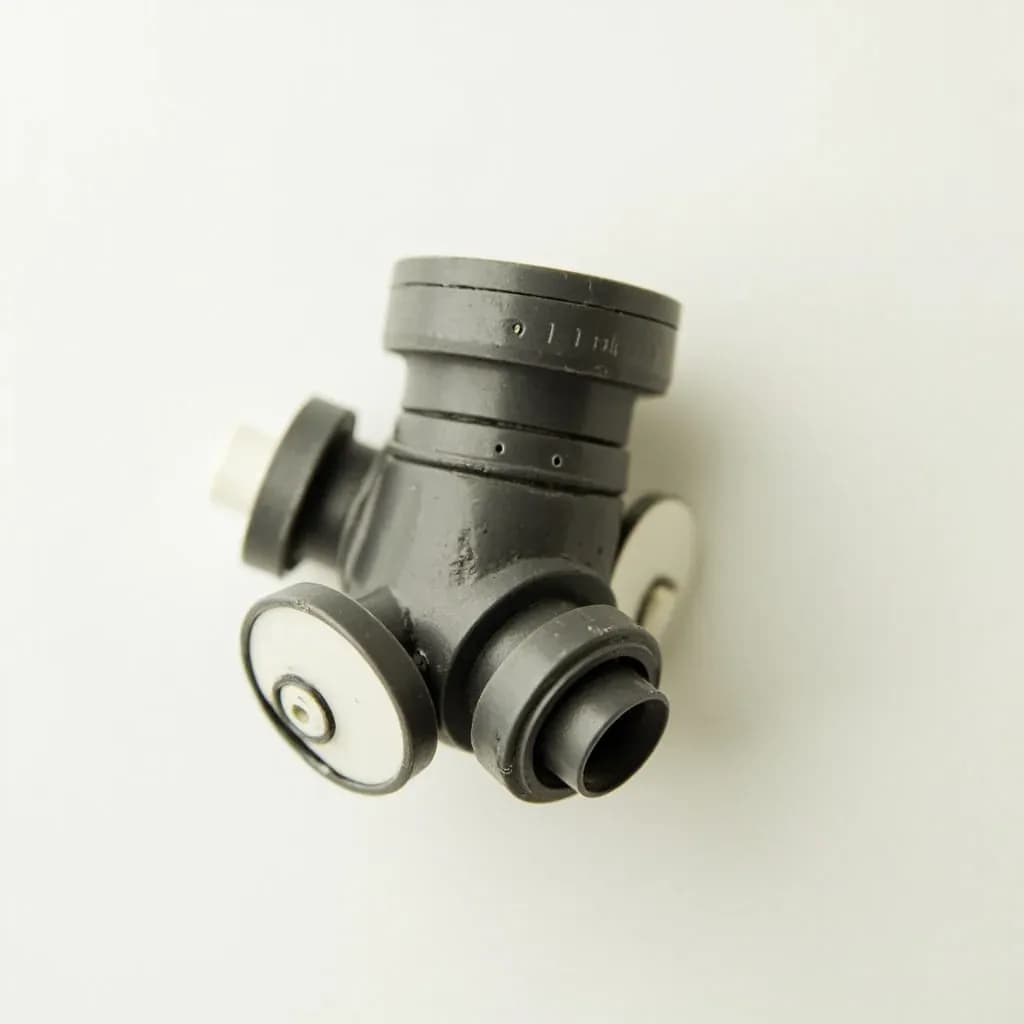
A small water-filled valve fitted to a fermentation vessel that vents gas while blocking outside air.
An airlock is a one-way valve, often a three-piece or S-shaped tube holding a little water, that seals a fermentation vessel. It lets carbon dioxide bubble out as yeast or bacteria work but stops oxygen and contaminants from getting in. It is essential for brewing, winemaking, and jar fermentation, and the bubbling gives a visible sign that fermentation is active.
An airlock is a small one-way valve that sits in the bung or stopper of a fermentation vessel, releasing the carbon dioxide that yeast and bacteria produce while preventing oxygen, mold spores, and other outside microbes from getting back in. It is the defining accessory of closed-vessel fermentation: a sealed jar, carboy, or bucket stays anaerobic throughout the process, and the airlock is the part that lets pressure out without letting contamination in. The simplest designs are little more than a chamber that holds a few centimeters of water; bubbles rising through that liquid are the visual signature of an active ferment.
The airlock only works as part of a system. The vessel, the rubber stopper or threaded fitting, and the airlock itself all have to seal cleanly, because any leak at the joint will let gas (and contaminants) bypass the water column entirely. The choice of filling liquid — water, a no-rinse sanitizer like Star San, or high-proof alcohol for stronger ferments — affects how forgiving the setup is if the liquid level drops or gets sucked back into the vessel.
For most home cooks, an airlock is the piece of equipment that turns a covered jar of cabbage into sauerkraut, a bucket of apple juice into cider, or a carboy of honey and water into mead, with the confidence that the environment inside the vessel will stay controlled from pitch to packaging. Understanding how the valve behaves — when it bubbles, when it goes quiet, and when liquid can travel the wrong way — is the difference between ferments that finish cleanly and ones that spoil.
Alternatives
Types & varieties
The most common style; three plastic pieces forming an S-shaped chamber that holds water. Easy to clean and gives a clear visual readout of fermentation activity.
Dome or 'barrel' shape with an inner cup; simpler design, holds slightly more liquid, common on carboys.
Smallest and simplest; a single molded cap that seats directly in a rubber stopper. Common for small-batch ferments and food jars.
Uses a silicone diaphragm that opens under pressure and seals shut. No liquid needed; eliminates evaporation and suck-back. Found on Speidel fermentation vessels and similar closed systems.
Older, often handmade style used in small winemaking; more fragile than plastic but resistant to sanitizer and heat.
The airlock as part of a sealing system
An airlock only protects a ferment if the rest of the seal holds. The vessel — a carboy, fermentation bucket, Mason jar with a grommeted lid, or ceramic crock fitted with a stopper — needs to be paired with a stopper or bung sized to the airlock's stem. Standard rubber stoppers are numbered (#6, #6.5, #7) to match common airlock stems; threaded plastic lids on buckets take airlocks with matching threads. Any gap, hairline crack, or dried-out rubber at these joints lets CO2 (and outside air) bypass the water column, which means an airlock that looks sealed may not be.
- Match the stopper (or threaded fitting) to the airlock stem before anything else — a wrong size is the most common cause of slow leaks in home setups.
- During the first 24–72 hours of a vigorous primary, replace the airlock with a blow-off tube leading into a jar of sanitizer; krausen (the foamy head of yeast and protein) can climb through the airlock and clog it or blow it off the stopper.
- For long bulk aging of beer, mead, or wine, switch to a solid rubber bung or a waterless silicone valve so the seal can't quietly evaporate open over months.
- Bubbling rate is a useful visual cue but not a precise instrument; a hydrometer or refractometer reading is the only reliable way to know fermentation has actually finished.
Common uses
Tips & pitfalls
- Sanitize the airlock and the stopper it sits in before every use; an unsanitized airlock is one of the most common sources of contamination in home ferments.
- Fill to the marked line only — too much water and a vigorous fermentation can blow the liquid out, too little and CO2 can slip past the seal without bubbling through.
- For ferments above roughly 12% ABV, fill the chamber with vodka or another high-proof spirit instead of water to prevent mold or a pellicle from forming inside the airlock.
- Watch for suck-back: a sudden drop in temperature lowers internal pressure and pulls the chamber liquid (and any microbes riding on its surface) back into the vessel. Keeping fermenters in a temperature-stable room minimizes this.
- Use a no-rinse sanitizer like Star San in the chamber for a small margin of extra protection; it foams visibly so you can confirm liquid is still present at a glance.
- A stopped airlock does not always mean a stalled ferment — temperature swings reabsorb CO2 into the liquid (a 'CO2 crash'), and small leaks at the stopper can vent pressure silently. Confirm with a hydrometer before intervening.
- Clean plastic airlocks in warm water, not boiling; high heat warps the seals and ruins the fit. Replace any airlock with cracks, persistent cloudiness, or a loose fit.
- If a waterless silicone valve gets sticky or fails to reseat, it has reached the end of its life; these are cheap enough to replace rather than push.
Good to know
- Also called
- Fermentation lock
- Common materials
- Food-grade plastic, glass, silicone
- Typical sizes
- Small (under 4 in / 10 cm) and large; matched to rubber bung size (#6, #6.5, #7, or threaded)
- Filling medium
- Water, diluted no-rinse sanitizer (e.g., Star San), or high-proof alcohol (vodka)
- Mechanism
- One-way valve; releases CO2 pressure from inside the vessel while blocking outside air and contaminants
- Common in
- Home beer brewing, winemaking, mead, cider, kombucha, lacto-pickled vegetables, and vinegar
- First introduced
- Mid-19th century alongside sealed fermentation vessels in European winemaking and brewing
- Replacement cadence
- Plastic airlocks are usually replaced every 2–3 years as the plastic can craze or harbor residue
- Bubbling rate
- Roughly indicates CO2 output — not a precise gauge of fermentation progress on its own
Also called
fermentation airlock · bubbler · S-airlock
Related

Peeler
Swift blade for stripping skin off fruit and vegetables

Grater
Sharp-toothed surface for shredding cheese and vegetables

Microplane
Ultra-fine rasp for citrus zest, garlic, and hard cheese

Mixing Bowl
All-purpose bowl for combining, whisking, and tossing

Whisk
Looped wires that beat air into eggs, cream, and sauces

Spatula
Flat blade for flipping, lifting, and scraping

Slotted Spoon
Pierced spoon that lifts solids and drains the liquid behind

Wooden Spoon
Gentle, heat-friendly spoon for stirring anything