Prep Tools
Alcapurria Shaping Board
A board or leaf used to spread and roll plantain-and-yautía dough around a meat filling for alcapurrias.
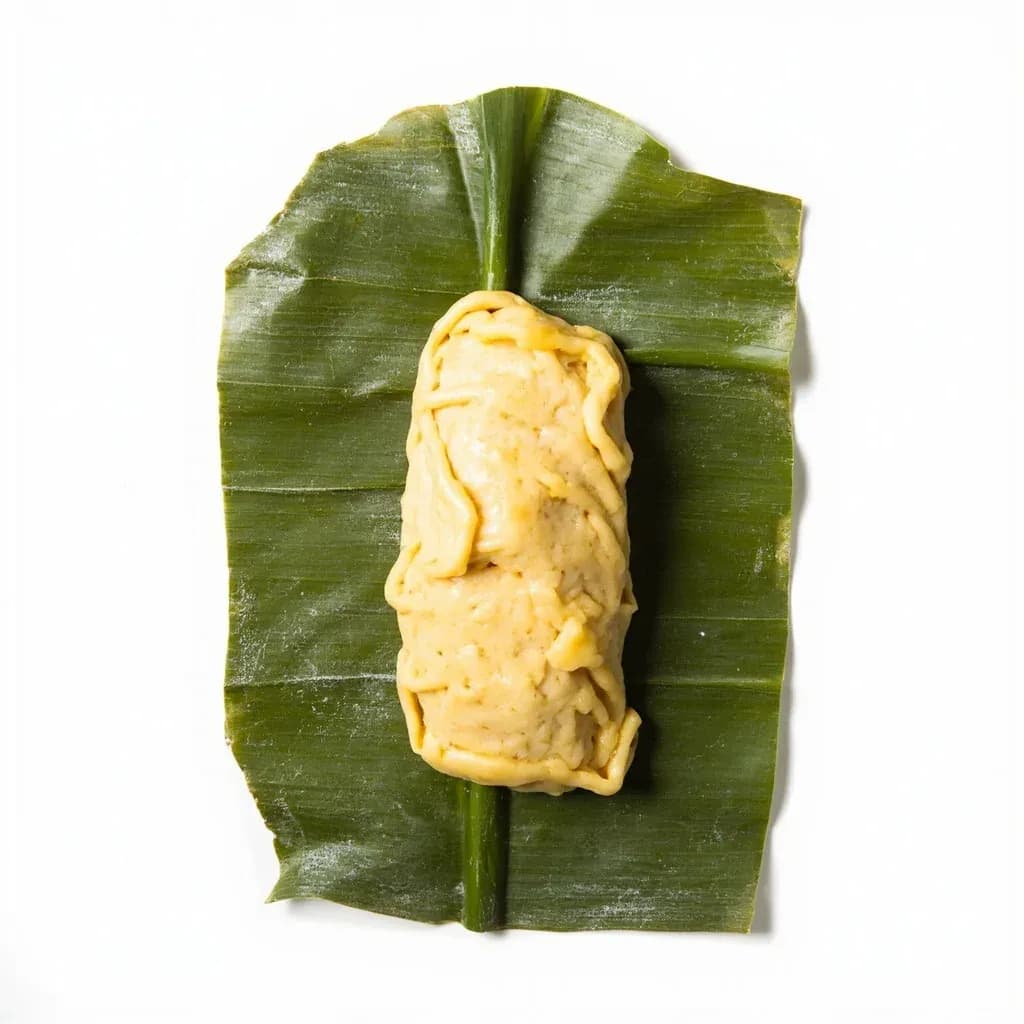
An alcapurria shaping board is a flat surface, traditionally a greased banana leaf or wooden board, on which the masa of grated green plantain and yautía is spread, filled with seasoned picadillo, and folded into a torpedo shape before frying. It keeps the sticky dough from tearing while it is formed. The greased surface lets the formed fritter slide off cleanly.
The alcapurria shaping board is the working surface on which a cook spreads, fills, and folds the green-plantain or yautía masa that becomes an alcapurria — the oblong, half-moon fritter that anchors Puerto Rican fritura. In traditional practice the board is a piece of banana leaf (hoja de plátano), wilted over flame until supple and brushed with a thin coat of oil; in modern home kitchens a plastic cutting board, a parchment-lined sheet pan, or wax paper does the same job. It is not a mold that dictates shape, but a non-stick forming aid: a place to lay the wet, starchy dough down, portion the seasoned picadillo in the center, fold the sides up, and seal the seam before lowering the parcel into hot oil.
The tool matters because alcapurria masa is unforgiving. Green plantain and yautía are starchy, gluey, and quick to oxidize, and they grip almost any dry surface tenaciously. A properly prepared shaping surface — whether leaf, plastic, or parchment — lets the cook work the dough thinly and evenly without tearing it, and gives a clean release when the formed alcapurria is lifted into the fryer. When banana leaf is used, the leaf is folded around the dough, so it does double duty: forming surface, wrapper, and a partial shield that protects the delicate masa from the harshest direct contact with the oil, while lending a faint grassy, tea-like aroma to the finished crust.
Mastery of the shaping board is, in practice, the difference between a split, greasy alcapurria and a blistered, golden one. The technique is constant across cooks: oil the surface, wet your hands, portion the masa to roughly the size of a small potato, spread it into a 5–6 inch oval, set a tablespoon or two of filling down the center, fold, press the seam, rest briefly, and fry at 350–365 °F. The board's job is to make every one of those steps cleaner, faster, and more repeatable.
Alternatives
Types & varieties
The traditional choice. Wilted over an open flame or hot comal until bright green and flexible, then brushed with oil; it serves as both forming surface and, when folded, as a wrapper that protects the masa from the oil and lends a faint grassy aroma.
A modern home-kitchen substitute. Non-porous and easy to oil, but it imparts no aroma and provides no wrapping, so the alcapurria is fried bare.
Used for larger batches or catering. The parchment is lightly oiled and the alcapurrias are formed in rows, then lifted with a spatula and slid into the fryer.
An older prep surface seen in traditional Puerto Rican kitchens. Must be well-seasoned or lined with plastic, since raw wood absorbs oil, stains, and grips the wet masa.
The banana leaf, properly prepared
The leaf is more than a non-stick surface — it is the heart of the traditional method. A raw banana leaf is stiff and will crack the moment you try to fold it around a soft masa; passed too long over a flame it becomes brittle and leathery. The right wilt is quick: hold the leaf a few inches above a gas burner or sweep it across a hot comal for 2–4 seconds per side, until the green brightens and the leaf flexes without creasing. The vein side is the side that faces the dough; the glossy outer side faces the oil. Brush the dough side with a thin film of neutral oil, or with annatto- or achiote-tinted oil for color. Never boil the leaf, which strips its flavor and turns it into wet cardboard.
- Wilt over flame, never boil — boiling leaches the grassy aroma and leaves a limp wrapper.
- Brush with oil after wilting, not before; oil on a cold leaf drips off unevenly.
- The vein side grips the masa; the glossy side faces the fryer.
Modern substitutes and when to use them
A plastic cutting board or a parchment-lined sheet pan is the right call when banana leaves are unavailable, when frying for a crowd, or when the cook wants a uniform, photographable alcapurria without the green tint and leaf creases. The trade-off is flavor and protection: there is no grassy aroma, and the bare masa hits the oil directly, so crust color and blistering depend entirely on fryer temperature and the surface starch of the dough itself.
- Oil the plastic board or parchment the same way you would oil a leaf — a thin, even film.
- Work in small batches; the masa oxidizes from cream to gray within minutes of exposure to air.
- On parchment, slide a fish spatula under the formed alcapurria to lift it cleanly into the oil.
Filling and masa ratios to pair with the board
The shaping board is indifferent to what goes inside, but the alcapurria's identity lives in the filling and the masa blend. The classic picadillo is ground beef seasoned with sofrito, alcaparrado (capers and olives), and a thread of achiote; alcapurrias de yautía sometimes hold a softer stewed-meat filling, and seafood versions (jueyes, bacalao) appear along the coast. Masa ratios swing from 100% green plantain to roughly 60% plantain / 40% yautía; the yautía adds elasticity and a slightly sweet, earthy note, and helps the dough hold a seal.
- Sofrito, alcaparrado, and achiote are the flavor backbone of a classic picadillo filling.
- Adding yautía to the masa improves elasticity and reduces splitting in the fryer.
- Wet masa and dry masa behave differently on the board; wetter dough needs a more heavily oiled surface.
Common uses
Tips & pitfalls
- Lightly oil the surface — or brush the leaf with annatto- or achiote-tinted oil — so the wet masa releases cleanly without tearing.
- Wet your hands and re-wet the leaf or board often; green-plantain and yautía masa oxidizes and turns gray within minutes, so work in small batches and quickly.
- Wilt banana leaves by passing them briefly over a gas flame or a hot comal until they brighten and flex — never boil them, which strips flavor and leaves a limp wrapper.
- Portion the masa to roughly the size of a small potato; too much dough yields a thick, gummy crust, too little and the filling blows out in the oil.
- Press the seam firmly with a wet finger or the back of a spoon to seal — a poor seal is the single most common cause of split alcapurrias.
- Skip the flour: a dusting of flour on a wet, starchy masa is redundant and can scorch; rely on oil and the masa's own moisture to keep things from sticking.
- Rest the formed alcapurrias seam-side down for 2–3 minutes before frying so the starch can swell and grip the seal.
- Lower alcapurrias into 350–365 °F (175–185 °C) oil; oil that is too cool soaks the crust, oil that is too hot scorches the wrapper before the dough cooks through.
- When frying in banana leaves, lower the parcel seam-side up so the leaf shields the dough from direct heat on the first side, then flip once the leaf has released from the crust.
Good to know
- Primary use
- Forming alcapurrias — spreading green-plantain and/or yautía masa around a meat filling before frying
- Traditional material
- Banana leaf (hoja de plátano), wilted over flame until pliable
- Modern substitutes
- Oiled plastic or polyethylene cutting board, parchment-lined sheet pan, or wax paper
- Working size
- Roughly 8–12 in (20–30 cm) square, enough to spread a portion of masa into an oval ~5–6 in long
- Region / cuisine
- Puerto Rico and the Puerto Rican diaspora (Caribbean and U.S. mainland)
- Compatible doughs
- Green plantain masa, yautía (taro) masa, or blends of green banana, plantain, and yautía in roughly 60/40 ratios
- Oil temperature for frying
- 350–365 °F (175–185 °C) — cooler oil soaks the crust, hotter oil scorches the wrapper before the dough cooks
- Yield per batch
- One alcapurria shaped at a time; formed in sequence as you fry
Also called
Alcapurria Board · Plantain Fritter Shaping Board
Related

Peeler
Swift blade for stripping skin off fruit and vegetables

Grater
Sharp-toothed surface for shredding cheese and vegetables

Microplane
Ultra-fine rasp for citrus zest, garlic, and hard cheese

Mixing Bowl
All-purpose bowl for combining, whisking, and tossing

Whisk
Looped wires that beat air into eggs, cream, and sauces

Spatula
Flat blade for flipping, lifting, and scraping

Slotted Spoon
Pierced spoon that lifts solids and drains the liquid behind

Wooden Spoon
Gentle, heat-friendly spoon for stirring anything