Prep Tools
Asanka
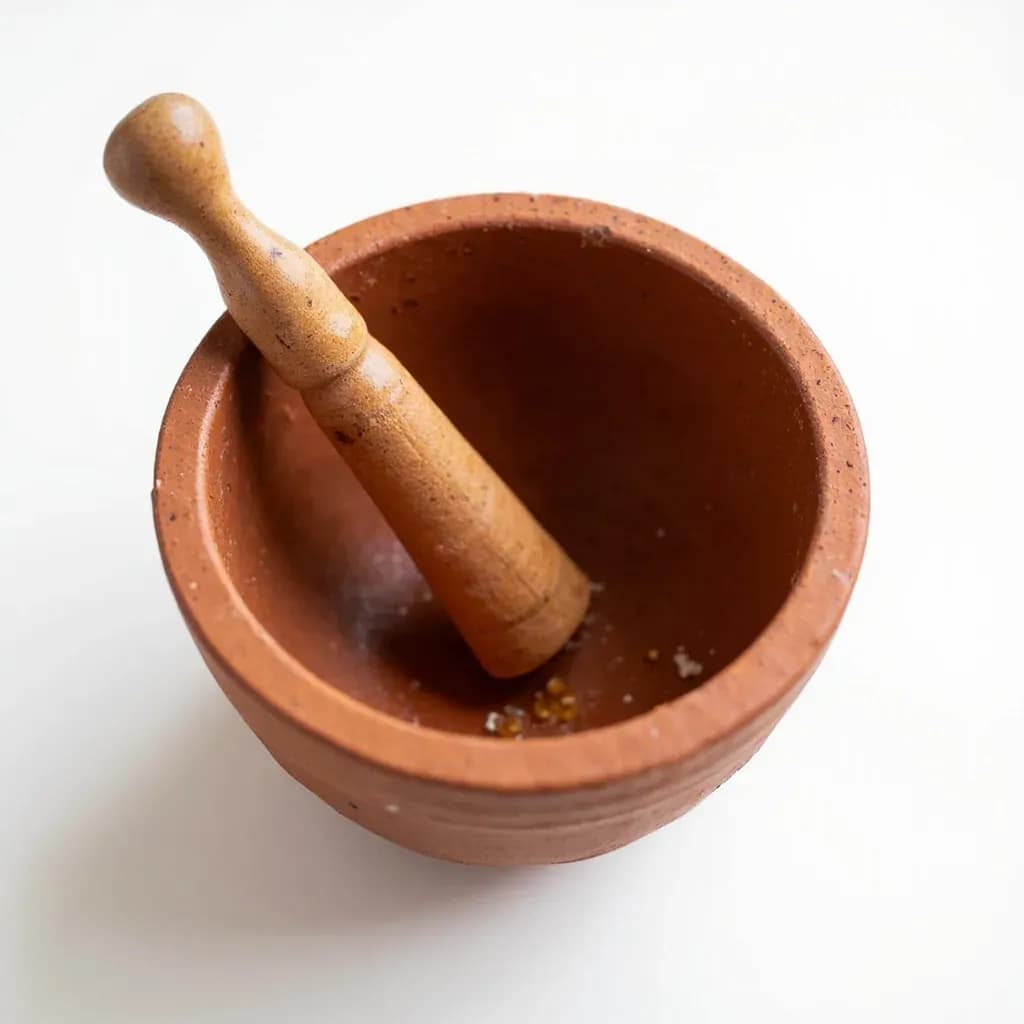
Ghanaian grooved earthenware grinding bowl used with a wooden pestle to mash peppers and spices.
An asanka is a shallow, ridged clay bowl from Ghana used together with a wooden pestle called a tapoli to grind and mash fresh peppers, onions, ginger, tomatoes and spices. The fired-clay surface has incised grooves that catch ingredients so they break down into a coarse paste rather than sliding around. It is the everyday tool for making shito base, pepper sauces and the foundations of many West African stews.
The asanka is an unglazed earthenware bowl carved on the inside with concentric grooves, used in Ghanaian kitchens with a heavy wooden pestle to crush aromatics into a coarse, oily paste. Everyday bowls measure roughly 15–25 cm across, with larger versions for chop bars and catering, and the pestle — variously called kolaa, twa, or susuma depending on the language — is the other half of an inseparable system. Together they are the defining prep tool of Ghanaian home and chop-bar cooking, used across Akan, Ga, Ewe, and northern Ghanaian cuisines.
Ghanaian cooks reach for the asanka rather than a blender because the action matters. Crushing between clay and wood ruptures cell walls without shearing everything to a pulp, so pepper seeds and tomato fibers remain partly intact and the paste keeps a chunky, saucier body that stands up to long simmering in soups and stews. The oils from scotch bonnets, ginger, and shito bases are expressed differently than they are in a food processor, and most cooks will tell you the result tastes fresher and brighter. The rhythmic pounding is treated as a recipe step in its own right, not as background prep.
The grooves do the real work. They grip ingredients as the pestle presses down and rotates, tearing rather than slicing, and they wear down with heavy use. When an asanka's interior finally glazes smooth, the bowl is functionally spent — it shreds ingredients into a mealy texture instead of crushing them into the desired coarse paste.
Alternatives
Types & varieties
About 15–18 cm across; everyday pepper and tomato bases for 2–4 servings.
20–25 cm or wider and deeper; used in roadside chop bars and for cooking in quantity.
Often shallower with finer, more densely carved grooves, suited to coastal fish and palm-oil sauces.
Sometimes larger and rounder, paired with a heavier pestle for grinding dried spices and soumbala (dawadawa).
Why crushing beats blending
A blender or food processor purees by shearing ingredients against a fast metal blade, which ruptures every cell at once and aerates the mix. The asanka works differently: ingredients are trapped between the wooden pestle and the clay grooves and pressed until they break, so larger structures — tomato skins, pepper seeds, ginger fibers — survive the process partly whole. In a shito base or a light soup base, that translates into a paste that suspends visibly in oil and sauce rather than dissolving into it, and into a flavor that tastes layered rather than uniform. Many Ghanaian cooks also feel the paste keeps a brighter, less cooked taste, because the friction generates less heat than a high-speed blender.
- Crushing keeps seeds and fibers partly intact, giving body to long-simmered sauces.
- Pounding expresses oils without emulsifying air into the paste.
- The rhythmic, controlled action is easier to stop at a coarse texture than a blender is.
Common uses
Tips & pitfalls
- Season a new asanka by rubbing the interior with a little vegetable oil and letting it sit overnight before first use; this reduces the earthy clay taste in the first few batches.
- Never wash with soap or detergent — the unglazed clay absorbs it and will leach off-flavors into food. Rinse with warm water and air-dry in sunlight.
- Always use the wooden pestle; a metal pestle chips the clay and accelerates groove wear.
- Add a small pinch of coarse salt early in the pounding. The crystals act as gentle abrasives and help break down pepper skins and tough ginger fibers.
- Cut peppers, onions, tomatoes and ginger into rough chunks before pounding; whole tomatoes and large onion halves slip inside the bowl and can bruise your hand.
- Use a circular, pressing motion rather than straight up-and-down pounding to keep the paste moving through the grooves and protect the bowl.
- Brace the bowl against your body or wedge it in a folded kitchen towel on the counter; the unglazed base is slick when wet and will slide with the first heavy press.
- To freshen the bowl after pungent work like smoked fish, rub the interior with a paste of baking soda and water, rinse thoroughly, and sun-dry before storing.
- When the grooves feel smooth and the bowl glazes over, replace it — a worn asanka shreds instead of crushing and gives a mealy texture.
Good to know
- Origin
- Ghana, West Africa
- Material
- Unglazed fired earthenware (clay)
- Companion tool
- Wooden pestle (kolaa, twa, or susuma, depending on language)
- Interior surface
- Roughly carved concentric grooves that grip and crush ingredients
- Typical size
- Roughly 15–25 cm diameter for everyday bowls; larger versions used in chop bars
- Primary use
- Crushing peppers, tomatoes, onions, ginger, garlic and aromatics into a coarse paste
- Texture produced
- Coarse, slightly chunky paste with intact seeds and fibers
- Care
- Rinsed with water only, air-dried; never washed with soap or detergent
- Lifespan
- Grooves erode with heavy use; bowls are typically replaced every few years
Also called
Earthenware Grinding Bowl · Apotoyewa
Related

Peeler
Swift blade for stripping skin off fruit and vegetables

Grater
Sharp-toothed surface for shredding cheese and vegetables

Microplane
Ultra-fine rasp for citrus zest, garlic, and hard cheese

Mixing Bowl
All-purpose bowl for combining, whisking, and tossing

Whisk
Looped wires that beat air into eggs, cream, and sauces

Spatula
Flat blade for flipping, lifting, and scraping

Slotted Spoon
Pierced spoon that lifts solids and drains the liquid behind

Wooden Spoon
Gentle, heat-friendly spoon for stirring anything