Prep Tools
Ash Rake
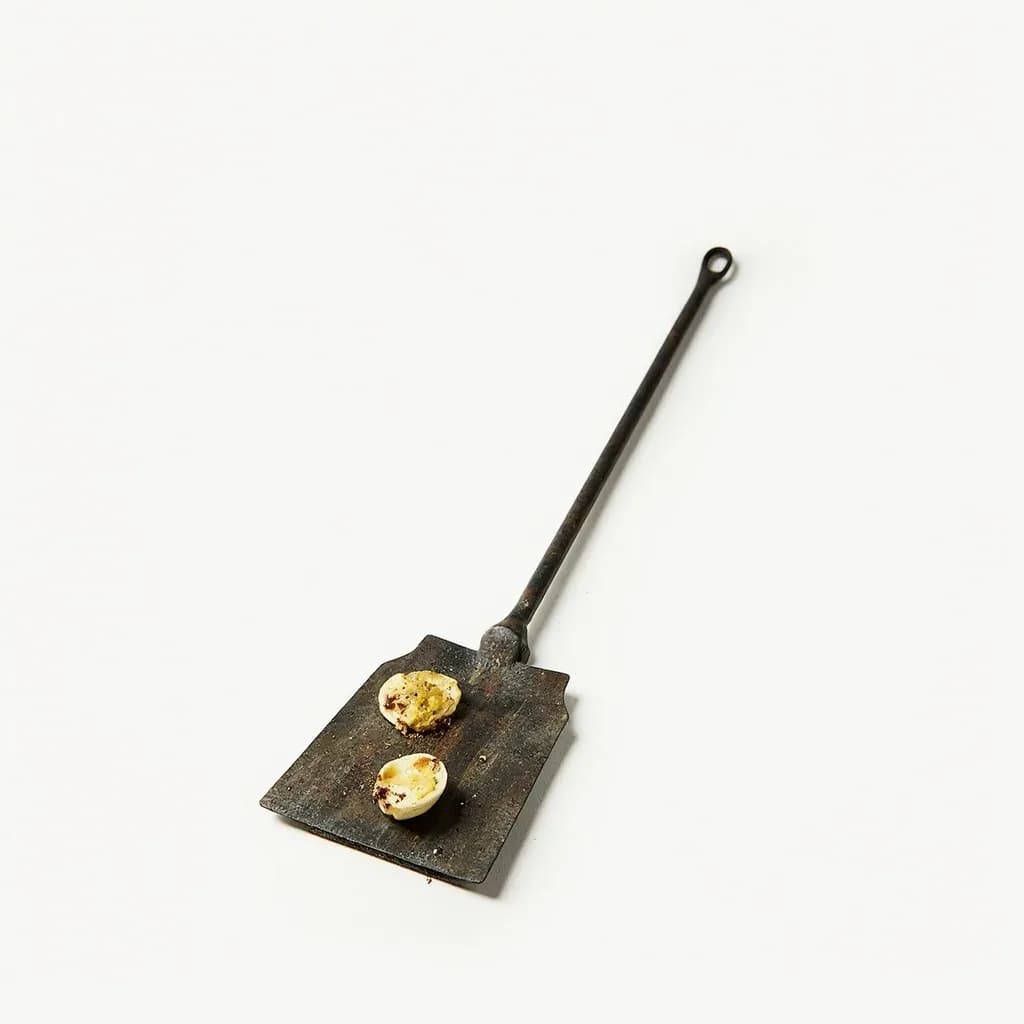
A long-handled metal rake for spreading embers and pulling ash from wood-fired ovens and grills.
An ash rake is a long-handled tool with a flat metal head used to move, level, and clear glowing coals and spent ash inside wood-fired ovens, hearths, and barbecue pits. Pizzaiolos and live-fire cooks use it to bank embers to one side and manage the heat zone before baking or grilling. The long handle keeps hands clear of intense heat, and the flat blade doubles for scraping the oven floor.
An ash rake is a forged, short-tined rake built specifically for managing live fire. Its head — usually four to eight stiff, blunt tines, often paired with a flat scraper edge on the opposite side — is hammered from carbon steel or iron so it can sit in direct contact with embers at 500–800 °C without warping. The long hardwood handle (traditionally ash, oak, or beech) keeps the cook's hands well back from radiant heat and rising sparks while still allowing precise control of the rake's bite. Unlike a garden rake, nothing about it is thin, springy, or welded; every part is built to take abuse from glowing coals.
In a working wood-fired oven, the ash rake is the tool that turns raw fire into cookable heat. Pizzaioli use it to drag embers forward from the back wall and even them across the deck, or to pull a curtain of ash aside to expose a clean hot zone for the next pie. It is equally useful at the cold end of the job: scooping out the dead grey ash that insulates a fire before relighting, breaking up clinker, and banking logs to the side of the firebox. In Neapolitan service it sits alongside the peel, turning peel, and brush as one of the four tools of the forno, and in hearth cooking, kamado work, and tandoor management it performs the same job under a different name.
Alternatives
Types & varieties
Full-length version (typically up to 120 cm / 48 in) for reaching the back wall of deep wood-fired bread or pizza ovens.
Compact rake around 60 cm long, used for tabletop hearths, kamados, and shallow ovens where close control matters more than reach.
Tines on one end, flat scraper blade on the other for cutting through crusty ash and lifting clinker.
Bladed scoop variant that lifts and deposits live coals, common in hearth cooking and large open fireplaces.
Heavy one-piece forged model favoured in traditional Neapolitan pizzerias for mass, durability, and heat tolerance.
Modern rust-resistant version for outdoor kitchens, coastal climates, and anyone who would rather wipe than oil.
Sizing the handle to the oven
Handle length is the single most important choice, because a rake that is too short pulls the cook into the radiant heat zone and a rake that is too long loses the fine touch needed to dress a small fire. As a rule of thumb:
- Ovens deeper than about 1 m (3 ft) need a 100–120 cm handle so the user can reach the back wall without leaning past the mouth.
- Standard 70–90 cm ovens (most backyard pizza ovens) are well served by an 80–90 cm handle — the all-purpose middle ground.
- Shallow kamado inserts, tabletop hearths, and fireplace tool sets are happier with a 60–70 cm short-handled rake for control.
- When stood beside the oven, the head should reach the floor comfortably with the handle resting at waist or chest height; if the cook has to stoop, the handle is too short for that oven.
Fire management in a wood-fired oven
The ash rake's real value shows up in the rhythm of service, not in the first lighting. Three techniques cover most of what a pizzaiolo or baker does between cooks:
- Dressing the floor: drag embers from the back and sides toward the centre, then rake them flat so the deck sees even radiant heat.
- Cutting a cooking zone: use the flat scraper edge to slice through the ash crust, then pull the ash aside to expose a clean hot patch of deck for the next pie.
- Banking the fire: push burning splits to the back or side wall to keep one half of the oven clear for loading and turning, leaving the other half to generate heat.
Common uses
Tips & pitfalls
- Hang the rake on a hook or bracket right next to the oven mouth so it is always to hand during service — walking back to a tool room mid-cook costs you heat.
- Wear heat-resistant gloves even when the handle feels cool; the real hazards are stray embers kicked up by the tines and splinters from an old handle, not the wood itself.
- Never quench a hot rake in cold water — thermal shock can crack a forged head or loosen the handle tang. Let it cool in air, then brush and oil.
- Use the flat scraper edge to cut and lift a crust of ash, then flip to the tines to drag and spread embers; the two ends are designed to work as a pair.
- After every service, brush the head with a stiff wire brush once cool and wipe a thin film of food-safe oil over carbon-steel heads to prevent flash rust overnight.
- If the handle loosens, wedge the tang with a thin strip of hardwood soaked in food-safe linseed oil rather than glue, so the handle can still be replaced.
- Keep a dedicated short rake for the kamado or charcoal grill and a longer one for the deep oven — a long rake has the wrong leverage over a low grill, and a short rake in a deep oven puts hands too close to the radiant heat.
- Avoid using an ash rake to pry logs apart like a poker; the head is meant for raking and scraping, and lateral leverage is the fastest way to snap a tine or split the handle socket.
Good to know
- Category
- Prep Tools / Fire & Oven Tools
- Head material
- Forged carbon steel or iron; stainless variants exist for humid climates
- Handle material
- Hardwood (traditionally ash, oak, or beech); some all-steel models
- Handle length
- 60–120 cm (24–48 in); longer for deep ovens, shorter for tabletop hearths
- Head width
- 12–25 cm (5–10 in)
- Tine count
- Usually 4–8 short, stiff tines, often paired with a flat scraper edge opposite
- Heat tolerance
- Rated for direct contact with embers at 500–800 °C (930–1470 °F)
- Weight
- Typically 1–2.5 kg (2–5.5 lb)
- Origin of name
- Likely a double meaning: it rakes ash, and the handles were traditionally turned from ash wood
- Maintenance
- Brush dry after cooling, oil steel heads lightly with food-safe oil, never quench hot or store wet
Also called
Coal Rake · Ember Rake · Oven Rake
Related

Peeler
Swift blade for stripping skin off fruit and vegetables

Grater
Sharp-toothed surface for shredding cheese and vegetables

Microplane
Ultra-fine rasp for citrus zest, garlic, and hard cheese

Mixing Bowl
All-purpose bowl for combining, whisking, and tossing

Whisk
Looped wires that beat air into eggs, cream, and sauces

Spatula
Flat blade for flipping, lifting, and scraping

Slotted Spoon
Pierced spoon that lifts solids and drains the liquid behind

Wooden Spoon
Gentle, heat-friendly spoon for stirring anything