Baking & Pastry
Baking Tray
Shallow oven pan for roasting, baking, and traybaked pastries and savory pies.
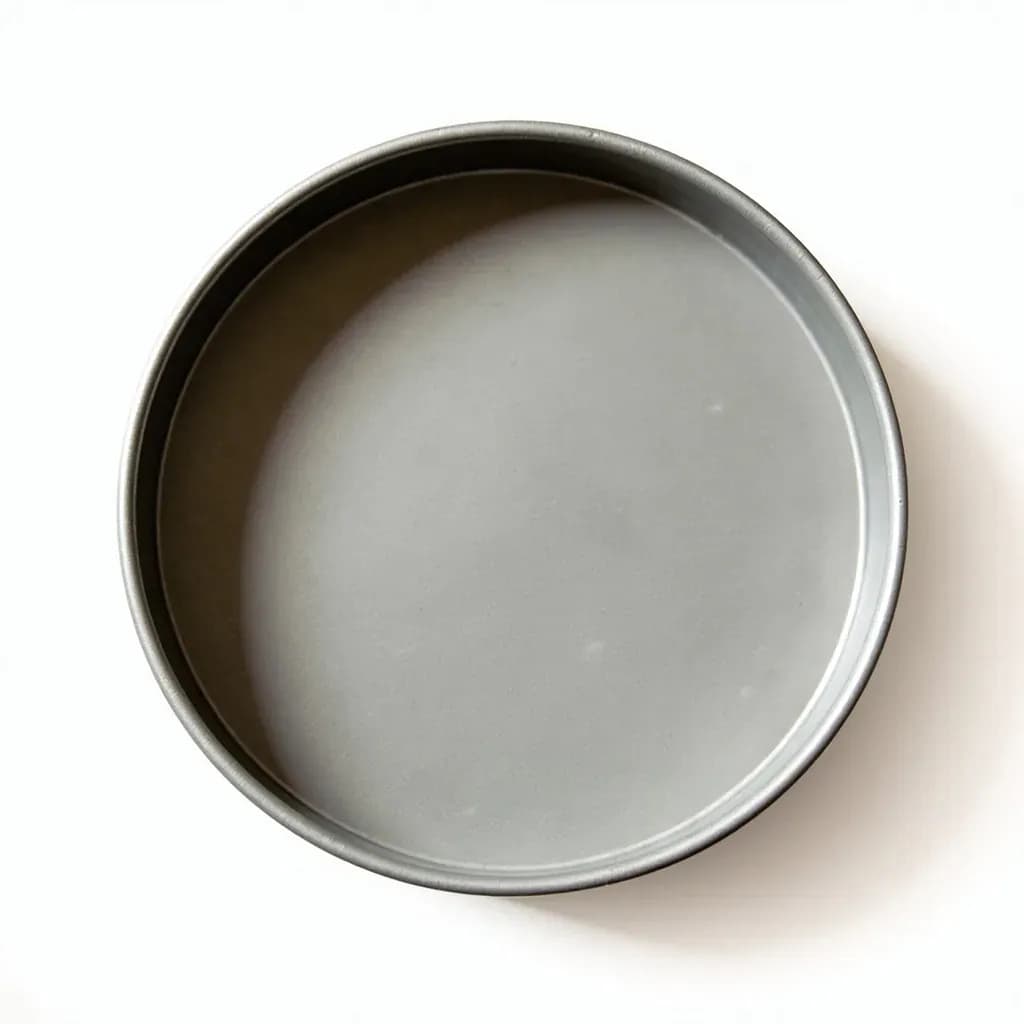
A baking tray is a shallow metal pan used in the oven for roasting, baking, and traybakes, with rims that hold juices and crumbs. Round versions are used for layered pastries like börek, banitsa, and knafeh, while rectangular ones suit roasts and sheet bakes. It overlaps heavily with the baking sheet, differing mainly in deeper sides and sometimes a round shape.
A baking tray is the flat, shallow oven pan you reach for more than almost any other piece of equipment: cookies, roasted vegetables, sheet-pan suppers, bar cookies, toasting nuts, and par-baking pastry all happen on it. Its strength is the wide, single-layer surface area, which lets hot air circulate around the food and drives off surface moisture so browning and crisping can happen. A rimmed version — what Americans typically call a sheet pan and Britons commonly call a baking tray — also catches drips and makes the pan easier to grip with oven mitts, which is why the rimmed design has become the de facto home standard.
The tray you buy matters more than it looks. Material and finish change how hot the surface actually bakes: bare shiny aluminum is the neutral benchmark, dark anodized or non-stick coatings run roughly 15–25°F (about 8–15°C) hotter at the surface, and insulated sheets run cooler and gentler. Gauge — the thickness of the metal — determines whether the pan warps under high heat or thermal shock, the single most common failure mode of cheap sheet pans. A heavy-gauge rimmed half sheet (about 18 × 13 in / 45 × 33 cm) is the workhorse for most home ovens, with a quarter sheet and a flat cookie sheet filling in the jobs each does best.
Alternatives
Types & varieties
The default home baking tray: 18×13 in with a 1 in rim. Versatile for cookies, sheet-pan dinners, roasting vegetables, and catching drips under other pans.
26×18 in commercial size; too large for most home ovens but the workhorse of professional kitchens.
Roughly 9×13 in; ideal for small batches, toast, single-serving sheet-pan suppers, mise en place, and as a stovetop landing pad for hot pans.
Rimless or with one short handle. Best for cookies and items that need to slide off; not suitable for juicy roasts because liquids spill.
Large flat pan (about 15×10 in) with a low rim (~0.75 in); designed for Swiss rolls and thin sheet cakes.
Deeper, often 3–4 in walls, usually with a rack. Used for whole poultry, brisket, and large cuts rather than baking cookies — a related tool, not a substitute.
Punched with holes so steam can escape from below; the right choice for breads, viennoiserie, and crisp-bottomed items.
Two aluminum sheets with an air gap; gentler browning, useful for shortbread and sugar cookies where dark bottoms are a problem.
Coated aluminum or steel; convenient for sticky items, but the coating scratches, degrades under the broiler, and runs hotter than bare metal.
Fiberglass-reinforced silicone; reusable non-stick surface that bakes more gently than bare metal — professional bakers often avoid it for cookies because bottoms turn pale and soft.
Heavier than aluminum, heats evenly, and develops seasoning like carbon steel cookware; browning is closer to dark steel.
Steel core with an aluminum coating; combines steel's strength with aluminum's conductivity and corrosion resistance — common in commercial pans.
Choosing a Baking Tray
Three decisions shape how a baking tray performs: size, material, and finish. Size first: a heavy-gauge rimmed half sheet fits a standard home oven with a couple of inches to spare on each side, which is the airflow a sheet pan needs. A full sheet (26 × 18 in) is the professional default but is too large for most domestic ovens, where it blocks airflow and bakes unevenly. A quarter sheet is a useful second pan for small jobs and as a flat surface to set hot skillets and saucepans on.
Material and finish come next. Bare aluminum is the neutral benchmark — it heats fast, conducts evenly, and runs at the temperature you set. Dark anodized aluminum and non-stick coatings absorb more radiant heat and run roughly 15–25°F (8–15°C) hotter in practice, which is helpful for crusty breads and roasted vegetables but burns pale sugar cookies. Insulated sheets do the opposite: the air gap slows heat transfer to the food, giving shortbread and sugar cookies a more even, paler bottom. Aluminized steel is common in commercial pans for a reason: it resists warping at high heat and browns predictably.
Gauge is the unglamorous detail that determines whether a pan survives a year or a decade. Home pans in the 0.8–1.0 mm range are adequate; commercial heavy-duty pans at 1.0–1.5 mm hold their shape well above the 425°F (220°C) threshold where thin pans start to bow, and they tolerate thermal shock far better. Anything thinner will eventually warp in the middle, and once a pan bows it never sits flat again — hot oil pools in the low spot and cookies slide toward the rim.
Surface, Finish, and How Food Browns
The browning you see on a cookie or a tray of vegetables is mostly the Maillard reaction, and the rate at which it runs depends on the temperature of the surface the food touches. A shiny aluminum pan reflects and re-radiates less heat back to the food, so it bakes close to the oven's set temperature; a dark anodized or non-stick pan absorbs more radiant heat from the oven walls and elements and bakes hotter than the dial suggests. The practical translation: a recipe developed on a light aluminum pan may over-brown in a dark non-stick pan, and a recipe developed in a dark pan may look underdone on a light one.
A silicone mat adds another layer of insulation between the metal and the food, which is wonderful for caramel and sticky batters but produces paler, softer cookie bottoms — which is why many professional bakers bake cookies on bare metal or parchment and reserve silicone mats for sugar work and candy. Perforated trays work the opposite way: they let steam vent from below, which is exactly what a crisp-bottomed baguette or pain au chocolat wants but is the wrong choice for a custard bar that needs gentle, even heat.
Common uses
Tips & pitfalls
- Buy at least one heavy-gauge (1 mm or thicker) rimmed half sheet — it is the single most useful pan in most kitchens and will outlast three cheap ones.
- Choose bare shiny aluminum as the all-rounder; dark non-stick pans run hot and over-bake pale items like sugar cookies and shortbread.
- Crowding is the most common mistake: pieces need airflow to brown. Use two pans rather than piling food on one — a single crowded pan steams everything.
- Preheat the pan for roasted vegetables and bacon; a hot surface drives off surface moisture and triggers browning almost immediately.
- Use parchment or a silicone mat for sticky items, but skip heavy oil at the same time — oil pooled under parchment steams the food and prevents browning.
- Avoid thermal shock: never put frozen food onto a screaming-hot pan, and never run a hot pan under cold water. Both warp thin metal permanently.
- Rotate the pan 180° halfway through baking — most home ovens have hot spots, and a turn evens out the browning.
- Lower the oven temperature by about 25°F (15°C) when switching from a light aluminum pan to a dark non-stick pan to compensate for the extra surface heat.
- Hand-wash bare aluminum; dishwasher detergent strips the oxidized patina that gives the pan its mild non-stick quality and can discolor it.
- Keep a dedicated 'savory' pan and a 'sweet' pan — savory residue (oil, garlic, fish) taints cookies and can leave off-flavors in delicate batters.
Good to know
- Standard home size
- Half sheet, approximately 18 × 13 in (45 × 33 cm) with a 1 in (2.5 cm) rim — the workhorse of home baking.
- Commercial full size
- 26 × 18 in (66 × 46 cm); commercial quarter size roughly 13 × 9.5 in (33 × 24 cm). Home 'quarter sheet' pans are typically 9 × 13 in.
- Common materials
- Aluminum (best heat conduction), aluminized steel, heavy-gauge carbon steel, stainless steel, silicone, and non-stick coated aluminum or steel.
- Typical gauge
- 0.8–1.0 mm for home pans; commercial heavy-duty is around 1.0–1.5 mm. Thicker gauges resist warping at high heat.
- Finish and browning
- Bare or shiny aluminum bakes gently; dark anodized or non-stick coatings brown faster and effectively run ~25°F (≈15°C) hotter than the dial suggests.
- Rim height
- Rimmed sheet pan: 1–1.5 in (2.5–4 cm). Jelly roll pan: lower rim, ~0.75 in. Roasting pan: 3–4 in deep walls.
- Heat tolerance
- Aluminum and steel pans handle 500°F (260°C) and above; silicone baking mats are typically rated to about 480°F (250°C).
- Regional terminology
- In the UK and Commonwealth, 'baking tray' usually means a rimmed pan; 'baking sheet' or 'cookie sheet' means a flat or rimless one. In the US, 'sheet pan' and 'rimmed baking sheet' are common synonyms.
Also called
baking-tray · baking-pan · oven-roasting-pan · round-oven-tray · round-baking-pan
Related

Muffin Pan
Multi-cup pan for muffins, cupcakes, and egg bites

Bundt Pan
Fluted ring mold for showstopping cakes with a center hole

Springform Pan
Latch-release pan that frees delicate cakes without flipping

Pie Dish
Sloped round dish for crisp-bottomed pies and quiches

Tart Pan
Fluted pan with a pop-out base for clean-edged tarts

Rolling Pin
Rolls dough into even sheets for pastry and bread

Pastry Brush
Brushes on egg wash, glaze, butter, and marinades

Bench Scraper
Flat blade that divides dough and clears your work surface