Prep Tools
Bamboo Strainer
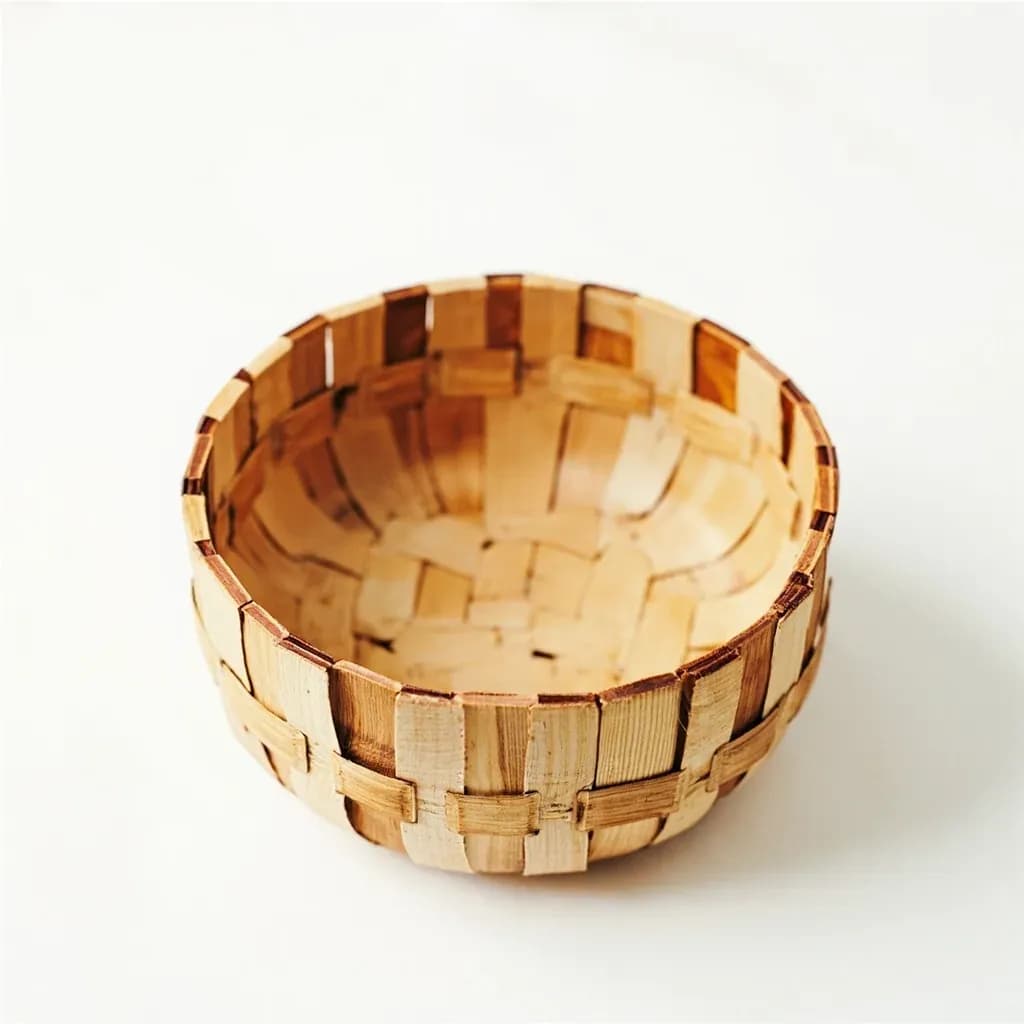
A woven bamboo or wire-mesh basket for draining, rinsing, and serving noodles and produce.
A bamboo strainer is a shallow woven basket, like a Japanese zaru, used to drain and rinse noodles, vegetables, and rice. It doubles as a serving vessel for chilled soba and tempura, letting excess water and oil drip away while food stays presentable. The breathable weave releases steam quickly, keeping drained noodles from turning gummy.
The bamboo strainer is a woven basket of thin bamboo strips, sometimes paired with a stainless-steel mesh insert, used to drain, rinse, and in many East Asian kitchens to serve food. In Japan it is called a zaru; in China a zhào lán or cè lán. What sets it apart from a punched-metal colander is the open, lattice-like weave: water falls through almost instantly, the basket itself weighs only a few hundred grams, and the bamboo breathes, which keeps whatever sits in it cooler through evaporation. That last property is why a soba-zaru on the table is not just a draining tool but part of how cold noodles are presented and kept lively.
Practically, a bamboo strainer behaves the opposite of a fine-mesh sieve. It is built for speed and volume, not for catching small grains. It tolerates brief contact with hot, drained food — a pot of just-cooked noodles, a scoop of blanched greens — but it does not like sitting in standing water, simmering liquid, or the high, sustained heat of a dishwasher. Treat it the way you would treat a wooden cutting board: wash quickly, dry fast, and keep it out of prolonged moisture.
For a cook, the basket is a small but versatile workhorse. It is the fastest way most home kitchens can drain a pound of noodles or a head of washed greens, and it doubles as a serving piece for dishes where the presentation is part of the recipe.
Alternatives
Types & varieties
The standard round, footed bamboo colander — the workhorse form for draining noodles, washing produce, and rinsing rice.
A shallower, often flat-bottomed basket used to drain and serve cold buckwheat or wheat noodles; the breathable weave continues to cool the noodles as they sit.
A fan-shaped strainer, decorative as well as functional; used to drain small batches and to serve tempura.
Square or rectangular bamboo sieves with a tighter weave, used for sifting flour, draining tofu, and straining dashi.
A close cousin with a tighter, often mesh-bottomed weave designed to sit over simmering water and steam buns, dumplings, or fish.
A modern hybrid with a bamboo frame and a fine stainless-steel mesh set inside, fast-draining like a traditional zaru but able to hold small items like capers, fine noodles, or rinsed berries.
Generally deeper and sturdier than the Japanese zaru, used for washing rice, blanching vegetables, and draining noodles; often sold with a matching bamboo lid.
Why bamboo, specifically
Three properties make bamboo hard to beat for draining. The open weave sheds water faster than almost any punched-metal colander, so a heavy load of noodles or greens does not sit in a puddle. The basket is light enough to shake out one-handed, and the breathable surface keeps food cooler than a metal bowl would — important when you are serving cold noodles and want them to keep their bite. The trade-off is durability: bamboo cannot take the sustained heat, detergent, or trapped moisture that metal can, so the basket needs the same care you would give a good wooden spoon.
Bamboo strainer vs. metal colander
Use the bamboo strainer when drainage speed and low weight matter most, and when the food is large enough to sit on top of the weave — noodles, blanched vegetables, washed greens, fried foods. Use a metal colander when you want something that can go over a stockpot, take a hard knock, and shrug off a cycle in the dishwasher. For very small items (rice, orzo, fine noodles) the bamboo basket needs a cloth liner, while a metal colander with tighter holes can often handle them bare.
The noodle-serving tradition
In Japanese kitchens the soba-zaru is as much a serving vessel as a draining tool. Cold soba or somen is drained after cooking, then plated directly on the shallow basket and brought to the table; diners dip the noodles in tsuyu or mentsuyu in a small bowl alongside. The bamboo's breathability continues to cool the noodles as they sit, and the visual of pale noodles against the warm tone of woven bamboo is considered part of the dish. A flat-bottomed basket on a tray or wooden board is the conventional presentation.
Common uses
Tips & pitfalls
- Do not soak it. Bamboo left standing in water will swell, crack, and eventually mildew; wash and dry it in the same sitting you use it.
- Keep boiling liquid out of the basket. Lift noodles out with tongs or a spider and set them in the zaru rather than pouring a full pot through it — sustained heat scorches and warps the weave.
- Line the basket with a clean kitchen towel or cheesecloth when you need to strain small or fine items like rice, quinoa, or berries; the gaps are designed for fast flow, not retention.
- Wipe the rim with a thin coat of food-grade mineral oil every few months if the bamboo looks dry or is shedding; it slows cracking at the binding.
- A sour or musty smell means trapped moisture and the start of mildew — scrub with a diluted white-vinegar solution, rinse, and dry fully in moving air from a window or fan.
- Never put it in the dishwasher. The prolonged heat, steam, and detergent will craze the bamboo and undo the rim binding in a single cycle.
- When buying, check the rim binding and the feet first. A poorly lashed rim is the first point to fail, and uneven feet make the basket rock and spill when you set it down loaded.
- Shake the basket in a single, confident motion rather than tilting it to pour; the flat base of a mori-zaru is meant to sit on the counter while the water falls straight through.
Good to know
- Material
- Woven strips of bamboo, often with a bound bamboo rim and sometimes a stainless-steel wire-mesh insert for finer straining.
- Traditional names
- Japanese zaru (笊); larger or deeper forms are zaru-oke. Chinese equivalents are zhào lán (笊籃) and cè lán.
- Typical sizes
- Household mori-zaru run roughly 20–40 cm (8–16 in) in diameter; commercial versions reach 50–60 cm.
- Weight
- Most household baskets weigh only 150–300 g empty — markedly lighter than an equivalent metal colander.
- Heat tolerance
- Limited. Brief contact with hot noodles or blanched vegetables is fine; prolonged contact with boiling water or simmering liquid will scorch and warp the weave.
- Drainage
- Fast by design. The wide gaps shed water almost instantly, which is the point; the basket is not suited to fine grains like rice or couscous without a cloth liner.
- Care
- Hand wash in cool or warm water with mild soap, rinse quickly, towel-dry, and air-dry fully. Never put it in the dishwasher.
- Price range
- Most retail between $10 and $40 USD, with larger or finer-crafted examples higher.
Also called
Bamboo / Wire Strainer · Zaru · Bamboo/Mesh Strainer
Related

Peeler
Swift blade for stripping skin off fruit and vegetables

Grater
Sharp-toothed surface for shredding cheese and vegetables

Microplane
Ultra-fine rasp for citrus zest, garlic, and hard cheese

Mixing Bowl
All-purpose bowl for combining, whisking, and tossing

Whisk
Looped wires that beat air into eggs, cream, and sauces

Spatula
Flat blade for flipping, lifting, and scraping

Slotted Spoon
Pierced spoon that lifts solids and drains the liquid behind

Wooden Spoon
Gentle, heat-friendly spoon for stirring anything