Prep Tools
Basting Mop
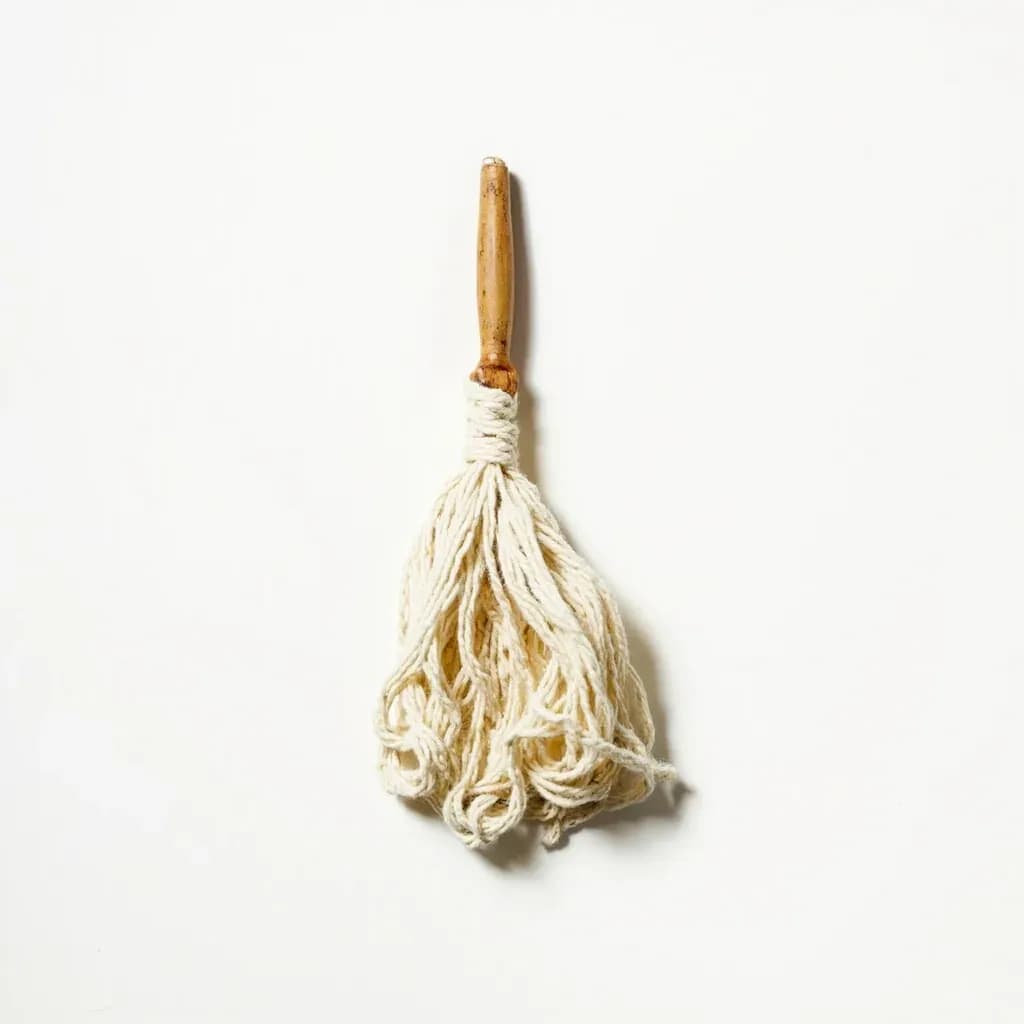
A small cotton-headed mop on a handle for slathering sauce and mop liquid over barbecuing meat.
A basting mop looks like a miniature floor mop, with absorbent cotton yarn on a wooden or metal handle. Pitmasters dip it into a thin mop sauce and dab or swab large cuts of meat during long smokes to add moisture and flavor. Its loose strands hold and spread more liquid than a brush, ideal for big surfaces like brisket and ribs.
A basting mop — also called a BBQ mop, sauce mop, or barbecue mop — is a small, janitor's-mop-shaped tool used to apply thin liquids to meat during low-and-slow cooking. It consists of a soft absorbent head (traditionally bleached cotton) bound to a short wood, plastic, or stainless handle, and it has been a fixture of American barbecue since the era when whole hogs were turned by hand in cinder-block pits across the Carolinas. Its job is the same job a mop has always done: hold a liquid, then dab and lay that liquid down in a thin, even film over a large or uneven surface.
What separates a mop from a basting brush or a spray bottle is the way it delivers sauce. The cotton or silicone head holds a meaningful amount of liquid and releases it with a gentle press, the way a towel wipes a counter — the sauce is laid on, not painted on. That dabbing action is gentler on a developing bark than a brush stroke, and it carries more liquid per pass than a spray, so a whole hog or a full brisket flat can be coated in a minute or two. The trade-off is real: a mop cannot lay down the paper-thin coat a silicone brush gives, and it cannot mist the inside of a closed pit the way a spray bottle can, which is why serious pitkeepers keep all three within reach.
The mop matters most on long cooks — pork shoulders, ribs, brisket, whole hog — where the meat is in the pit for six to sixteen hours and benefits from periodic bursts of moisture and seasoning. It is less useful on hot-and-fast grilling, where a brush is faster and a heavy mop of sauce will simply run off and flare up. Treated as a low-and-slow tool, the basting mop is one of the cheapest pieces of equipment in a pitkeeper's kit and one of the most consequential, because it is the primary way flavor is layered onto meat between the initial rub and the final sauced finish.
Alternatives
Types & varieties
The classic: white cotton strands on a wooden dowel. Absorbs thin sauces well but must be replaced once soiled or scorched.
Same cotton head, more durable dishwasher-safe handle.
Food-grade silicone bristles or molded head. Easier to sanitize, holds thicker glazes, tolerates higher heat, and is favored by many modern pitmasters.
Natural animal-hair head marketed as a barbecue mop. Behavior is similar to cotton but lasts a few cooks longer.
Oversized 3–4+ inch head on a long handle, built for reaching across whole hogs and large shoulders in offset smokers.
Around 1 inch across, useful for tight work on rib racks, chicken parts, and burnt-end trays.
Handle and head detach so only the cotton is discarded, reducing waste and the cost of replacing the whole tool.
Mop vs. brush vs. spray bottle
All three tools apply liquid to meat, but they are not interchangeable, and most experienced pitkeepers own at least two of them. The notes below are a working guide to which one to reach for in a given moment.
- Mop: holds the most liquid, lays it on with a dab. Best for thin vinegar- or mustard-based mop sauces on large, irregular surfaces — whole hogs, shoulders, brisket flats. Gentle on bark because it doesn't drag across it.
- Silicone basting brush: lays down the thinnest, most even coat. Best for finishing glazes in the last 30–60 minutes of a cook, and for any sauce you want painted rather than dabbed.
- Spray bottle: fastest, won't disturb bark at all, and can mist the inside of a closed cooker. Best for spritzing with water, apple juice, or cider to keep surface moisture up during the first hours of a smoke.
- Foam brush (disposable): a useful stand-in for a silicone brush when you want a fresh, uncontaminated applicator for a single finishing step.
The mopping rhythm on a long cook
When and how often you mop matters as much as what is in the mop. Mop too early and the sauce pools and washes the rub off; mop too late and the bark has set and the sauce sits on top. A workable schedule for a typical 225–250°F cook on a brisket, shoulder, or rib rack looks like this.
- Hours 0–2: do not mop. Let the rub set and the bark begin to form. Use a spray bottle of water or apple juice if you want to keep the surface from drying out.
- Hours 2–6: mop every 45–60 minutes with a thin, even coat of vinegar- or mustard-based mop sauce. Press and twist the mop against the bowl to release excess — never drip.
- Final 30–60 minutes: stop mopping with wet sauces. If a glaze or finishing sauce is going on, switch to a silicone brush to keep the bark intact and the sugar from burning.
- Wrap or pull: if wrapping in butcher paper or foil, mop one last time before the wrap; if saucing to finish, sauce and let it tack up for 10–15 minutes before pulling.
Common uses
Tips & pitfalls
- Soak a brand-new cotton head in warm water for 10–15 minutes before its first use to release loose lint and pre-load the fibers so they absorb sauce evenly.
- Press and twist the mop against the side of the sauce bowl rather than dunking and lifting — dunking drips all over the pit and wastes sauce.
- Mop thin. A heavy coat cools the meat, washes the rub off, and prevents bark from setting. Two light passes beat one soaking pass every time.
- Keep separate mops for vinegar/mustard mops and sweet finishing sauces, and label them. Flavor crossover is the most common reason a finishing glaze tastes like mop sauce.
- Discard cotton heads once they have absorbed visible smoke residue or sauce, or after a few cooks at most. A dirty head leaves black streaks on the meat and taints every flavor that comes after.
- Never store a used cotton head sealed in a plastic bag — it will mildew. Hang it loose, or throw it away.
- Angle the handle so the head lays on the meat while the grip stays in the cooler air above the pit; pressing a vertical handle into hot fat scorches cotton heads fast.
- For competition cooks, dedicate a labeled mop per category (pork, brisket, ribs, chicken) to keep flavors clean.
Good to know
- Also called
- BBQ mop, sauce mop, barbecue mop
- Primary materials
- Cotton head on wood/plastic handle, or food-grade silicone head on plastic or stainless handle
- Typical head size
- 1.5–3 inches across; whole-hog mops run 3–4+ inches; mini mops about 1 inch
- Total length
- 8–14 inches standard; long-handled whole-hog models reach 18+ inches
- Heat tolerance
- Cotton heads should not touch open flame or direct coals; silicone tolerates higher direct heat
- Care
- Cotton heads are replaced every few cooks; silicone heads are dishwasher-safe
- Best for
- Smoked pork, brisket, ribs, and poultry at 225–275°F over long cooks
- Cost
- $3–$8 for standard cotton mops; $10–$25 for silicone or premium models
Also called
BBQ mop · barbecue mop · sauce mop
Related

Peeler
Swift blade for stripping skin off fruit and vegetables

Grater
Sharp-toothed surface for shredding cheese and vegetables

Microplane
Ultra-fine rasp for citrus zest, garlic, and hard cheese

Mixing Bowl
All-purpose bowl for combining, whisking, and tossing

Whisk
Looped wires that beat air into eggs, cream, and sauces

Spatula
Flat blade for flipping, lifting, and scraping

Slotted Spoon
Pierced spoon that lifts solids and drains the liquid behind

Wooden Spoon
Gentle, heat-friendly spoon for stirring anything