Prep Tools
Meat Shredding Claws (Bear Paws)
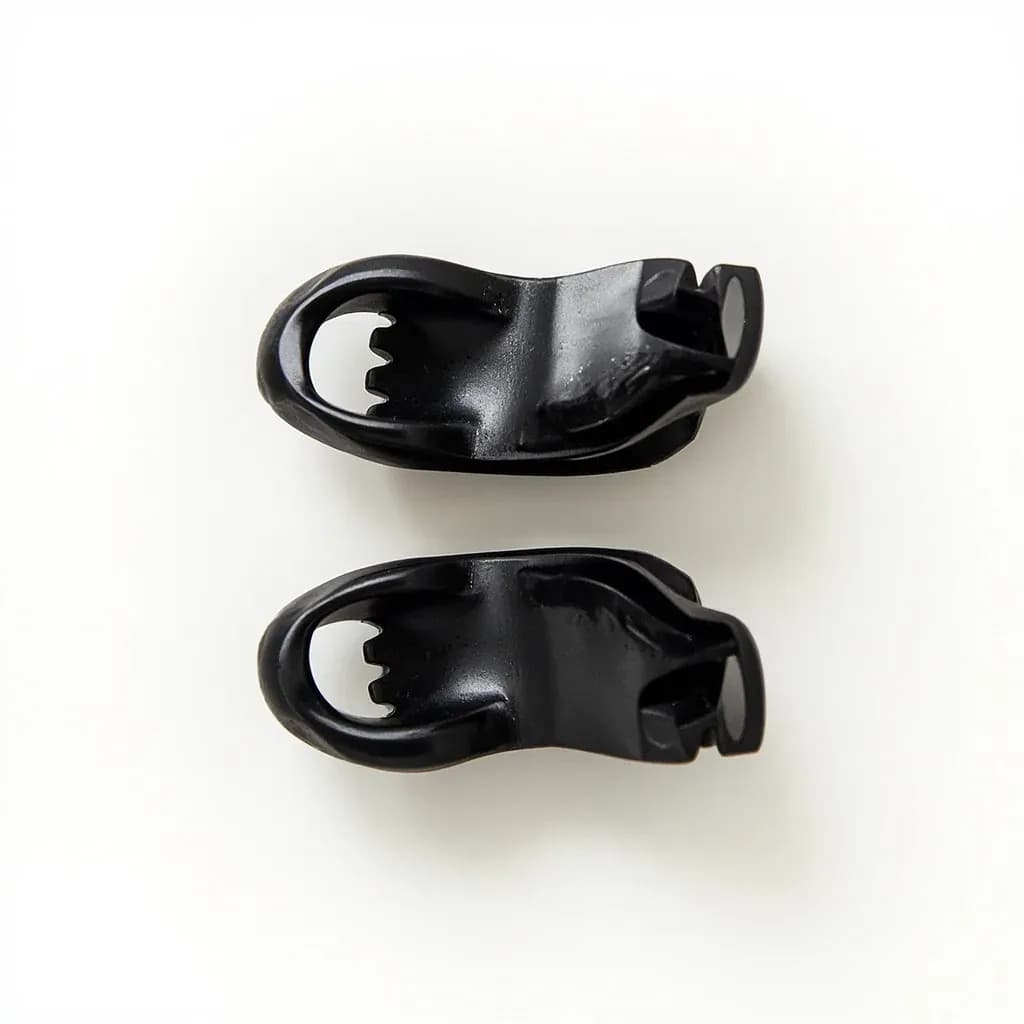
A pair of clawed handheld tools for quickly pulling and shredding cooked meats like pork and chicken.
Meat shredding claws, often sold as bear paws, are a pair of handheld tools with stout pronged claws used to grip, lift, and pull apart cooked roasts into shreds. They make fast work of pulled pork, brisket, and rotisserie chicken without burning your fingers. The claws also help hoist and carry large hot cuts from the smoker or pot.
Meat-shredding claws — also called bear paws, BBQ claws, or pulled pork claws — are a pair of handheld tools, each with a sturdy palm-grip handle and a fan of 5 to 7 curved, pointed tines, designed for tearing apart tender, cooked meats. They emerged from American low-and-slow barbecue tradition as a way to convert a whole smoked pork shoulder or brisket into the long, moist strands that define pulled pork and shredded brisket sandwiches. Compared with two forks, a potato masher, or even a stand mixer, claws give the cook a uniquely controllable combination of leverage, speed, and strand length.
The design is essentially a fork scaled up to match a five- to ten-pound cut of meat. The broad handle lets the cook drive the tines in with body weight, while the curved points anchor and rip meat across a wide section in a single motion. Most consumer pairs are molded from a single piece of heat-resistant nylon rated to roughly 400–450 °F (200–230 °C); stainless steel and aluminum versions exist for heavier use. Nylon won't scratch cookware and is light in the hand, but it will warp if rested on a hot grill lid; metal claws are tougher but should be kept off non-stick and ceramic surfaces.
In practical terms, claws turn a long, messy job into a quick, controlled one: a Boston butt that would chase you around a cutting board with two forks comes apart in even, juicy strands in a fraction of the time. They're now standard equipment in competition BBQ turn-in rooms and home smoker setups alike, and they double as a safe second pair of hands for lifting hot roasts off pans or out of a cooker.
Alternatives
Types & varieties
The most common style; lightweight, affordable, and won't scratch cookware, but can melt if rested on a hot lid or grill grate.
More durable and heat-tolerant; preferred by some competition pitmasters, but heavier and capable of scoring non-stick surfaces.
Lighter than steel with decent heat tolerance; less common than nylon or stainless.
Traditional-look design; the handle stays cooler but is not dishwasher safe, and the wood can crack with repeated wash cycles.
Handle and tines molded as one piece with no rivets to loosen; the typical entry-level/consumer model.
Some pairs store together magnetically or clip to a smoker handle for quick access during a cook.
Alternatives when you don't have claws
Claws are purpose-built for the job, but they're not the only way to get from a whole roast to a pan of shredded meat. The right substitute depends on batch size, the strand length you want, and whether you're working in a competition turn-in room or a home kitchen.
- Stand mixer with paddle attachment — fastest option for large batches; pulse and check to avoid over-shredding or smearing the meat into a paste.
- Two dinner forks — the universal backup; slower and harder on the hands but reliable, and they produce clean, even strands.
- Potato masher — effective for smaller amounts of meat in a bowl; yields shorter, finer shreds well suited to tacos or sloppy joes.
- Heat-resistant gloves plus tongs — useful for lifting the hot roast off the cooker before switching to forks or a mixer.
- Clean bare hands — fastest for texture control and common in competition BBQ, but not appropriate for service or events.
Common uses
Tips & pitfalls
- Work the meat while it is still hot (around 195–205 °F internal for pork shoulder) — cold meat resists shredding and tears into chunks instead of long strands.
- Anchor a steady section with the non-dominant claw and pull with the other; rotating the claws apart produces long, even strands rather than mush.
- Remove the bone, fat cap, and large pieces of connective tissue before shredding — pulling around them wastes time and produces inconsistent texture.
- Shred over a large sheet pan or hotel pan to catch the juices, then redistribute those juices over the finished meat to keep it moist.
- Never rest plastic claws on the closed lid of a hot smoker or grill — radiant heat from the lid can exceed the plastic's rating and warp or melt the tines.
- Keep the tines pointed down and away from the other hand; the points easily puncture skin and even heavy gloves.
- Avoid nylon claws on non-stick cookware or ceramic-coated grills — the tines will score those surfaces; reserve metal claws for bare metal and cast iron.
- Pair two heatproof gloves with claws when handling a 10+ lb shoulder coming off the smoker — claws grip, gloves protect.
Good to know
- Also known as
- Meat claws, BBQ claws, pulled pork claws, shredder claws
- Configuration
- Sold and used as a pair (one per hand)
- Tines per claw
- Typically 5–7 curved, pointed tines
- Typical length
- Approximately 6–8 inches (15–20 cm) per claw
- Common materials
- Heat-resistant nylon/plastic, stainless steel, and aluminum
- Nylon heat tolerance
- Roughly 400–450 °F (200–230 °C); lower-grade plastics can warp lower
- Dishwasher safe
- Most nylon and metal versions are top-rack safe; wood-handled models are hand-wash only
- Primary use
- Shredding cooked, tender meats — pulled pork, pulled chicken, shredded beef
Also called
Bear Paws · Shredding Claws · Pork Pullers · Meat Claws
Related

Peeler
Swift blade for stripping skin off fruit and vegetables

Grater
Sharp-toothed surface for shredding cheese and vegetables

Microplane
Ultra-fine rasp for citrus zest, garlic, and hard cheese

Mixing Bowl
All-purpose bowl for combining, whisking, and tossing

Whisk
Looped wires that beat air into eggs, cream, and sauces

Spatula
Flat blade for flipping, lifting, and scraping

Slotted Spoon
Pierced spoon that lifts solids and drains the liquid behind

Wooden Spoon
Gentle, heat-friendly spoon for stirring anything