Prep Tools
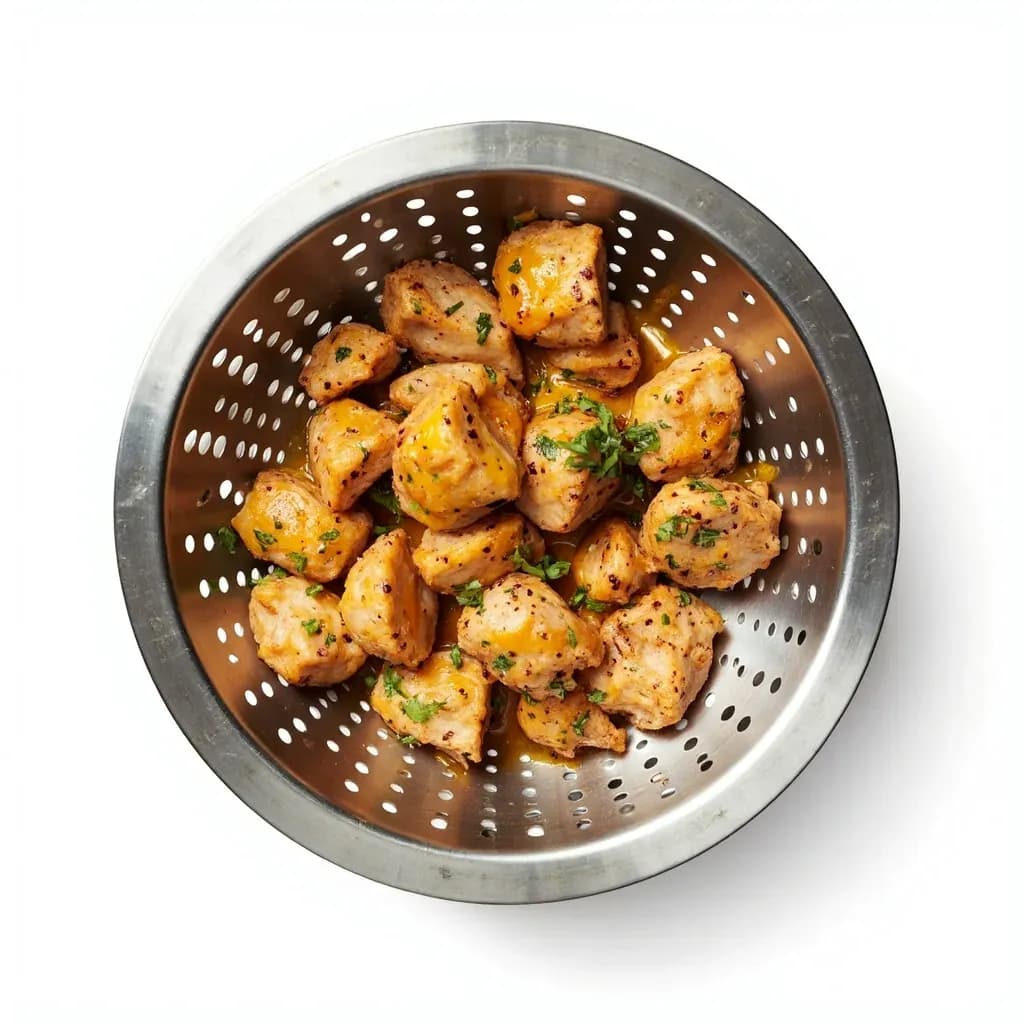
Stainless Boil Strainer Basket
Large perforated basket that drops into boiling water to cook and lift food in one motion.
A deep perforated stainless basket designed to sit inside a stockpot so you can boil food and lift it all out at once for instant draining. It's ideal for blanching vegetables, boiling pasta, or cooking a seafood boil, sparing you from pouring a heavy pot into a colander. Many come with a hook or handle to rest the basket on the pot rim.
A stainless boil strainer basket is one of those humble tools that quietly solves a problem every cook eventually faces: how to cook something in a pot of boiling water or hot oil and remove it cleanly in a single motion, without hauling the pot to the sink or fishing food out one piece at a time. The basket is a perforated metal container, usually a fine or medium stainless mesh bowl with a long handle, that drops into any pot of appropriate size. While the food cooks, water or oil circulates freely through the mesh, so the food behaves as if it were loose in the liquid. When the cook is ready, a firm lift brings the basket and its contents out, draining as it rises.
The real value of a boil basket is timing and control: the moment the basket comes up, the cooking is over. That simple fact is what makes it indispensable for blanching green vegetables, cooking small portions of pasta or dumplings, lowering fragile foods into hot oil, and any task where overcooking is a single minute away. A good basket is also portable: the same tool that blanches asparagus at the stove can be lifted straight into an ice bath, drained, and set aside, which is why professional kitchens keep several sizes within arm's reach.
Despite its modest appearance, a boil basket is not the same as a colander (built for draining a whole pot), a slotted spoon (works piece by piece), or a pasta pot insert (sized to nest permanently in a specific stockpot). It also overlaps with the Chinese spider skimmer, which is essentially the same idea in flat, long-handled form. What sets a boil strainer basket apart is that it is a free-standing perforated container, sized to fit any pot of the right diameter, that goes down and comes back up with the food still inside.
Alternatives
Types & varieties
The classic form: a bowl-shaped fine-mesh basket with a long handle, ideal for blanching vegetables and lifting them straight into an ice bath.
Symmetrical loop handles for two-handed lifting, better for heavier loads like corn on the cob or whole potatoes.
Taller, rectangular wire mesh sized to fit a saucepan or stockpot, used for fries, doughnuts, and other deep-fried foods.
A large perforated insert sized to nest inside a specific stockpot; lifts out to drain pasta without a colander.
A flat or shallow wire-mesh disk on a long bamboo or metal handle; the Asian counterpart used for lifting dumplings, noodles, and tempura.
The handle pivots flat for storage in a drawer, common in European-style designs.
The blanching workflow
Blanching — a brief plunge into boiling salted water followed by an ice bath — is the single use that justifies owning a boil basket. The technique sets the color of green vegetables, loosens skins from tomatoes and peaches, and partially cooks dense vegetables before a stir-fry or gratin. The basket is the workhorse of that workflow because it lets the cook move the food from pot to ice bath in one clean lift, draining as it goes, with no slotted-spoon gymnastics in between.
- Bring a pot of well-salted water to a full rolling boil; the salt should taste like the sea.
- Lower the basket with the vegetables inside slowly, so the boil does not stall and the water does not splash.
- Time from the moment the water returns to a boil; small florets may need only 60–90 seconds, asparagus spears 2–3 minutes.
- Lift the basket, shake it once firmly to shed water, and plunge it straight into a bowl of ice water to stop the cooking.
- Lift again, drain, and pat dry if the vegetables are going into a salad or a hot pan.
Common uses
Tips & pitfalls
- Do not overcrowd: water must circulate freely, or food steams instead of boils and turns soggy and unevenly cooked.
- Pat food dry before lowering it into hot oil in the basket; wet food causes violent splatter that can be genuinely dangerous.
- Lower and raise the basket slowly to prevent boil-overs and splashing, especially when lifting starchy pasta water.
- Pick a basket whose handle stays outside the pot's rim, so you are not reaching over a cloud of steam to grab it.
- Shake the basket firmly over the pot after lifting to shed water; for oil, drain over the pot for several seconds before transferring to a rack or paper towels.
- Use a clip or pot rim holder to suspend the basket above the waterline if you need to pause cooking, keeping fragile items warm without overcooking.
- Clean the mesh promptly after use: starch and oil clog the weave, reducing drainage and harboring off-flavors into the next task.
- Salt the water generously before lowering the basket; the basket does not affect seasoning, but it also does not excuse under-salted water.
Good to know
- Material
- Stainless steel mesh with stainless steel rim and handle
- Typical diameter
- 6 to 9 inches (15–23 cm) round; rectangular versions run 9–12 inches long
- Mesh style
- Fine to medium perforated or woven wire mesh that allows free water or oil circulation
- Handle style
- Single long handle, twin loop handles, or folding handles that stay cooler on the stove
- Heat tolerance
- Suitable for boiling water and deep frying up to about 400°F (200°C)
- Care
- Dishwasher safe; dry promptly to prevent water spots on lower-grade stainless
- Common alternate names
- Blanching basket, mesh cook's basket, fry basket, pasta basket, boil basket
Also called
Pasta Insert · Blanching Basket · Boil Basket
Related

Peeler
Swift blade for stripping skin off fruit and vegetables

Grater
Sharp-toothed surface for shredding cheese and vegetables

Microplane
Ultra-fine rasp for citrus zest, garlic, and hard cheese

Mixing Bowl
All-purpose bowl for combining, whisking, and tossing

Whisk
Looped wires that beat air into eggs, cream, and sauces

Spatula
Flat blade for flipping, lifting, and scraping

Slotted Spoon
Pierced spoon that lifts solids and drains the liquid behind

Wooden Spoon
Gentle, heat-friendly spoon for stirring anything