Prep Tools
Bottle Brush
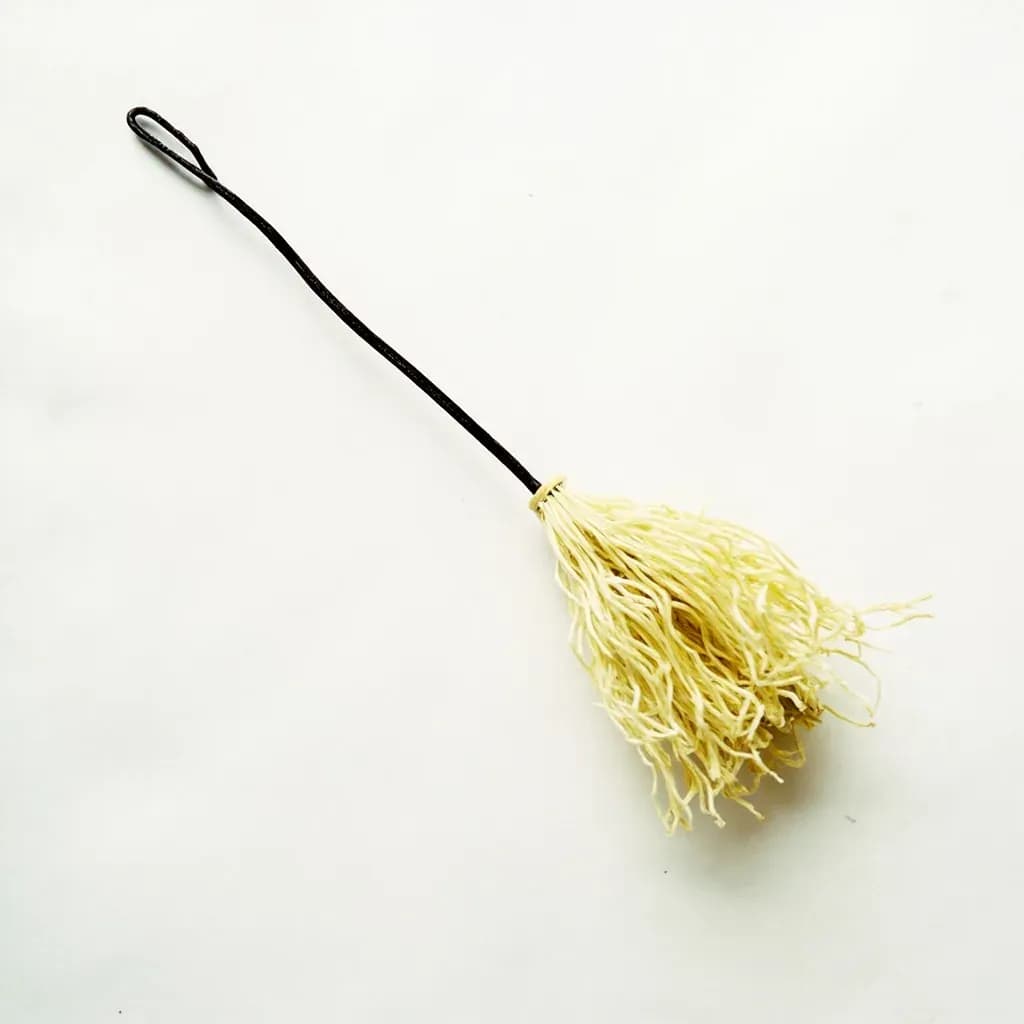
A long, narrow brush on a twisted wire handle for scrubbing the inside of bottles and jars.
A bottle brush is a cylinder of stiff bristles fixed to a long twisted-wire handle, made to reach the bottom and sides of narrow vessels that a sponge cannot. In the kitchen it cleans water bottles, oil and sauce bottles, jars, decanters and fermentation vessels. Sizes range from slim tube brushes to wide carafe brushes, often with a sponge or foam tip for the base.
A bottle brush is a long-handled cleaning tool built to reach into vessels whose narrow necks make a sponge or cloth impossible. Its defining feature is a tuft of bristles held open by a twisted wire shaft, so that when the brush is pushed into a bottle the bristles spring outward and scrub the curved walls. The wire core gives the shaft rigidity while still allowing some flex, and a small loop at the end lets you hang the brush bristle-down to dry between uses.
It is one of the only practical ways to clean the inside of a regular-mouth mason jar, a glass olive-oil bottle, a swing-top growler, or a 5-gallon fermentation carboy — containers otherwise very difficult to scrub from the inside. A well-made brush with a stainless core and quality bristles will outlast a stack of cheap versions; the difference shows in how aggressively the bristles return to shape after each pass.
Used with hot water, dish soap, and the occasional baking-soda or brewery-wash soak, a bottle brush makes reusable glassware — and the sauces, oils, ferments, and beverages stored in it — reliably clean. Once you own a good one, it is hard to go back.
Alternatives
Types & varieties
The workhorse; stiff nylon bristles on a twisted wire core. Best for mason jars, oil and vinegar bottles, and reusable water bottles.
Mexican agave plant-fiber bristles on a stainless core; biodegradable and gentler than nylon, suited to glass decanters and vintage or etched glass.
A foam head replaces the bristle tuft; non-scratching for delicate glassware, narrow wine glasses, and laboratory glass.
Two heads of different sizes on one shaft — a small nipple or teat brush and a larger bottle brush — the standard for baby bottles.
Extra-long 24–36 in shaft for 1-, 3-, 5-, and 6-gallon glass carboys and demijohns used in homebrewing and winemaking.
Under 1/4 in diameter and 6–8 in long; for reusable metal, bamboo, silicone, and glass straws, and hydration-pack tubes.
A cellulose sponge tip on a flexible wire; gentle enough for wine glasses, narrow vases, and other fragile narrow-neck vessels.
All-metal construction with a rust-proof core; built for humid environments, breweries, and commercial kitchens.
Sizing the brush to the vessel
The single most useful skill with a bottle brush is matching its diameter to the bottle. A brush that is too small for the neck will pass through but never spring outward against the glass, so it slides around without actually scrubbing. A brush that is too large simply will not enter. The bristle spread should be slightly larger than the inside diameter of the narrowest point of the vessel, which is almost always the neck or shoulder — not the belly, which is wider.
- Regular-mouth mason jars (about 2.5 in / 6.4 cm opening) need a brush at the upper end of the general-purpose range — roughly 2–2.5 in spread — to make firm contact with the walls.
- Wide-mouth mason jars (about 3 in / 7.6 cm opening) are wider than most standard brushes can reach; look for an oversized brush with at least a 2.5–3 in spread, or accept that the shoulder area will get only a partial scrub.
- Olive-oil and vinegar bottles typically have 3/4–1 in necks; a standard brush enters easily, but push slowly so the bristles fan out gradually inside the shoulder rather than folding back on themselves.
- Five-gallon glass carboys (about 1 in neck) demand a 24–36 in long-reach brush to reach the bottom of the belly. The belly itself is far wider than any bristle spread can cover, so cleaning happens by pushing the long brush against the walls and letting the bristles flex across the surface.
- Reusable straws need a thin, short detail brush — full-size bottle brushes are too thick to enter a straw and are the wrong tool for the job.
Sanitizing the brush itself
A bottle brush is a moist, bristled surface — exactly the environment bacteria and mold love. The brush must be cleaned and dried as carefully as the vessels it scrubs, particularly in a brewing or canning context where residual contamination can spoil an entire batch. The most common failure mode is storing the brush wet or bristle-up, which traps moisture against the wire core, rusts it, and seeds microbial growth in the damp bristles.
- Rinse the brush under hot running water after every use and shake out the excess.
- Periodically run it through the dishwasher's utensil basket, or soak it for a few minutes in a dilute bleach solution (1 Tbsp unscented household bleach per gallon of water), then rinse thoroughly.
- Hang bristle-down on a hook, peg, or bottle-drying rack so water drains away from the wire core.
- Replace the brush the moment the bristles splay, kink, or shed — bent tips no longer spring against the glass and harbor residue in their deformed shape.
Common uses
Tips & pitfalls
- Match the brush diameter to the bottle's narrowest point, almost always the neck. Too small and the bristles never press against the glass; too large and the brush will not enter at all.
- Soak the vessel first in hot water with a tablespoon of baking soda or a splash of white vinegar to loosen dried sauces, oils, and wine residue before scrubbing.
- For oily bottles (olive oil, sesame oil, hot sauce) use a drop of dish soap and very hot water — cool water will not emulsify oil, and you will end up with a greasy film no matter how hard you scrub.
- Sanitize the brush itself between uses by running it through the dishwasher's utensil basket or soaking it briefly in a dilute bleach solution (1 Tbsp unscented bleach per gallon of water), then rinse and hang to dry.
- Replace the brush as soon as the bristles kink, splay, or shed. Worn bristles no longer spring outward, leave a greasy film behind, and can harbor bacteria in their bent tips.
- Hang the brush bristle-down by the loop end so water drains away from the wire core. Standing it bristle-up traps moisture and rusts the wire from the inside out.
- Do not use stiff nylon on thin, etched, or vintage glass — switch to a natural Tampico or foam-tip brush to avoid scratching the surface.
- Avoid steel-wool pads and abrasive cleansers inside the bottle. They shed particles that lodge in narrow necks and are nearly impossible to rinse out.
Good to know
- Also called
- Bottle washer, bottle scrubber, carboy brush (for larger sizes)
- Core construction
- Twisted galvanized or stainless steel wire shaft, usually with a hanging loop at one end
- Bristle materials
- Nylon, polyester, polypropylene, natural Tampico (agave) fiber, foam, or sponge
- Typical length
- Standard 12–18 in (30–46 cm); straw brushes 6–8 in; carboy brushes 24–36 in
- Bristle spread
- Roughly 1.5–2.5 in (4–6 cm) for general purpose; thinner for straws, wider for carboys
- Heat tolerance
- All-nylon and stainless-core brushes tolerate boiling water and dishwasher cycles; natural Tampico tolerates hot water but degrades faster
- Replacement interval
- Roughly 3–6 months of regular use, or sooner if bristles splay, kink, or shed
- Storage
- Hang bristle-down by the loop end in open air; never store wet or bristle-up
Also called
Bottle Cleaning Brush
Related

Peeler
Swift blade for stripping skin off fruit and vegetables

Grater
Sharp-toothed surface for shredding cheese and vegetables

Microplane
Ultra-fine rasp for citrus zest, garlic, and hard cheese

Mixing Bowl
All-purpose bowl for combining, whisking, and tossing

Whisk
Looped wires that beat air into eggs, cream, and sauces

Spatula
Flat blade for flipping, lifting, and scraping

Slotted Spoon
Pierced spoon that lifts solids and drains the liquid behind

Wooden Spoon
Gentle, heat-friendly spoon for stirring anything