Prep Tools
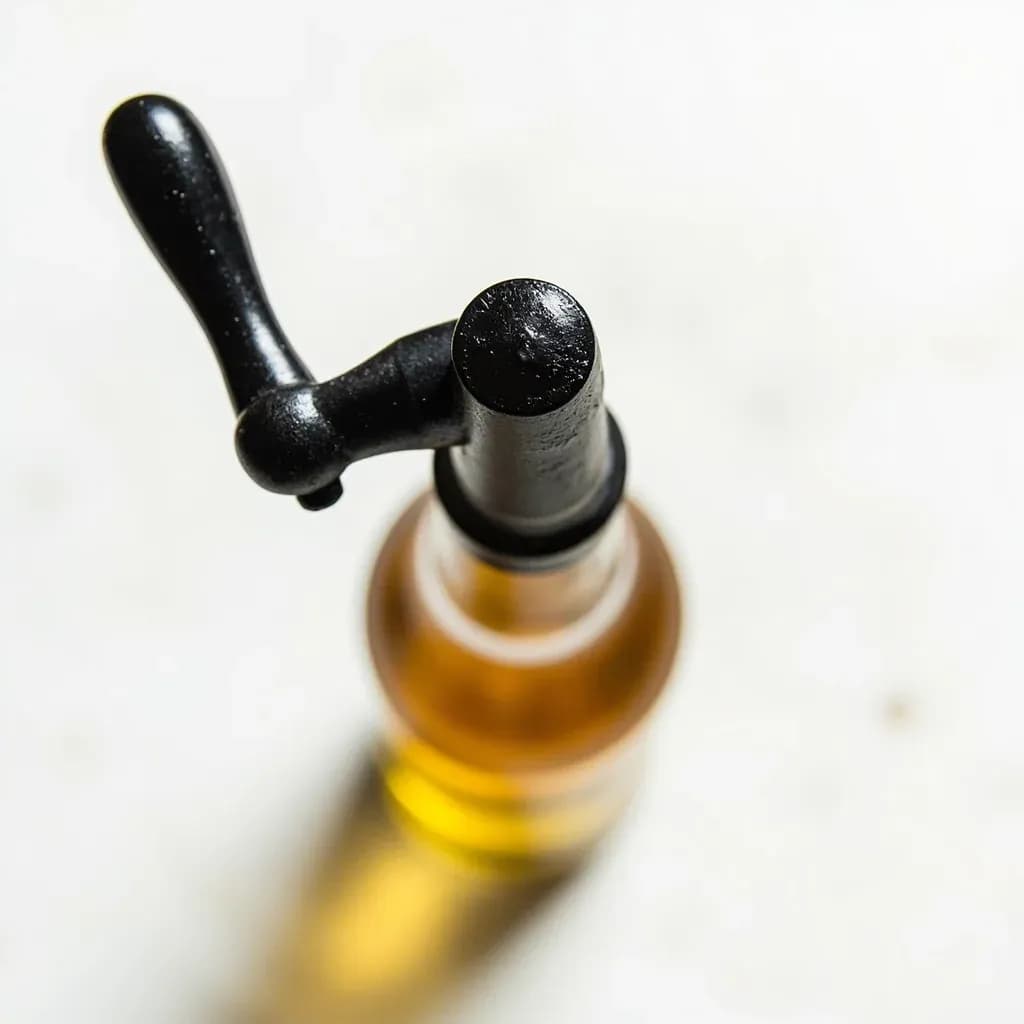
Bottle Capper
A lever or bench tool that crimps crown caps or seats corks onto bottles of beer, cider, or wine.
A bottle capper presses and crimps a metal crown cap onto a bottle, while corker versions drive a cork into a wine bottle. Home and craft brewers use the handheld two-lever or bench-mounted style to seal carbonated beer and cider so they can condition in the bottle. A floor corker uses jaws to compress and insert corks for wine and sparkling drinks.
A bottle capper is the workhorse tool that finishes the job on bottling day, pressing a steel crown cap down over the lip of a glass bottle so the soft liner compresses into a hermetic seal. Without a good seal, beer goes flat, cider oxidizes, kombucha keeps fermenting right through the cap, and homemade soda loses its fizz in a week. The tool itself is deceptively simple: a hardened steel bell or die sized to a specific cap diameter, mounted in a frame with one or two levers that drive the cap home with a short, decisive stroke. The craft lies in applying just enough force to fold the cap's corrugated skirt under the bottle's locking ring — too little and the cap leaks or pops under carbonation pressure, too much and the glass cracks or the cap deforms and refuses to seal.
The category is broader than most people realize. Beyond the familiar bench capper that seats 26 mm crown caps on American-style beer bottles, there are handheld cappers for travel, champagne corkers that compress mushroom corks into sparkling bottles, free-standing floor corkers for still wine, and specialty 38 mm units for growlers. A household that bottles a single five-gallon batch of beer a year only needs a basic single-lever bench capper, but anyone producing more than a few cases soon finds that a double-lever model saves the hand, and anyone who drifts into cider or small-lot winemaking eventually adds a corker to the lineup.
Alternatives
Types & varieties
Standard homebrew workhorse; bolts to the bench; lowest cost; requires more hand pressure over long sessions
Two opposing levers reduce effort and fatigue; preferred for batches of 40 or more bottles
Operated in mid-air; no mounting required; slower and harder on the hand; useful for travel or a handful of bottles
Lever tool that compresses a mushroom cork and releases it into a sparkling-wine or sparkling-cider bottle
Free-standing machine for standard wine corks (#8 and #9); used by small wineries and serious home winemakers
Specialty size for wide-mouth growlers and 32–40 oz glass bottles
Semi-automatic and rotary bench units used by small commercial breweries
Choosing caps and bottles that work together
Most bottling problems blamed on a capper are actually mismatches between the cap, the bottle finish, and the bell of the tool. American long-neck beer bottles, Belgian 750 mL bottles, and European swing-tops all take different caps, and the capper bell has to match the cap, not just the bottle.
- Standard North American pry-off and twist-off beer bottles take 26 mm crown caps; this is the default size for any entry-level bench capper.
- Belgian, German, and most European long-necks take 29 mm caps and require a capper sold or fitted with a 29 mm bell; a 26 mm bell will crush 29 mm caps flat.
- Grolsch-style swing-top bottles need no capper at all but require fresh rubber gaskets to seal properly.
- Growlers and 32–40 oz glass jugs take 38 mm caps; a 38 mm capper is a separate purchase and worth it only if you bottle beer for transport.
- For cider and wine, the cap is replaced by a cork — straight #9 cork for still wine, mushroom cork for sparkling — and a corker rather than a capper does the work.
The bottling-day workflow
A bottle capper is the last step in a sequence that starts with clean, sanitized glass and properly carbonated beverage. Skipping any step upstream makes even the best capper fail. The bench capper should be bolted to a sturdy surface at a height that lets you drive the lever with a straight wrist, not a bent elbow.
- Sanitize every bottle, cap, siphon, and bottling wand with a no-rinse sanitizer and keep them wet or covered until use.
- Fill each bottle to the proper headspace — roughly 2–3 cm of air below the cap — using a bottling wand that lets you bottom-fill and then pull out to set the level.
- Place a sanitized crown cap on the bottle lip and slide the bottle up into the capper bell until it stops against the cap.
- Pull the lever in a single smooth stroke until you feel firm resistance, then stop — over-crimping is the most common cause of cracked glass and deformed caps.
- Lift the bottle out, give it a gentle squeeze to feel for movement or leaks, and stand it upright in a case to condition.
Common uses
Tips & pitfalls
- Match the capper bell to your cap size — 26 mm for most US beer bottles, 29 mm for many Belgian and German bottles; using the wrong bell crushes caps or fails to seat them and ruins the seal.
- Bolt bench cappers to a 2x6 board rather than directly to the workbench so the whole rig can be clamped to a kitchen counter or moved to a different bench on bottling day.
- Soak crown caps in a no-rinse sanitizer such as StarSan or IO Star for at least five minutes before use; dusty or oily caps are a frequent cause of off-flavors and failed seals in bottled beer.
- Leave roughly 2–3 cm (about 1 inch) of headspace between the beverage surface and the cap; too little causes foam-overs during conditioning, too much leaves excess oxygen that stales the beer.
- Stop pressing the lever the moment you feel firm resistance — over-crimping cracks bottle necks, deforms the cap, and breaks the seal rather than improving it.
- If a cap repeatedly refuses to seat, suspect a bent or worn capper bell before blaming the caps; replacement bells are inexpensive and worth keeping on hand during a long bottling session.
- Use oxygen-barrier or PVC-free caps when bottle-conditioning pale lagers, pilsners, or other light beers, where even small oxygen pickup shows up quickly as cardboard or sherry-like off-flavors.
- Cap cool — below 24°C / 75°F — to avoid pushing warm foam up under the cap and trapping a pocket of oxygen against the liner.
Good to know
- Also known as
- Crown capper, bench capper, beer capper
- Standard cap size (US)
- 26 mm crown caps fit most American homebrew and commercial beer bottles
- European cap size
- 29 mm crown caps fit many Belgian and German bottles
- Cap material
- Steel crown caps with PVC, oxygen-barrier, or PVC-free plastisol liner
- Origin
- Crown cap invented by William Painter in 1892 for the Crown Cork & Seal Company
- Mounting
- Bench cappers bolt to a workbench or a thick portable board for clamp-on use
- Typical price
- Single-lever $20–50; double-lever $80–150; floor corkers $200 and up
- Compatible containers
- Glass beer, soda, kombucha, and cider bottles; growlers require a 38 mm capper
Also called
Crown Bottle Capper · Floor Corker · bench capper · corker
Related

Peeler
Swift blade for stripping skin off fruit and vegetables

Grater
Sharp-toothed surface for shredding cheese and vegetables

Microplane
Ultra-fine rasp for citrus zest, garlic, and hard cheese

Mixing Bowl
All-purpose bowl for combining, whisking, and tossing

Whisk
Looped wires that beat air into eggs, cream, and sauces

Spatula
Flat blade for flipping, lifting, and scraping

Slotted Spoon
Pierced spoon that lifts solids and drains the liquid behind

Wooden Spoon
Gentle, heat-friendly spoon for stirring anything