Prep Tools
Bottle Filler
A spring-tipped wand or counter-pressure rig that fills bottles cleanly while limiting foam and oxygen.
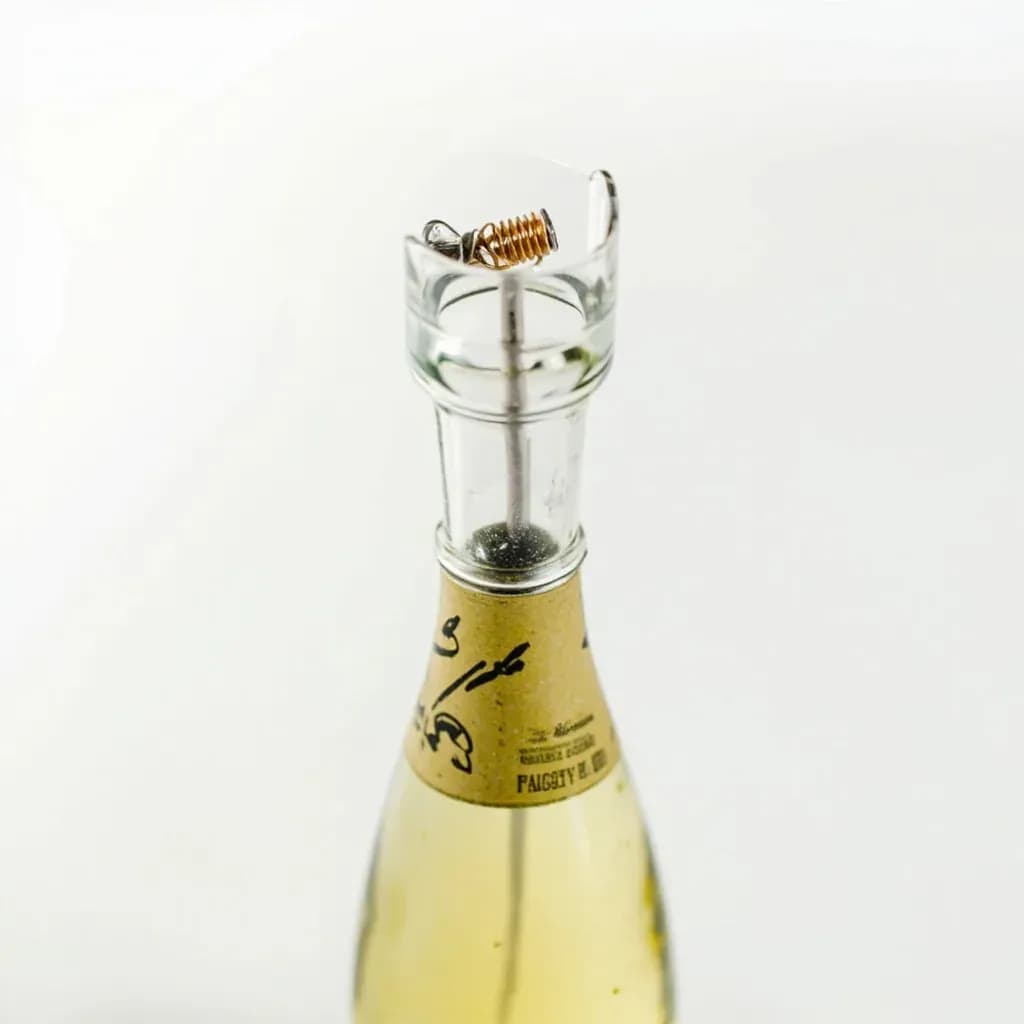
A bottle filler is a wand or valve that controls flow into a bottle for clean, level fills. A simple spring-tip bottling wand opens when pressed against the bottle bottom and stops when lifted, leaving correct headspace. Counter-pressure fillers pressurize the bottle first so carbonated beer or soda fills without foaming or losing fizz.
A bottle filler is a specialized tool for transferring liquid from a bulk vessel — most often a bottling bucket or a pressurized keg — into individual bottles with minimal foam, splashing, and oxygen pickup. The category lives at the intersection of homebrewing, craft soda, cold-brew coffee, kombucha, and small-batch winemaking, where the last few inches of headspace and the air trapped during filling can be the difference between a crisp, stable product and a flat, oxidized one. In practical terms, it is the tool that replaces a funnel when the liquid in question is carbonated, delicate, or expensive enough that waste matters.
The defining feature of the most common design — the spring-tipped wand — is a self-closing valve at the tip that opens only when it is pressed against the bottom of the bottle. Liquid flows out as long as the tip is depressed, and shuts off the instant you lift the wand, so you never pour an open stream into open air. Counter-pressure versions go further: they purge the empty bottle with CO2 and fill it under line pressure, which is how you bottle highly carbonated beer, mead, or hard seltzer from a keg without losing fizz. Either way, the goal is the same — get liquid into the bottle quietly, with the least possible disturbance to dissolved gas and the least possible exposure to oxygen.
Alternatives
Types & varieties
Self-closing valve opens when the tip contacts the bottle bottom and shuts off as you lift. The standard for homebrew bottling from a bucket or keg.
Pressurizes the empty bottle with CO2 through one port, then fills under counter-pressure through a second valve. Preserves carbonation and excludes oxygen.
Non-valve, open-tube wand that relies on the operator's thumb to start and stop flow. Cheapest option, but it produces the most foam.
Small commercial-style unit that meters liquid via a peristaltic pump; common in craft soda and cold-brew production.
Larger commercial machines that fill many bottles at once under pressure; relevant only for production-scale kitchens.
How the spring-tipped valve actually works
The valve at the tip is a small spring-loaded poppet. When the wand is hanging free, the spring holds the poppet closed against a seat, sealing the flow path. When you press the tip down onto the bottom of a bottle, the spring compresses, the poppet unseats, and liquid flows out around it. Lift the wand a millimeter and the spring snaps it shut. The bottle itself does the work of holding the valve open, which is why this design is so forgiving — you cannot accidentally leave the flow running. The trade-off is that the valve must be disassembled and cleaned thoroughly; wort, beer stone, and sanitizer residue all collect in the seat and cause slow leaks.
Spring-tipped wand vs. counter-pressure filler
These two designs solve different problems and live at different price points. The spring-tipped wand is the right tool for bottling from a gravity-fed bottling bucket or a keg tapped at low pressure into a picnic tap; it costs little and handles beer in the 2.0–2.8 volumes of CO2 range with ease. Counter-pressure fillers — the device homebrewers call a 'beer gun' — become worth the investment once you are bottling directly from a keg at serving pressure, or anything more highly carbonated than roughly 2.8 volumes of CO2 (think Belgian tripels, dry-hopped IPAs pushed to 2.8–3.2 volumes, or commercial-style hard seltzer). They also shine when oxygen sensitivity is paramount, because the bottle is purged with CO2 before liquid ever enters it.
Common uses
Tips & pitfalls
- Sanitize every part that contacts the bottle — wand, tip, tubing, and bottle interior — immediately before use; oxygen-starved beer and kombucha spoil quickly.
- Hold the bottle at a slight angle and rest the wand tip on the bottom before opening the valve; the bottom-contact method is what prevents foam.
- Lift the wand smoothly as liquid rises; jerky motion re-introduces splashing and foam right at the neck.
- Leave 1–1.5 in (2.5–4 cm) of headspace in 12 oz bottles; under 1/2 in risks cap blow-off on highly carbonated styles.
- For counter-pressure fillers, pressurize the empty bottle to match keg pressure first, then open the fill valve — otherwise beer foams back through the gas line.
- Match the wand tip diameter to your bottles; a tip too loose splashes, too tight will not seat and will flood the bench.
- After filling, give carbonated bottles 30–60 seconds to settle before capping so any residual foam collapses.
- Common mistake: leaving the wand sitting in sanitizer between bottles. Sanitizer can wick up the line and flavor the next bottle; drain the wand between fills.
- Common mistake: reusing cheap plastic wand bodies for any liquid above about 140 °F / 60 °C. The heat of repeated sanitizing warps the body and seats, leading to slow leaks; switch to stainless steel for hot work.
Good to know
- Primary use
- Filling bottles with liquid (typically carbonated or foam-sensitive) while minimizing foam, splashing, and oxygen pickup.
- Most common type
- Spring-tipped wand filler (also called a bottle wand or bottling wand) for gravity or pressurized lines.
- Counter-pressure type
- A pressurized filler (often called a 'beer gun') that pre-purges the bottle with CO2 and fills under line pressure.
- Typical materials
- Stainless steel (304/316) for premium versions; food-grade acetal copolymer or polypropylene for plastic versions.
- Standard tubing connection
- 3/8" or 1/2" barbed inlet for vinyl or silicone tubing; some commercial units use 1/4" flare or tri-clamp.
- Wand tip diameter
- Roughly 12–14 mm OD to clear standard crown-cap and pry-off bottle necks.
- Typical length
- About 9–12 in (23–30 cm) for standard 12 oz / 500 mL longneck bottles; longer versions exist for 22 oz 'bombers' and 750 mL wine bottles.
- Cleaning
- Disassemble fully; soak in an oxygen-based cleaner like PBW, then sanitize with Star San or iodophor immediately before use.
Also called
Counter-Pressure Filler · Bottling Wand · bottle filling wand
Related

Peeler
Swift blade for stripping skin off fruit and vegetables

Grater
Sharp-toothed surface for shredding cheese and vegetables

Microplane
Ultra-fine rasp for citrus zest, garlic, and hard cheese

Mixing Bowl
All-purpose bowl for combining, whisking, and tossing

Whisk
Looped wires that beat air into eggs, cream, and sauces

Spatula
Flat blade for flipping, lifting, and scraping

Slotted Spoon
Pierced spoon that lifts solids and drains the liquid behind

Wooden Spoon
Gentle, heat-friendly spoon for stirring anything