Prep Tools
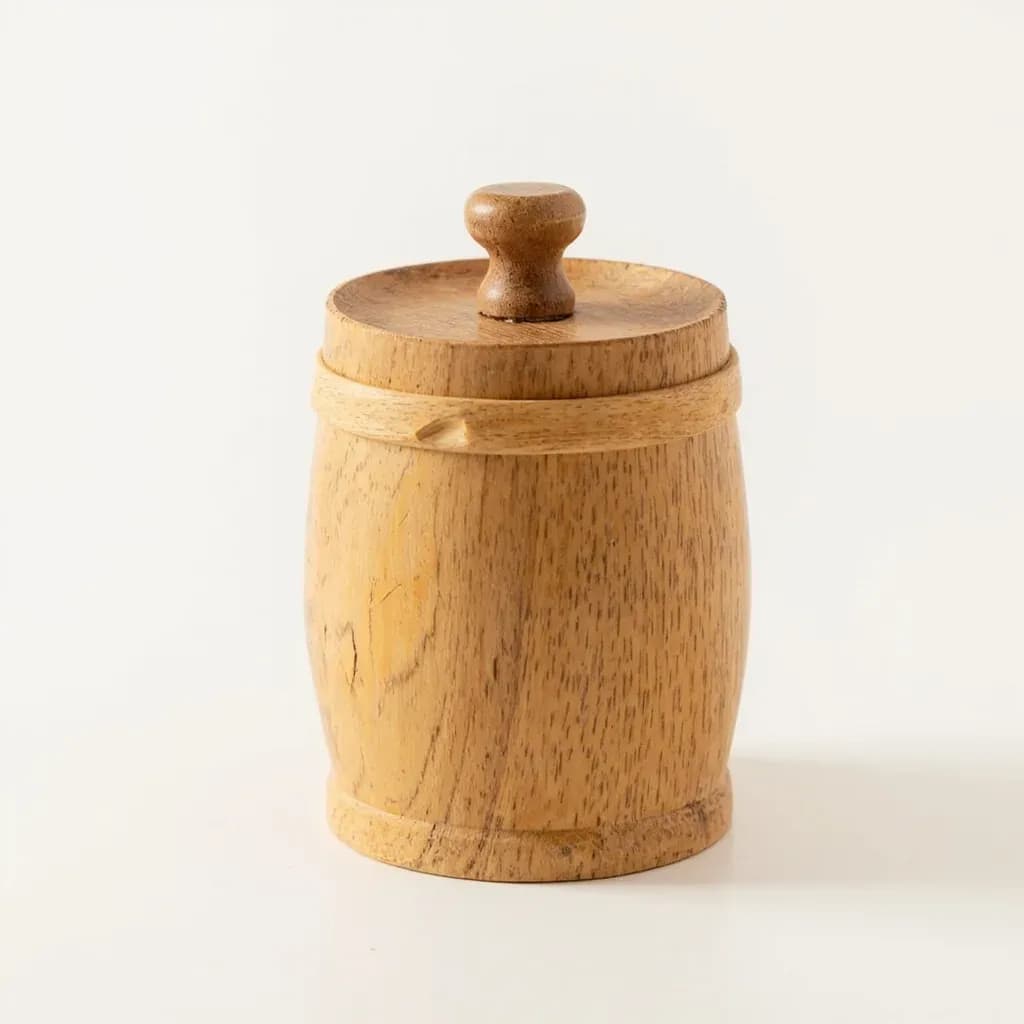
Butter Churn
A vessel that agitates cream until the fat clumps together into butter.
A butter churn is a container in which cream is repeatedly beaten or plunged until the fat globules break and join into solid butter, separating from the liquid buttermilk. Traditional versions use a plunger or hand crank, while a glass jar with a paddle works for small home batches. After churning, the butter is rinsed and worked to press out excess buttermilk.
A butter churn is the vessel-and-agitator system that turns cream into butter by mechanical shear. The vessel holds the cream; the dasher, paddle, or tumbling action supplies the agitation that ruptures the fat-globule membranes and forces them to coalesce into a single mass, releasing the watery buttermilk at the same time. Every churn, no matter how elaborate, shares three essentials: room for the cream to slosh, a means of vigorous agitation, and a surface that stays cool enough to keep the fat firm while it shears. Wood is prized for that last quality — it holds chill far better than metal, which warms the cream during a long session and yields soft, greasy butter.
The churn matters in the kitchen because it is the only common tool that produces traditional butter with its buttermilk cleanly separated and its fat structure properly sheared rather than whipped. A stand mixer can approximate the action, but its flat beater pushes cream downward and incorporates air as it shears, so the butter tends to be more aerated and the break less clean, yielding buttermilk that is foamy and harder to pour off. A dedicated churn — or even a well-chosen jar with a dasher — gives the cook direct control over temperature, fill level, and the moment of the break, which is what separates a fragrant, slow-churned pound of farmhouse butter from a bland, overworked kind.
For the modern cook, the churn is less a relic than a precision tool. A small tabletop model makes a stick of butter in under ten minutes from warm, high-fat cream, the cultured buttermilk that comes off it is the real article for biscuits and pancakes, and the working rhythm of a hand-cranked dash is one of the more satisfying pieces of kitchen labor still in use.
Alternatives
Types & varieties
A tall cylindrical vessel of wood, stoneware, or glass with a perforated dasher worked up and down by hand. The classic farmhouse style, ideal for small batches.
A wooden barrel fitted with a hand-cranked dasher inside; the crank drives a paddle through a gear, allowing larger volumes with less effort.
A barrel or box mounted on a frame that tumbles end over end; the rotation itself agitates the cream. Common in Scandinavian and Scottish dairying.
A small glass or metal jar with a geared crank in the lid, designed to sit on the counter. The standard 20th-century home model.
A pot-shaped brown-glazed crock with a wooden dasher; favored in 19th-century American and British kitchens for its durability and neutral flavor.
An industrial design with a spinning bowl that flings cream against perforated walls, separating butter rapidly. The basis of modern commercial butter production.
Countertop appliances that replicate dash or rotary action with a motor, popular for hobbyist butter making.
The Break: How Cream Becomes Butter
Churning is not whipping, and understanding the difference is the key to good butter. In unhomogenized cream the fat exists as tiny globules suspended in watery serum. The dasher's job is not to whip air in but to apply shearing force until the globule membranes rupture and the liquid fat inside begins to stick to itself. Three stages follow, and learning to read them is the cook's main task.
Stage one is a gentle thickening as the cream loses its pourable quality. Stage two is full whipped-cream stage, where the cream holds soft peaks. Stage three is the break: the whipped structure collapses almost instantly, pale yellow butter solids clump around the dasher, and thin buttermilk sloshes free. Once the break occurs, every additional stroke packs more fat and squeezes out the water that should stay with the butter. The right move is to stop, drain the buttermilk, and switch to washing and kneading.
Caring for a Wooden Churn
A wooden churn will outlast a metal one if it is treated as a piece of cooperware rather than a pot. Wood is naturally cool, slightly porous, and slightly absorbent, which is what makes it ideal for butter but also what makes it intolerant of dish soap and hot water.
- Rinse in cool water only; never soap, never the dishwasher, never a long soak.
- Stand the churn upside down with the lid off to air-dry fully; trapped moisture invites mold and can split the staves.
- Season a new churn by filling it with plain water overnight once or twice, or by churning a sacrificial first batch and discarding it, to seal the grain.
- If the wood darkens or smells sour, scrub it with a paste of coarse salt and cool water, rinse, and dry in moving air.
- Store the dasher separately or propped inside so air circulates around all surfaces.
Churn Versus Stand Mixer
A stand mixer will make butter, and for the busy cook it is the practical choice. The difference is in the structure of the finished product and the quality of the buttermilk. A mixer's flat beater pushes cream downward, incorporating air as it shears; the result is a slightly aerated butter and a buttermilk that is foamy and harder to pour off cleanly. A churn's dasher moves cream in a rolling, fluid motion with much less air entrainment, so the fat shears cleanly, the butter is denser, and the buttermilk pours off as a usable stream. For everyday butter, a mixer is fine. For cultured butter, for working with rich Jersey or Guernsey cream, and for cooks who want a real buttermilk by-product, the churn earns its place.
Common uses
Tips & pitfalls
- Age cream 12–24 hours in the refrigerator before churning; freshly separated cream can take up to 50% longer to break.
- Fill the churn no more than half full — overfilling leaves no room for the cream to slosh and the butter will not form properly.
- Chill the cream to 55–60°F (13–16°C); warmer cream churns faster but yields soft, greasy butter that is hard to wash.
- Watch for the 'break' and stop churning as soon as the solids clump. Continued agitation after the break packs the fat and squeezes out moisture you want to keep.
- Strain the buttermilk off immediately and reserve it — it is the real thing, not a cultured-milk substitute, and is excellent for biscuits and pancakes.
- Wash the butter in several changes of ice water, kneading gently, until the rinse water runs clear; this removes lactose and casein and lengthens keeping quality.
- Salt at 1.5–2% of butter weight (about ½ teaspoon per stick) as fine dry salt so it dissolves without extra washing.
- Rinse wooden churns with cool water only and air-dry with the lid off; never use soap, which can split the wood and taint future batches.
- If the butter refuses to break, the cream is likely too cold, too fresh, or too low in fat; warm it toward 60°F, add a small splash of warm water, and resume.
- Do not churn over-warm cream (above about 70°F) — the butter will be soft, oily, and difficult to wash.
Good to know
- Also called
- Plunger churn, dash churn, barrel churn, or simply 'the churn' (depending on style)
- Primary function
- Agitates cream mechanically until fat globules coalesce into butter, separating butterfat solids from buttermilk
- Traditional materials
- Wood (oak, cypress, cedar, spruce — woods chosen for being flavor-neutral and food-safe), stoneware, glass, and tinned or stainless steel
- Typical capacity
- Small tabletop plunger churns hold 1–2 quarts; upright barrel churns can process 10–50+ gallons
- Recommended fill
- Roughly one-third to one-half full — cream needs room to slosh without overflowing
- Ideal cream temperature
- Around 55–60°F (13–16°C); warmer cream churns faster but yields softer, greasier butter
- Churning time
- 5 minutes with warm, high-fat cream in a modern churn; 30–60 minutes with cool cream in a traditional wooden dash churn
- End point
- A sudden 'break' — cream thickens to whipped-cream stage, then butter solids separate and buttermilk sloshes free
- Historical era
- Butter making predates recorded history; the wooden plunger churn has been used in Europe since at least the Middle Ages
- Industrial descendant
- Centrifugal and continuous butter churns (the Fritz process, late 19th century) replaced small-batch churns in dairies
- Modern niche
- Still used by homesteaders, small dairies, and home cooks making cultured or heirloom-style butter
- Cleaning (wooden)
- Cool water only, then air-dry with the lid off; soap and hot water crack wood and strip its seasoning
Also called
Churn
Related

Peeler
Swift blade for stripping skin off fruit and vegetables

Grater
Sharp-toothed surface for shredding cheese and vegetables

Microplane
Ultra-fine rasp for citrus zest, garlic, and hard cheese

Mixing Bowl
All-purpose bowl for combining, whisking, and tossing

Whisk
Looped wires that beat air into eggs, cream, and sauces

Spatula
Flat blade for flipping, lifting, and scraping

Slotted Spoon
Pierced spoon that lifts solids and drains the liquid behind

Wooden Spoon
Gentle, heat-friendly spoon for stirring anything