Prep Tools
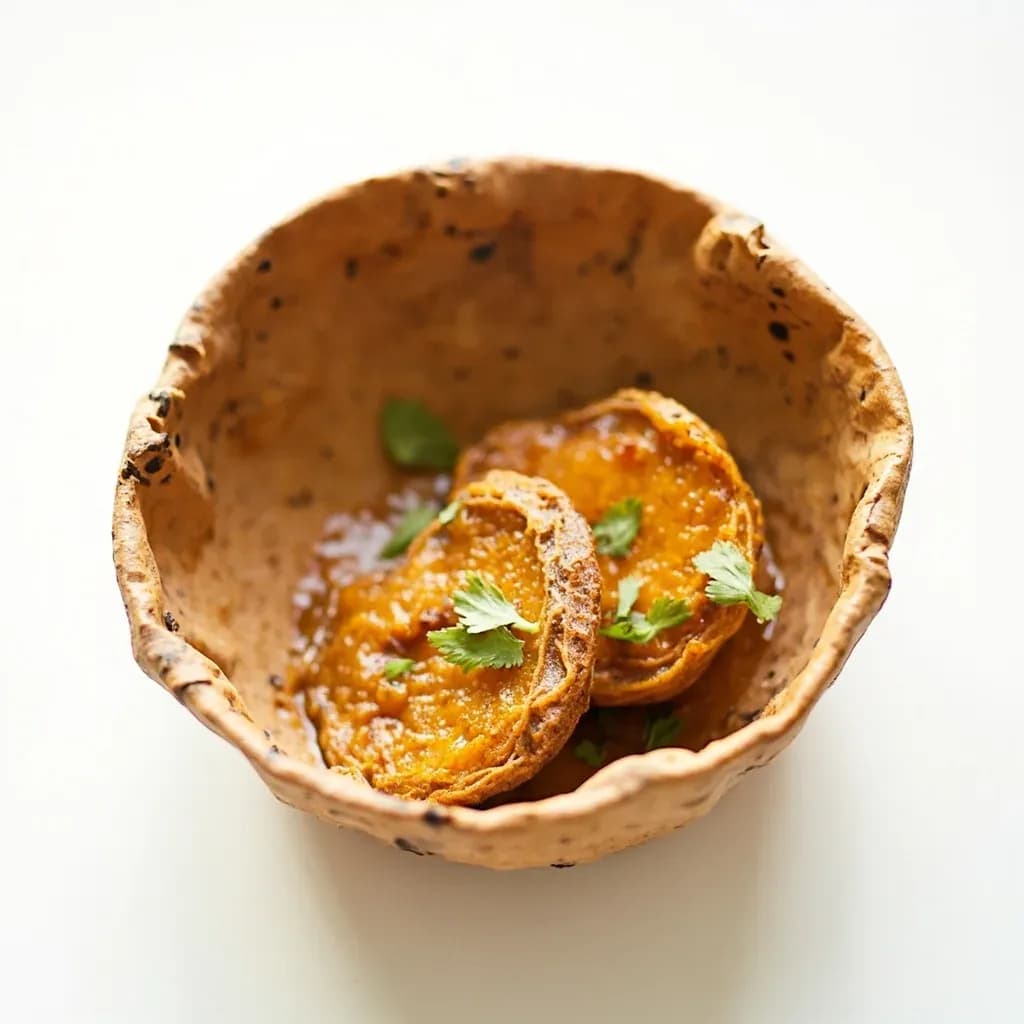
Calabash Bowl (Jícara)
A bowl made from a dried hollowed gourd, used to serve drinks and hold ingredients.
A calabash bowl, known as a jícara in Mexico and Central America, is made by drying and hollowing a hard-shelled gourd into a lightweight natural vessel. It is used to serve drinks such as cacao, atole, tejate and pozol, and to hold or scoop ingredients while cooking. The shells are often carved or painted and are valued for keeping cold drinks cool.
A calabash bowl is a serving and drinking vessel carved from a dried, hollowed gourd. The name covers two botanically distinct plants used interchangeably in the kitchen: the true jícara (Crescentia cujete, a tree fruit native to the tropical Americas) and the bottle gourd Lagenaria siceraria, the form most associated with South American mate. Both are cut, scraped, and dried until the shell is hard and watertight, and in use they behave like a thin, lightweight wooden bowl — neutral in flavor, cool to the touch, and never dishwasher-safe.
The jícara has a long pre-Columbian pedigree: the Aztecs and Maya used it to drink cacao, and cacao beverages were reportedly presented to Spanish conquistadors in jícaras and sent on to the Spanish court in the early 1500s. The form survives in regional cuisines on three continents — Mexican champurrado and pozol, Colombian ajiaco and ceviche, Argentinian yerba mate, Senegalese thiéboudienne — making it one of the oldest continuously used vessels in the pantry. The most celebrated decorative tradition is Olinalá lacquerware in Guerrero, finished with natural barniz; the plain, undecorated bowl is the version most cooks will actually handle.
A calabash does not meaningfully insulate: pour boiling water in and the outside warms within minutes, so the romantic idea that it keeps chocolate piping hot is mostly folklore. What it does offer is a slightly cool, dry surface in a warm kitchen — useful for chilled ceviche or fruit — and a hard, inert wall that takes oil the way a wooden board does. Keep it dry, oil it occasionally, and a well-cared-for bowl lasts years.
Alternatives
Types & varieties
Hand-lacquered bowls and cups from Olinalá, Guerrero, Mexico; finished with natural barniz and finely painted floral or landscape motifs. Prized as folk art as well as functional drinkware.
Plainer, undecorated Crescentia cujete bowls common in central and southern Mexico and Central America; everyday workhorse for chocolate atole, pozol, and hot chocolate.
A small Lagenaria siceraria gourd with an opening at the top, often fitted with a metal rim (virola) and always used with a bombilla — the metal filter straw — to drink yerba mate in Argentina, Uruguay, Paraguay, and southern Brazil.
South American (especially Colombian, Venezuelan, and Brazilian) names for medium calabash bowls used to serve sancocho, ajiaco, ceviche, and rice dishes.
Dried Lagenaria siceraria used across West and East Africa as a drinking cup, milk container, and — in Senegalese thiéboudienne — sometimes as a serving vessel.
Peruvian carved calabash vessels from Piura, etched with figurative scenes and sometimes coated with carbonized fig-tree milk for the carob color prized in collectors' pieces.
Jícara versus calabash
Although the words are used interchangeably in markets and kitchens, the two gourds have different shapes and biographies. The jícara (Crescentia cujete) is a round, hard-shelled tree fruit of tropical America, the default choice for round bowls, chocolate cups, and the lacquered Olinalá ware. The calabash proper (Lagenaria siceraria) is a climbing vine with a long-necked, bottle-shaped fruit, originally from Africa and the source of the South American mate gourd and many West African drinking and milk vessels. In practice the difference matters only when you are buying: ask for a jícara when you want a wide bowl or a drinking cup, and for a calabash when you want the tall, narrow shape of a mate gourd. They are seasoned, oiled, and cared for identically.
Common uses
Tips & pitfalls
- Cure a new, untreated gourd by filling it with warm water for several hours, then rinsing and drying completely; repeat a few times to drive out residual sap and tighten the pores.
- Rub a thin coat of neutral food-safe oil (grapeseed, walnut, or mineral oil) onto the interior every few weeks; skip cooking oils that can go rancid.
- Never soak — prolonged water exposure swells the fibers and leads to hairline cracks as the bowl dries.
- Avoid boiling liquids unless the gourd is well seasoned; very hot water can cause scorching or splitting.
- Hand-wash with mild soap and a soft cloth; dishwashers, microwaves, and ovens are all off-limits.
- Store in a dry, ventilated spot — a closed, damp cabinet encourages mold on the inside.
- If the gourd develops a faint odor, rinse with a baking-soda slurry, rinse again, and air-dry in sunlight.
- Reserve painted or lacquered decorative pieces for dry foods or display unless they are explicitly labeled food-safe.
Good to know
- Material
- Dried, hollowed gourd shell — most commonly Crescentia cujete (the true jícara) or, especially in South America, the bottle gourd Lagenaria siceraria.
- Origin
- Mesoamerica; the Spanish word 'jícara' derives from Nahuatl 'xicalli,' used by the Aztecs and Maya for centuries before contact.
- Traditional role
- Pre-Columbian vessel for drinking cacao (xocolātl) and other beverages; cacao beverages were reportedly presented to Spanish conquistadors in jícaras and sent on to the Spanish court in the early 1500s.
- Typical bowl size
- About 10–20 cm (4–8 in) in diameter for serving and drinking bowls; mate gourds are usually 6–10 cm.
- Weight
- Lightweight — a typical 15 cm bowl weighs roughly 150–300 g before lacquer or carving.
- Heat tolerance
- Wood-like; tolerates warm (not boiling) liquids, especially if seasoned. Not microwave- or dishwasher-safe.
- Surface treatment
- Often left natural, polished, or finished with lacquer, natural resins, or 'barniz' (achiote-tallow paste in Mexican folk craft).
- Care
- Hand-rinse briefly, towel-dry, and air-dry upside down. Periodically rub with food-safe oil (grapeseed, walnut, or mineral oil) to prevent cracking.
- Lifespan
- Years to decades if kept dry and oiled; susceptible to cracking if it dries out or absorbs standing water.
- Food safety
- Properly grown and finished gourds are inert and food-safe; painted or decorative pieces should be confirmed food-safe before use with food.
Also called
Jícara · jicaro-bowl · Gourd Bowl
Related

Peeler
Swift blade for stripping skin off fruit and vegetables

Grater
Sharp-toothed surface for shredding cheese and vegetables

Microplane
Ultra-fine rasp for citrus zest, garlic, and hard cheese

Mixing Bowl
All-purpose bowl for combining, whisking, and tossing

Whisk
Looped wires that beat air into eggs, cream, and sauces

Spatula
Flat blade for flipping, lifting, and scraping

Slotted Spoon
Pierced spoon that lifts solids and drains the liquid behind

Wooden Spoon
Gentle, heat-friendly spoon for stirring anything