Prep Tools
Cambro / Prep Container
A stackable food-storage container for prepped ingredients in professional kitchens.
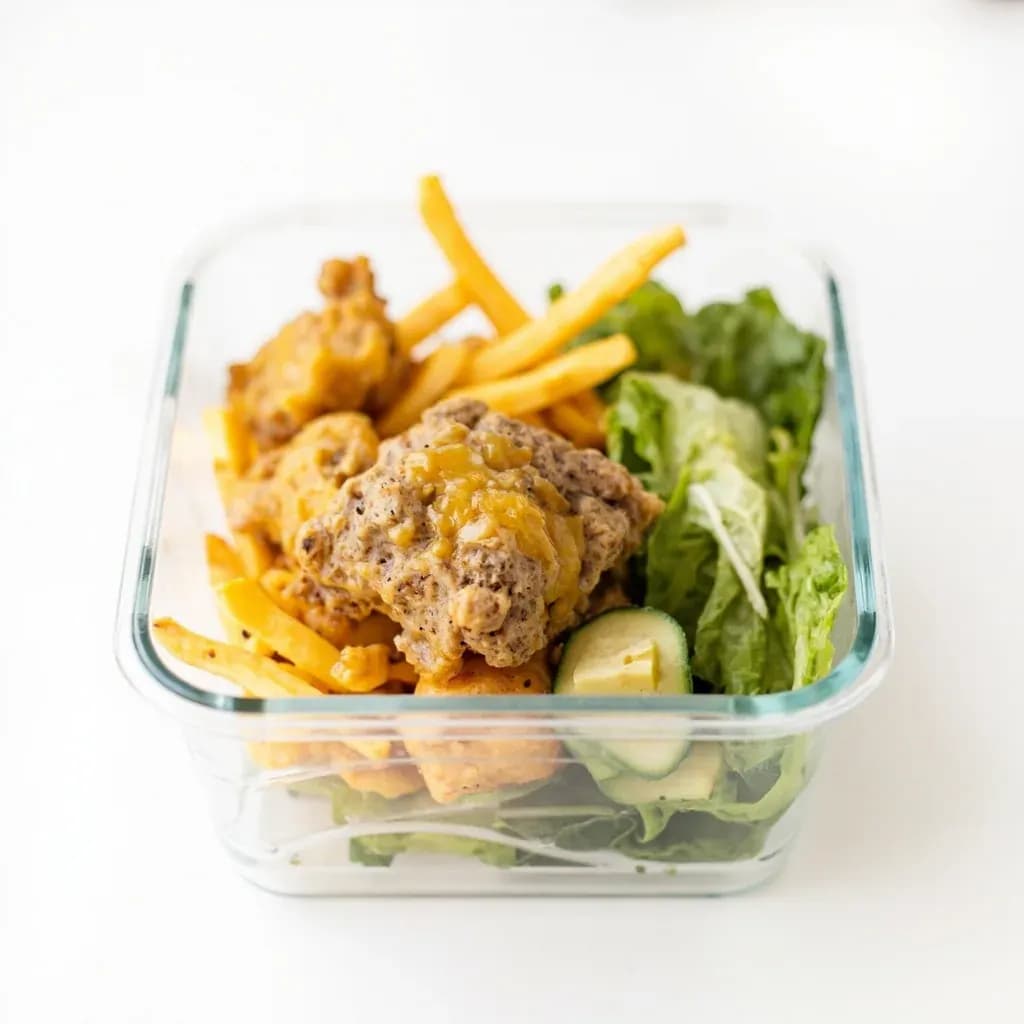
A Cambro, named for the leading brand, is a durable polycarbonate or plastic food-storage container with a snap-on lid, used to hold prepped ingredients, stocks, and stored food. Cooks rely on graduated markings to measure volume and use the square, stackable shape to maximize cold-storage space. Round deli containers serve the same role for smaller batches of sauces and garnishes.
The Cambro container is the square, stackable, translucent polypropylene food-storage tub that has quietly defined mise en place in professional kitchens since the 1980s. In practice it is a semi-rigid tub with molded graduations on the side wall, a flat or slotted lid that snaps on without truly sealing, and a footprint designed to pack densely on a shelf, under a prep table, or inside a lowboy. Cambro Manufacturing built the category; the brand name has since become shorthand for the entire format, the way Kleenex stands in for any facial tissue, and competing tubs from Carlisle, Rubbermaid, and Vollrath are usually specified by brand only to avoid confusion.
What makes the format so dominant is geometry and material behavior. Square and rectangular footprints hold roughly a third more food per square foot of shelf than round deli containers, and they nest when empty so a stack of six 6-qt tubs takes up almost no room. Polypropylene is rated for –40 °F to 160 °F (–40 °C to 70 °C), which means the same tub can move from freezer to walk-in to cold line without cracking or warping. It tolerates salt brines and vinegar at refrigeration temperatures, and its slightly cloudy body is more stain- and odor-resistant than the glass-clear polycarbonate Cambros that were common until BPA concerns largely ended that line. The molded quart and liter marks on the side wall are accurate to about 5% — fine for stocks, less fine for baking or charcuterie where weighing is still the right move.
For a home cook, two sizes cover the bulk of the work: a 2 qt square for chopped aromatics, garnishes, and small marinades, and a 6 qt square for proteins, braises, and produce. A 12 qt is the right scale for stocks, consommés, and brines that need room to move. Buy one solid flat lid and one slotted handled lid per size; the flat lid stores, the slotted lid drains and vents, and you will reach for each constantly.
Alternatives
Types & varieties
The current workhorse. Flexible, lightweight, freezer- and dishwasher-safe; slightly cloudy so contents read but aren't perfectly visible.
Glass-clear and rigid with high impact resistance. Largely a legacy category now — remaining stock is older inventory and most operators have moved to polypropylene.
Square and rectangular store about 33% more efficiently on a shelf and under a prep table; round is easier to stir in and is traditional for deli work.
Eight-color system matched to food groups for cross-contamination control in commercial kitchens and shared walk-ins.
Holds the lid above the food to drain ice, vent steam from blanched vegetables, or strain pasta in a utility sink.
A heavier separate lid with a rubber gasket for true airtight transport, brining, or longer cold storage. Not the default flat lid.
Cambro's insulated front-loading carrier built on the same form factor, used by caterers for off-site transport of hot or cold food.
Oversized 27–55 qt versions for flour, sugar, or rice with a sliding lid designed to hold a scoop inside without contaminating the bin.
The HACCP color-code system
The eight-color lid system is one of the cheapest and most effective cross-contamination controls available to a working kitchen. The standard assignment, used in most professional settings, is straightforward enough to adopt at home with a single pack of color lids.
- Red — raw meat
- Yellow — raw poultry
- Blue — raw fish and seafood
- Green — produce and dairy
- White — general use and dairy
- Purple — allergen-isolated items
- Brown — cooked meat
- Orange — prepared or ready-to-eat foods
Caring for polypropylene
Polypropylene is tough but not indestructible. A few habits extend the life of a tub by years and keep the lid sealing properly.
- Wash in the top rack of a dishwasher or any commercial rack; lids should be secured so heat and water pressure don't warp them.
- For stains from tomato, turmeric, or beet, soak in a baking-soda solution and sun-dry. Chlorine bleach embrittles the plastic over time and shortens its life.
- Cool hot food to roughly 80 °F (about 40 °F above the 40 °F cold-storage target) before pouring into the tub. Plunging a kettle of stock into a cold plastic tub will warp it and risk raising the walk-in temperature.
- If a lid no longer sits flat after years of cycles, replace it. A warped lid is the single most common cause of mystery fridge spoilage.
Common uses
Tips & pitfalls
- Label every container with blue painter's tape and a Sharpie — the tape peels cleanly off polypropylene, unlike most sticker labels that leave residue.
- Buy two lid types per size: a solid flat lid for storage and a slotted handled lid for active prep. The flat lid will warp if you prop it over a hot pot or under a heat lamp.
- Polypropylene is more stain- and odor-resistant than polycarbonate but still takes on tomato, turmeric, and beet color over time; use a baking-soda soak rather than chlorine bleach, which embrittles the plastic.
- Cool hot food to roughly 80 °F (about 40 °F above your 40 °F target) before refrigerating in the container, both to avoid warping the tub and to keep the walk-in temperature safe.
- Square tubs nest with about an inch of wasted space per row; rectangular tubs are the densest on a sheet-pan rack — pick the shape by where they actually live, not by what looks tidy in a catalog.
- When marinating, leave at least an inch of headspace so the lid can seal and the tub can be shaken to redistribute the brine without sloshing.
- The molded graduations are accurate to roughly ±5%. For baking, sausage-making, or curing where ratios matter, weigh rather than trust the side marks.
- Never cut on the container bottom with a knife — the score line becomes a stress crack and the tub will eventually split at the seam.
Good to know
- Brand
- Cambro Manufacturing, founded 1951 in Huntington Beach, California; the name comes from founders Campbell Brothers.
- Primary material
- Translucent polypropylene; glass-clear polycarbonate was once standard but has largely been phased out over BPA and BPS concerns.
- Temperature range
- Polypropylene tubs are rated roughly –40 °F to 160 °F (–40 °C to 70 °C) — freezer to cold-holding, not hot-holding above the simmer.
- Common capacities
- 1, 2, 4, 6, 8, 12, 18, and 22 quarts, plus 2½ qt and half-quart sizes; oversized ingredient bins run 27–55 qt.
- Shapes
- Square (most space-efficient), rectangular/long (densest on a sheet-pan rack), and round (traditional for deli use and easier to stir in).
- Lid styles
- Solid flat lid, slotted lid with handle for draining or venting, color-coded flat lids, and a separate gasket-sealed lid for airtight transport.
- Markings
- Molded graduations in quarts and liters on the side wall for at-a-glance volume checks; accurate to about ±5%.
- Certification
- NSF International listed for commercial food contact; dishwasher- and freezer-safe.
Also called
Prep Container · Deli Container · Prep Container (Cambro) · Food Storage Container
Related

Peeler
Swift blade for stripping skin off fruit and vegetables

Grater
Sharp-toothed surface for shredding cheese and vegetables

Microplane
Ultra-fine rasp for citrus zest, garlic, and hard cheese

Mixing Bowl
All-purpose bowl for combining, whisking, and tossing

Whisk
Looped wires that beat air into eggs, cream, and sauces

Spatula
Flat blade for flipping, lifting, and scraping

Slotted Spoon
Pierced spoon that lifts solids and drains the liquid behind

Wooden Spoon
Gentle, heat-friendly spoon for stirring anything