Baking & Pastry
Casserole Dish
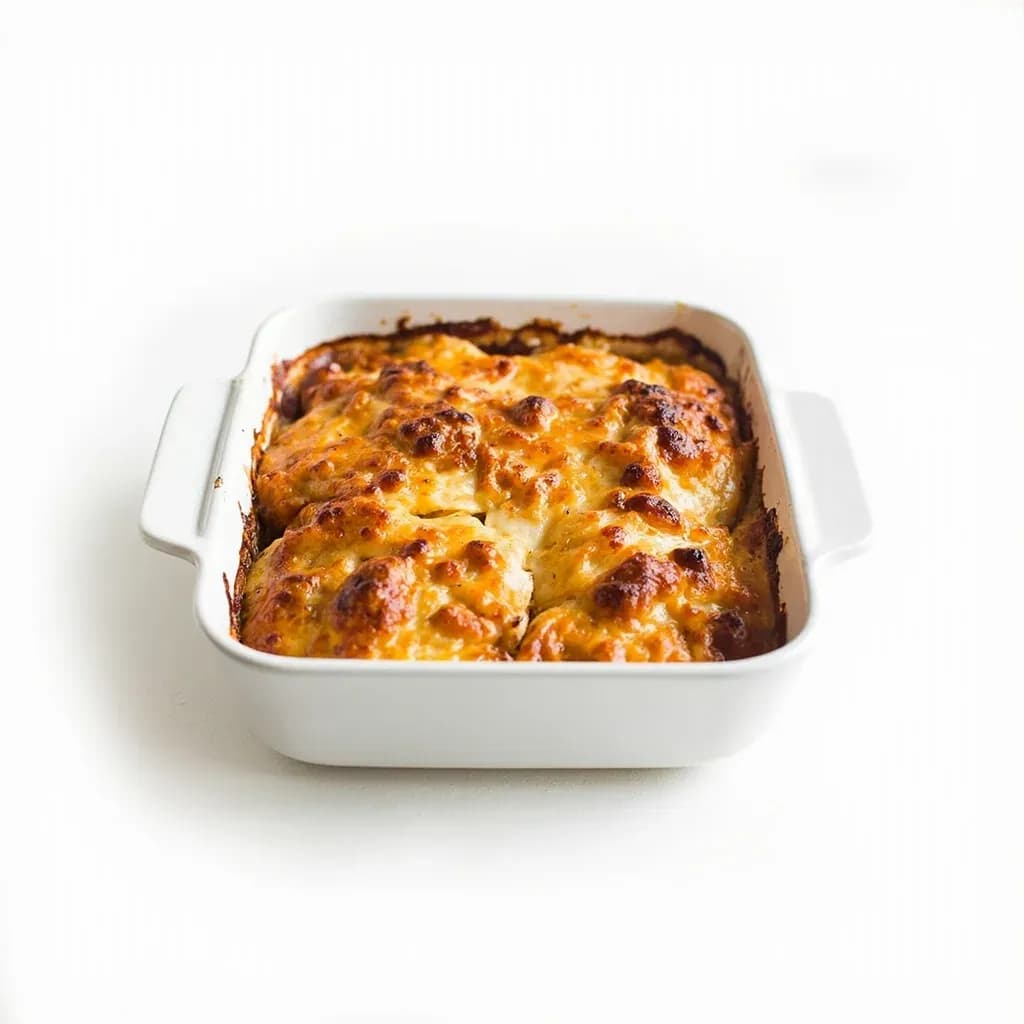
Deep oven-safe dish for baked casseroles, gratins, and roasted dishes.
A casserole dish is a deep, oven-safe vessel, usually ceramic, glass, or enameled cast iron, used to bake layered and one-dish meals like casseroles, gratins, and roasts. Its depth holds saucy, layered foods while the broad surface browns the top, and many come with a lid for moist cooking. It often goes straight from oven to table for serving.
A casserole dish is a deep, oven-safe vessel — usually with two handles and a fitted lid — designed to bake or braise food in its own juices. The word shares its name with the cooking method: from the French "casse" or Provençal "cassa" for a pan or pot, it entered English in the early 18th century to mean the vessel itself, then shifted in the twentieth century to describe the one-dish meal that cooks inside it. What separates a true casserole dish from a gratin dish or a baking dish is depth, lid-fitted construction, and the intent to trap steam. A roasting pan is shallower and open; a gratin dish is shallower still and lidless; a casserole dish is built to contain, not just to expose.
Material matters more than brand. Enameled cast iron and clad-stainless casseroles can move from burner to oven, which is what makes them the most versatile — you can sear meat, build a sauce, and braise in a single vessel. Glazed stoneware (the iconic American 9x13 rectangular dish) and tempered glass are convenient and inexpensive, but they are oven-only and vulnerable to thermal shock. Raw cast iron retains heat superbly for bread baking but demands seasoning and care. Unglazed earthenware such as a Romertopf or a tagine base is porous and self-basting, but it must be soaked before use and never preheated empty.
Size and shape are the most underrated decisions a cook makes. A 3-quart rectangular is the American default for lasagna, brownies, and family-sized bakes; oval enameled cast iron is the European classic for braises; a shallow gratin dish browns more surface area but holds less liquid. Match the dish to the recipe: too small and the contents boil over, too large and sauces reduce too quickly and edges dry before the center cooks. As a rule of thumb, fill the dish roughly two-thirds to three-quarters full to leave room for bubbling and browning.
Alternatives
Types & varieties
American default; the 9x13-inch (~3 qt) is the iconic size for lasagna, brownies, and family casseroles
French tradition; goes from stovetop to oven; the workhorse for bread baking, coq au vin, and long braises
Common in European bakeware; well suited to layered dishes and cobblers
Lower sides than a true casserole; purpose-built for browned, cheesy tops like gratin dauphinois or escalloped vegetables
Allows visual monitoring, bakes evenly, is lighter than cast iron; vulnerable to thermal shock
Porous clay that holds and releases moisture; must be soaked before use and never preheated empty
Single-serving size, typically 8–12 oz; used for pot pies, crème brûlée, and plated gratins
Lighter than cast iron with faster, more even heat; often has a nonstick interior
Tri-ply or 5-ply base for even heating; doubles as a stockpot; tight lid for stovetop-to-oven braises
Choosing the Right Material
The material you choose sets the dish's range more than its size or brand. Each has clear strengths and clear limits.
- Enameled cast iron and clad-stainless steel are the most versatile: they move from burner to oven, hold heat evenly, tolerate 500°F, and are ideal for sear-and-braise cooking in one pot.
- Glazed stoneware and tempered glass are the most affordable and convenient; lighter to lift and dishwasher-safe, but oven-only and prone to cracking under thermal shock. Never put a cold glass dish into a hot oven or a hot one onto a wet counter.
- Raw cast iron retains heat better than anything and is unrivaled for Dutch-oven bread baking, but it must be seasoned, hand-dried, and oiled. It also rusts if soaked.
- Unglazed earthenware (Romertopf, tagine bases, Mexican cazuelas) is porous and self-basting; soak it in water for 15–20 minutes before use and never preheat it empty or it can crack.
- Cast aluminum is a middle ground: lighter than cast iron, faster to heat, and often nonstick-coated, and a good everyday choice for casseroles that don't need long, slow braising.
Fitting the Dish to the Recipe
The single most common casserole mistake is the wrong size dish. Too small and the contents boil over and cook unevenly; too large and sauces reduce too quickly, leaving dry, over-browned edges and an undercooked center. The general rule is to fill the dish roughly two-thirds to three-quarters full for most baked pastas, gratins, and braises, leaving enough headspace for the lid to seat and for steam to circulate. Cobblers and crumbles can go a little fuller because the topping doesn't expand. For very long, liquid-heavy braises, choose a tighter dish so the lid traps moisture efficiently and the contents stay submerged.
Care by Material
Most glazed and enameled casseroles are technically dishwasher-safe, but hand-washing preserves the glaze and enamel finish for years longer. Soap will not strip seasoning from a well-seasoned raw cast iron casserole. Cast iron must never be soaked; dry it on a warm burner after washing and rub a thin coat of oil onto the cooking surface. Glass dishes cannot survive thermal shock, so let them come to room temperature before they meet heat in either direction. Metal utensils chip enamel — switch to wood or silicone inside enameled cast iron and you'll avoid the dark scratches that lead to rust spots.
Common uses
Tips & pitfalls
- Always bring a cold glass or ceramic casserole to room temperature before it goes into a hot oven; the thermal shock can shatter it.
- Grease the interior, including the rim where the lid rests — cheese and sugar caramelize tenaciously on ungreased stoneware and are miserable to scrub off.
- Match dish size to recipe: too small and contents boil over; too large and sauces reduce and edges dry before the center cooks.
- Fill casseroles no more than about three-quarters full to leave room for bubbling and browning.
- Set the dish on a sheet pan before baking; it catches drips and makes lifting a heavy hot vessel much safer.
- To brown the top under a lid, remove the lid for the final 10–20 minutes; keep it on the whole time for a moist bake.
- Cast iron and metal casseroles can start on the burner to brown aromatics or sear meat before going to the oven; stoneware and glass cannot.
- Let a hot dish rest 10–15 minutes on a wooden board or trivet, not on a cold stone counter or wet surface.
- Hand-wash glazed and enameled casseroles to preserve the finish; never soak cast iron or submerge a hot glass dish in cold water.
- Avoid metal utensils on enameled interiors — they chip the enamel and expose the iron underneath to rust.
Good to know
- Also called
- Bakeware casserole, oven dish
- Defining feature
- Deep, oven-safe vessel with two handles and a lid, designed to bake or braise food in its own juices
- Common materials
- Glazed stoneware, porcelain, oven-tempered glass, enameled cast iron, raw cast iron, stainless steel, anodized aluminum, unglazed earthenware
- Standard shapes
- Rectangular (American default), oval (French/European), round, square, individual portions
- Typical capacity
- 1 qt (individual/side) to 6+ qt (family/entertaining); 3 qt is the most common household size
- Oven-safe temperature
- Enameled cast iron and metal to 500°F/260°C; most glazed stoneware and glass to 450°F/230°C; unglazed earthenware and some older glass to 350–400°F/175–200°C
- Stovetop use
- Cast iron and metal casseroles can move from burner to oven; stoneware, glass, and porcelain are generally oven-only unless the maker states otherwise
- Lid role
- Traps steam for moist braising; removing or partially covering it browns and reduces sauces
Also called
casserole-dish · gratin-dish · roasting-dish · baking-dish
Related

Muffin Pan
Multi-cup pan for muffins, cupcakes, and egg bites

Bundt Pan
Fluted ring mold for showstopping cakes with a center hole

Springform Pan
Latch-release pan that frees delicate cakes without flipping

Pie Dish
Sloped round dish for crisp-bottomed pies and quiches

Tart Pan
Fluted pan with a pop-out base for clean-edged tarts

Rolling Pin
Rolls dough into even sheets for pastry and bread

Pastry Brush
Brushes on egg wash, glaze, butter, and marinades

Bench Scraper
Flat blade that divides dough and clears your work surface