Prep Tools
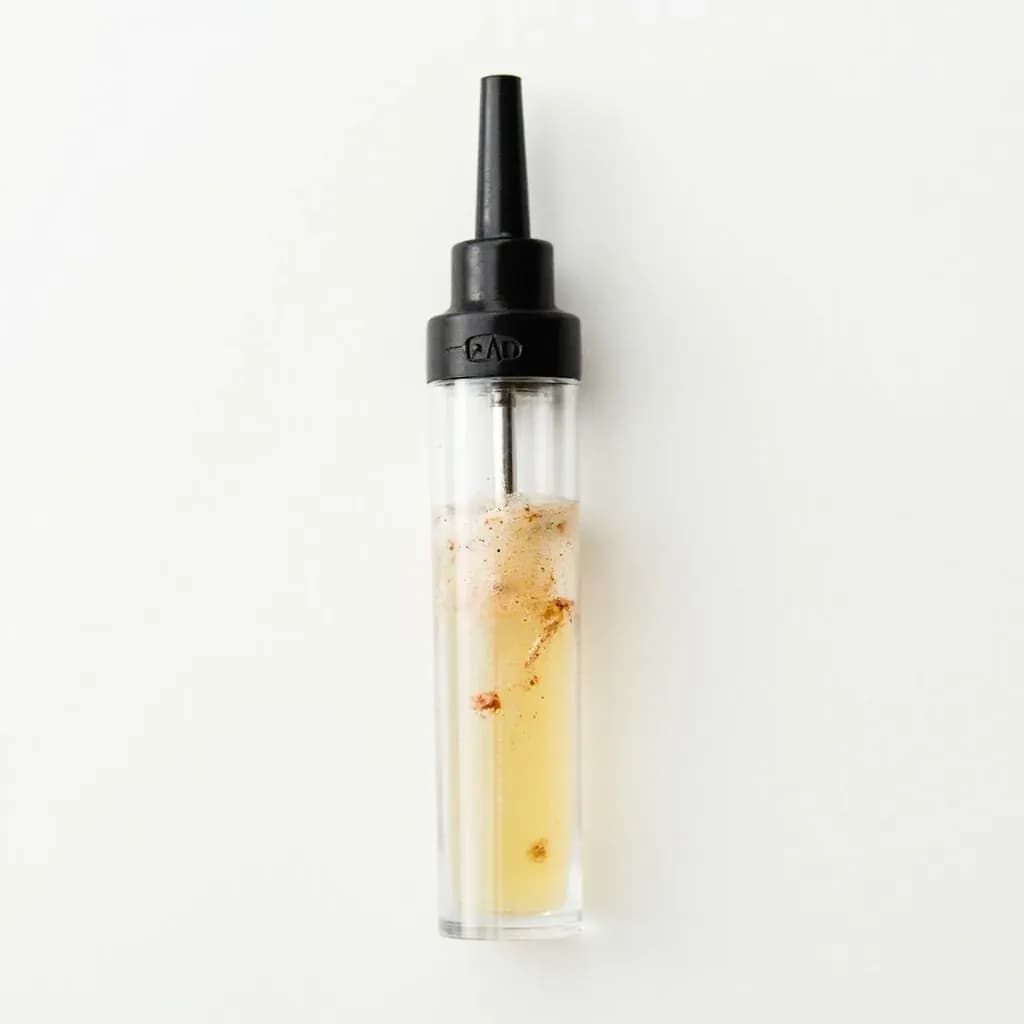
Caviar Maker (Spherification Dropper)
A multi-nozzle dropper that drips flavored liquid into a setting bath to form caviar-like spheres.
A caviar maker, or spherification dropper, is a tool with multiple syringe nozzles that release uniform droplets of an alginate-laced liquid into a calcium bath, where each drop sets into a thin-skinned, liquid-filled sphere. Modernist and pastry cooks use it to make fruit, herb, or savory 'caviar' that bursts on the tongue. The multi-nozzle design lets a whole batch of beads form at once instead of dropping them one by one.
A caviar maker is a precision liquid dropper built specifically for spherification, the molecular gastronomy technique that wraps a flavored liquid inside a thin, edible gel membrane. Where a squeeze bottle, syringe, or pipette can technically do the job for a few drops, a dedicated caviar maker delivers dozens to hundreds of identically sized droplets at a controlled height, which is what determines whether you end up with uniform caviar or a tray of fused, trailing, or flat pearls. The tool exists because gelation is a chemistry reaction, not a cooking one: drop too fast and the pearls merge; drop too high and they elongate; vary the drop size and you get a mix of burst-in-the-mouth and chewier spheres. The dropper is the piece of equipment that lets a cook dial in all three variables — drop size, drop height, and timing — with the repeatability that plating requires.
The body of the tool is almost always a food-grade plastic syringe, silicone bulb or reservoir, or pipette barrel fitted with a fine stainless-steel or polypropylene nozzle, and professional versions multiply that single nozzle into a bank of five to ninety-six or more, all fed from a shared chamber so the operator can produce plates of caviar in seconds rather than minutes. The dropper is the visible half of a two-part system; the other half is the setting bath, which is either a calcium chloride solution (for direct spherification, where an alginate-flavored liquid is dropped into calcium) or a sodium alginate solution (for reverse spherification, where a calcium-rich liquid is dropped into alginate). Once you understand the dropper is really a chemistry-dispensing tool, the rest of the technique falls into place: concentration, time, and temperature all become tunable parameters rather than guesswork.
Alternatives
Types & varieties
Plastic syringe with one nozzle; precise but slow, the standard for learning ratios and plating single portions
Five to ninety-six plus nozzles fed by a shared reservoir; the workhorse of professional kitchens producing volume for service
Flexible bottle with a fine tip; less precise than a syringe but faster for larger drops and reverse spherification
Glass or plastic pipette; favored for very small artisanal batches and fine-dining detail work
Pneumatic or peristaltic systems with dozens of synchronized nozzles for catering and food production
Pairs a multi-nozzle dropper with a slotted spoon or hemisphere mold for both caviar and larger spheres
Choosing Direct vs. Reverse Spherification
The dropper works the same way in both directions, but which bath you use depends on the liquid you want to encapsulate. Direct spherification — flavored liquid plus sodium alginate dropped into calcium chloride — is the simpler setup and works for almost any liquid that does not already contain calcium. Reverse spherification — calcium-rich liquid dropped into sodium alginate — is the right choice for dairy, stock, fruit juices high in calcium, or anything that would gel prematurely in the syringe. Knowing which to pick up front saves you from clogged nozzles and ruined batches.
- Use DIRECT (alginate liquid → calcium bath) for purées, infused waters, alcohol-based liquids, and most sweet or savory flavors
- Use REVERSE (calcium-rich liquid → alginate bath) for milk, cream, yogurt, fruit juices high in calcium, and consommés
- For reverse, calcium lactate or calcium gluconate is often added to the liquid at 0.5–1% since the liquid must hold enough calcium to gel on contact
Calibrating Your Drop
Before committing expensive ingredients, fill the syringe with plain water tinted with food coloring and run a test batch. The exercise reveals three things: whether your drop height produces round versus teardrop pearls, whether your squeeze pressure is consistent, and whether the bath concentration is dialed in. Adjust height, pressure, and bath strength in that order before moving to the real liquid.
- Aim for a drop that hits the bath as a perfect hemisphere and sinks cleanly without trailing
- If pearls trail, lower the nozzle or thicken the liquid slightly with extra alginate
- If pearls float, the liquid is aerated — rest it longer or vacuum it to remove trapped bubbles
- Reusable nozzles clog with dried alginate; flush with warm water between batches and soak in a mild vinegar solution at the end of service
Common uses
Tips & pitfalls
- Always deaerate the flavored liquid by resting it for one to two hours or running it under vacuum — trapped air bubbles cause pearls to float, trail, or rupture on impact
- Hold the dropper at a steady 10–15 cm and squeeze with consistent pressure; pearl size is set almost entirely by drop volume, not nozzle size alone
- Use distilled or filtered water for the setting bath; tap water minerals compete with calcium and prevent clean gelation
- For direct spherification, avoid liquids already high in calcium like dairy or certain stocks — switch to reverse spherification instead or the alginate will gel in the syringe
- Do not leave caviar in the bath longer than two minutes or the membrane thickens into a rubbery shell
- Rinse finished caviar gently in clean water to remove residual bath taste, especially with strong calcium chloride solutions
- Keep the setting bath refrigerated at 2–4°C; cold temperatures slow the reaction and yield a thinner, more delicate membrane that bursts cleanly on the tongue
- Calibrate with colored water before committing expensive ingredients, and sterilize reusable nozzles between batches to prevent clogging and cross-flavor
Good to know
- Tool Type
- Precision liquid dropper used in molecular gastronomy for spherification
- Origin of Technique
- Spherification codified in the early 2000s by Hervé This and Pierre Gagnaire; popularized at elBulli by Ferran Adrià
- Typical Materials
- Food-grade plastic syringe with stainless-steel or polypropylene nozzle; some models use silicone bulbs or reservoirs
- Nozzle Count
- Entry models have one nozzle; professional multi-nozzle units range from 5 to 96+
- Caviar Sphere Size
- Approximately 3–5 mm diameter, smaller than 'spheres,' which run 10–20 mm
- Recommended Drop Height
- 10–15 cm above the bath for uniform size and clean teardrop shaping
- Setting Baths
- Direct: 0.5–1% calcium chloride in distilled water; Reverse: 0.5–1% sodium alginate in distilled water
- Yield & Storage
- A 10 mL syringe yields roughly 200–400 pearls; finished caviar is best used within 24 hours, rinsed and held in clean water or light syrup
Also called
spherification dropper · caviar box · molecular caviar maker
Related

Peeler
Swift blade for stripping skin off fruit and vegetables

Grater
Sharp-toothed surface for shredding cheese and vegetables

Microplane
Ultra-fine rasp for citrus zest, garlic, and hard cheese

Mixing Bowl
All-purpose bowl for combining, whisking, and tossing

Whisk
Looped wires that beat air into eggs, cream, and sauces

Spatula
Flat blade for flipping, lifting, and scraping

Slotted Spoon
Pierced spoon that lifts solids and drains the liquid behind

Wooden Spoon
Gentle, heat-friendly spoon for stirring anything