Prep Tools
Cha Hai (Fairness Pitcher)
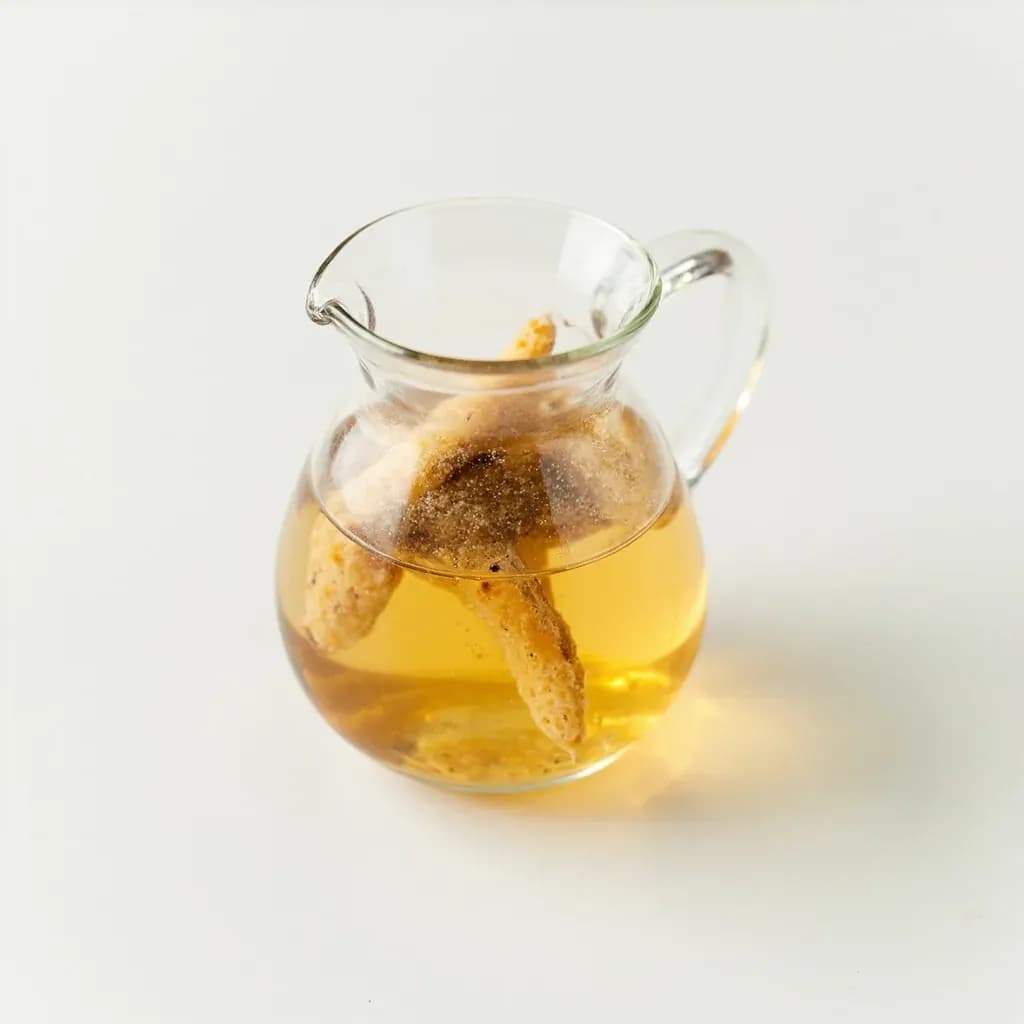
A small pitcher that holds brewed tea so each cup is poured at equal strength.
A cha hai, or fairness pitcher, is a small jug used in Chinese gongfu tea service to decant steeped tea from the brewing pot before pouring into cups. Holding the whole infusion at once evens out the strength so every guest's cup tastes the same and the leaves stop over-steeping. It is a standard piece of the gongfu tea table.
The cha hai is a small intermediate vessel in Chinese tea service that catches the liquor from a brewing pot or gaiwan before it reaches the cups. Because the leaves in a gongfu brewing vessel keep steeping from the moment water is added, the first liquid poured is thinner than the last. Decanting into a cha hai at a set time stops the extraction and blends the pours into a single, even serving. From the cha hai, tea is distributed to cups in equal measure, which is why the vessel is also called gong dao bei, the "fairness cup" or "justice cup."
Beyond fairness, the cha hai functions as a brief holding chamber between steeps, a cooling stage for very hot brews, and a way to assess a tea's color and clarity before it reaches the cup. Material shapes the experience: glass and porcelain are neutral and show off the liquor, while unglazed Yixing zisha clay absorbs aroma over time and is dedicated to a single tea category. A well-chosen cha hai holds at least one full decant from the brewing vessel, pours cleanly from a narrow spout, and fits the rhythm of a multi-steep gongfu session rather than crowding it.
Alternatives
Types & varieties
Neutral and transparent; the standard choice for beginners and for showcasing the color of green, white, or floral oolong teas.
Neutral and traditional; pairs with porcelain or glass teaware and does not retain any flavor from previous sessions.
Unglazed purple clay that seasons with use; dedicate it to one tea category, typically dark oolong, red tea, or cooked pu-erh, and never use it for scented teas.
Tetsubin-style with an enamel-lined interior; heavy, decorative, and good at holding heat for slower-cooled sessions.
Has a fine mesh or honeycomb filter at the spout to catch small particles from tightly rolled oolongs or broken-leaf teas.
Mimics a Western creamer pitcher; the friendliest option for those new to the rim-grip technique.
The classic gongfu form; held by pinching the rim with thumb and middle finger while the index finger steadies the top edge or lid.
Covers the liquor to retain aromatics and heat; useful for volatile greens and highly floral teas.
Why the 'Fairness' Function Matters
Gongfu brewing uses a high leaf-to-water ratio and short steeps, so the difference between the first sip poured and the last can be dramatic. If cups are filled straight from a gaiwan, the drinker at one end of the table gets a weak pour and the drinker at the other gets a harsh, overextracted one. Decanting through a cha hai at the end of the steep time blends every drop into one even serving, then redistributes it cup by cup. The Chinese name gong dao bei, often translated as 'fairness cup' or 'justice cup,' captures this idea literally. A common folk story links the name to a Ming-dynasty magistrate whose son revealed the secret of the design and was, by the same logic of even-handedness, ordered executed by his own father. Treat the story as legend, but the principle it illustrates is practical: equal pour, equal cup, equal strength.
Matching Material to Tea
The cha hai is the last vessel the liquor touches before it reaches the cup, so its material influences aroma and mouthfeel. Use glass or porcelain when you want a neutral surface that lets the tea's character speak, especially for green, white, light oolong, yellow, and fresh sheng pu-erh. Reach for unglazed zisha clay only with teas that benefit from a small amount of interaction, typically roasted oolong, red tea, and dark pu-erh, and dedicate that vessel to a single category so it does not ghost-flavor the next brew. Cast iron holds heat longest and suits slower sessions in cool rooms, though the enamel lining keeps the inside neutral. Stainless steel is uncommon in traditional gongfu but works in office or travel settings where breakage is a concern.
Pouring Technique
A handleless cha hai is held by pinching the rim between thumb and middle finger from above, with the index finger resting on the lid or the top edge for stability. Bring the spout close to the rim of the receiving cup and pour in a single, steady stream at a consistent height; this fills each cup to the same level and avoids splashing. Between pours, rest the base on the edge of the tea tray to catch any drips and to free both hands for the next step. The narrow, well-defined spout typical of a cha hai is part of the design, giving controlled, drip-free pours that a wide-mouthed pitcher cannot match.
Common uses
Tips & pitfalls
- Match the cha hai capacity to the brewing vessel: it should hold at least one full decant from the gaiwan or pot, otherwise the leaves will oversteep while you finish pouring.
- Decant the brewing vessel completely in one smooth, decisive pour. Leaving liquid on the leaves keeps extraction going and turns the next infusion sour or bitter.
- Discard the first short 'awakening' or rinse steep; it is washing the leaves, not for drinking, and should not enter the cha hai.
- Use a glass cha hai for scented, floral, or light teas so the color becomes part of the experience; reach for porcelain or dedicated clay for richer oolongs, reds, and pu-erhs.
- Never use detergent inside an unglazed Yixing or zisha cha hai. Rinse with hot water only and let it air-dry fully before storing, or the clay will absorb soap.
- Keep dedicated clay cha hai for a single tea category, one for sheng pu-erh and another for roasted oolong, for example, since clay absorbs aroma and will ghost-flavor anything else poured through it.
- Pour from the cha hai into cups at an even height and rate so each cup fills to the same level; this is the step that actually delivers the 'fairness.'
- Do not let brewed tea sit in the cha hai for more than a minute or two. Cooling and oxidation dull aromatics, especially in green and white teas.
- If using a handleless cha hai, rest the base on the edge of the tea tray between pours to avoid spills and free your hands.
- Avoid cha hai with very wide spouts; narrow, well-defined spouts give more controlled, drip-free pours.
Good to know
- Chinese name
- Cha Hai (茶海), also called Gong Dao Bei (公道杯)
- Literal meaning
- Cha Hai means 'tea sea'; Gong Dao Bei means 'fairness cup' or 'justice cup'
- Primary purpose
- Holds brewed tea between the brewing vessel and the drinking cups so every cup receives equal strength
- Typical capacity (gongfu)
- 150–300 ml; up to 500 ml for larger sessions
- Common materials
- Glass, porcelain, glazed ceramic, Yixing zisha clay, enamel-lined cast iron, stainless steel
- Paired with
- Gaiwan, Yixing or porcelain teapot, or other small brewing vessels
- Origin
- Rooted in Chinese gongfu cha tradition; the 'fairness' name is tied to a Ming-era folk legend about a magistrate
- Care
- Rinse and air-dry; unglazed clay versions should be kept dry and dedicated to one tea type
Also called
Fairness Pitcher · Gong Dao Bei · Cha Hai Pitcher
Related

Peeler
Swift blade for stripping skin off fruit and vegetables

Grater
Sharp-toothed surface for shredding cheese and vegetables

Microplane
Ultra-fine rasp for citrus zest, garlic, and hard cheese

Mixing Bowl
All-purpose bowl for combining, whisking, and tossing

Whisk
Looped wires that beat air into eggs, cream, and sauces

Spatula
Flat blade for flipping, lifting, and scraping

Slotted Spoon
Pierced spoon that lifts solids and drains the liquid behind

Wooden Spoon
Gentle, heat-friendly spoon for stirring anything